

the growing chain, resulting in the formation of the low-activity or dormant active
centers, Mt–CH(CH 3 )–CH 2 –Pol:
Mt À CH 2 À CH CH 3
ð
ÞÀPol þ CH CH 3
ð
Þ¼ CH 2 !
Mt À CH CH 3
ð
ÞÀCH 2 À CH 2 À CH CH 3
ð
ÞÀPol
(9)
Chain transfer in the presence of hydrogen reactivates such dormant centers:
Mt À CH CH 3
ð
ÞÀCH 2 À CH 2 À CH CH 3
ð
ÞÀPol þ H 2
! Mt À H þ CH 3 À CH 2 À CH 2 À CH 2 À CH CH 3
ð
ÞÀPol
(10)
The presence of n-butyl end groups in polymer chains formed during propene
polymerization in the presence of hydrogen supports this hypothesis [85, 91–93].
The possibility of formation of the inactive centers Mt–CH(CH 3 ) 2 by the reaction of
chain transfer with the monomer in a secondary 2,1-orientation or by a secondary
insertion in the Mt–H bond, formed as a result of chain transfer to hydrogen,
has been considered [76]:
Mt À CH 2 À CH CH 3
ð
ÞÀPol þ CH CH 3
ð
Þ ¼CH 2
! Mt À CH CH 3
ð
Þ 2 þ CH 2 ¼ C CH 3
ð
ÞÀPol
(11)
Mt À H þ CH CH 3
ð
Þ ¼CH 2 ! Mt À CH CH 3
ð
Þ 2
(12)
The chain transfer with hydrogen reactivates inactive centers Mt–CH(CH 3 ) 2
with the formation of a Ti–H bond, followed by a primary propene insertion.
Another explanation is related to the reactivation of Ti
2+ sites, which are inactive
2.0
1.5
1.0
0.5
0.0
0
1 0
2 0
30
40
50
60
Time, min
Relative propylene consumption rate
P H /P pr =0
P H /P pr =0.13
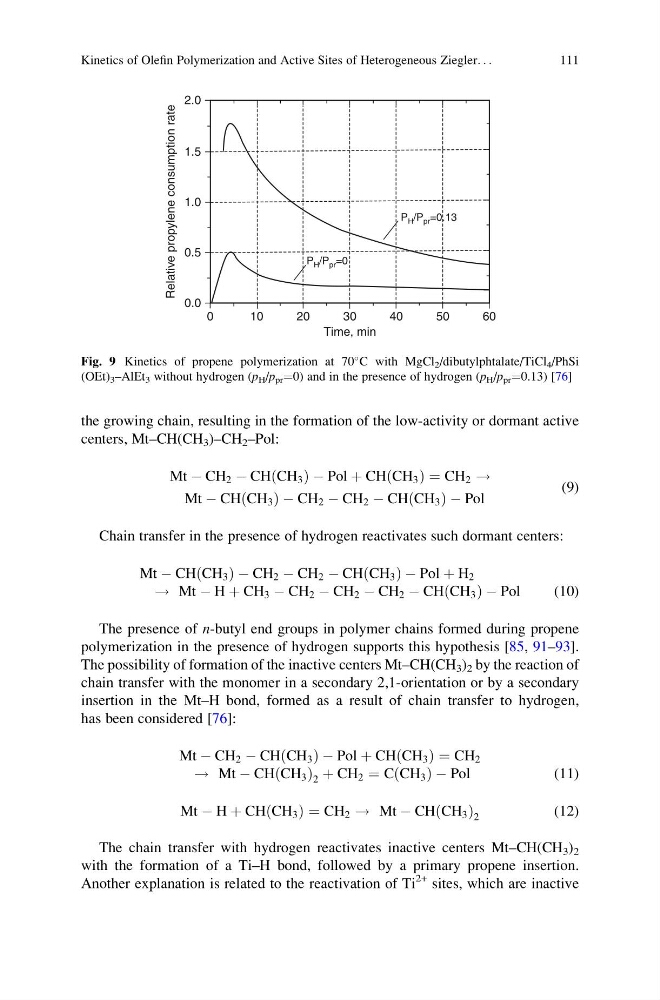
Fig. 9 Kinetics of propene polymerization at 70
C with MgCl 2 /dibutylphtalate/TiCl 4 /PhSi
(OEt) 3 –AlEt 3 without hydrogen (p H /p pr ¼0) and in the presence of hydrogen (p H /p pr ¼0.13) [76]
Kinetics of Olefin Polymerization and Active Sites of Heterogeneous Ziegler. . .
111
centers, Mt–CH(CH 3 )–CH 2 –Pol:
Mt À CH 2 À CH CH 3
ð
ÞÀPol þ CH CH 3
ð
Þ¼ CH 2 !
Mt À CH CH 3
ð
ÞÀCH 2 À CH 2 À CH CH 3
ð
ÞÀPol
(9)
Chain transfer in the presence of hydrogen reactivates such dormant centers:
Mt À CH CH 3
ð
ÞÀCH 2 À CH 2 À CH CH 3
ð
ÞÀPol þ H 2
! Mt À H þ CH 3 À CH 2 À CH 2 À CH 2 À CH CH 3
ð
ÞÀPol
(10)
The presence of n-butyl end groups in polymer chains formed during propene
polymerization in the presence of hydrogen supports this hypothesis [85, 91–93].
The possibility of formation of the inactive centers Mt–CH(CH 3 ) 2 by the reaction of
chain transfer with the monomer in a secondary 2,1-orientation or by a secondary
insertion in the Mt–H bond, formed as a result of chain transfer to hydrogen,
has been considered [76]:
Mt À CH 2 À CH CH 3
ð
ÞÀPol þ CH CH 3
ð
Þ ¼CH 2
! Mt À CH CH 3
ð
Þ 2 þ CH 2 ¼ C CH 3
ð
ÞÀPol
(11)
Mt À H þ CH CH 3
ð
Þ ¼CH 2 ! Mt À CH CH 3
ð
Þ 2
(12)
The chain transfer with hydrogen reactivates inactive centers Mt–CH(CH 3 ) 2
with the formation of a Ti–H bond, followed by a primary propene insertion.
Another explanation is related to the reactivation of Ti
2+ sites, which are inactive
2.0
1.5
1.0
0.5
0.0
0
1 0
2 0
30
40
50
60
Time, min
Relative propylene consumption rate
P H /P pr =0
P H /P pr =0.13
Fig. 9 Kinetics of propene polymerization at 70
C with MgCl 2 /dibutylphtalate/TiCl 4 /PhSi
(OEt) 3 –AlEt 3 without hydrogen (p H /p pr ¼0) and in the presence of hydrogen (p H /p pr ¼0.13) [76]
Kinetics of Olefin Polymerization and Active Sites of Heterogeneous Ziegler. . .
111