

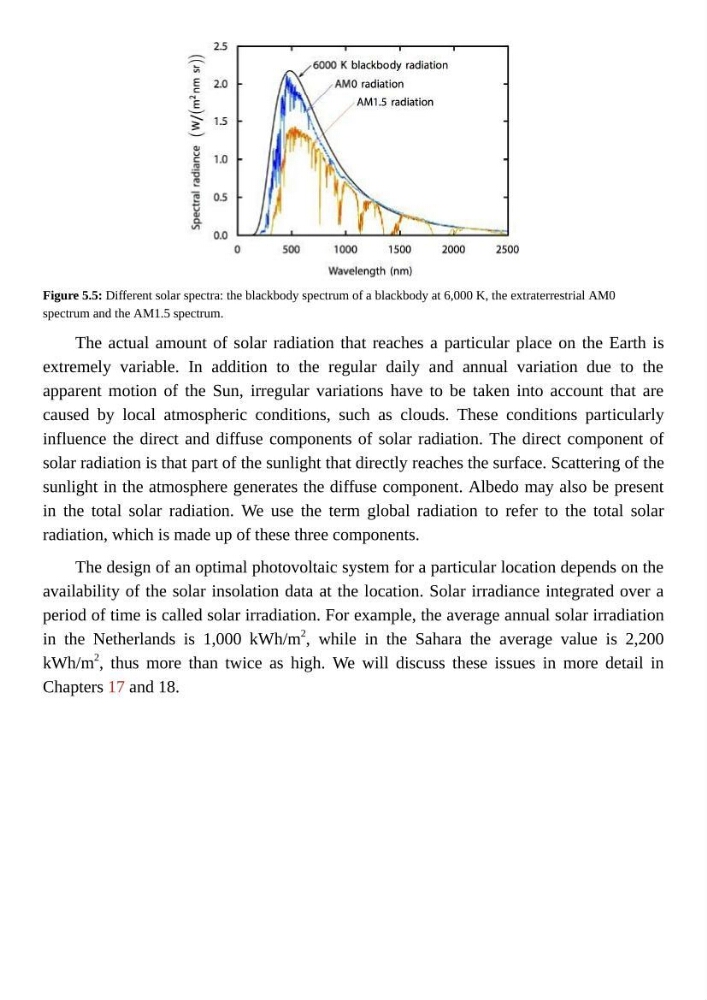
Figure 5.5: Different solar spectra: the blackbody spectrum of a blackbody at 6,000 K, the extraterrestrial AM0
spectrum and the AM1.5 spectrum.
The actual amount of solar radiation that reaches a particular place on the Earth is
extremely variable. In addition to the regular daily and annual variation due to the
apparent motion of the Sun, irregular variations have to be taken into account that are
caused by local atmospheric conditions, such as clouds. These conditions particularly
influence the direct and diffuse components of solar radiation. The direct component of
solar radiation is that part of the sunlight that directly reaches the surface. Scattering of the
sunlight in the atmosphere generates the diffuse component. Albedo may also be present
in the total solar radiation. We use the term global radiation to refer to the total solar
radiation, which is made up of these three components.
The design of an optimal photovoltaic system for a particular location depends on the
availability of the solar insolation data at the location. Solar irradiance integrated over a
period of time is called solar irradiation. For example, the average annual solar irradiation
in the Netherlands is 1,000 kWh/m
2 , while in the Sahara the average value is 2,200
kWh/m
2
, thus more than twice as high. We will discuss these issues in more detail in
Chapters 17 and 18.
spectrum and the AM1.5 spectrum.
The actual amount of solar radiation that reaches a particular place on the Earth is
extremely variable. In addition to the regular daily and annual variation due to the
apparent motion of the Sun, irregular variations have to be taken into account that are
caused by local atmospheric conditions, such as clouds. These conditions particularly
influence the direct and diffuse components of solar radiation. The direct component of
solar radiation is that part of the sunlight that directly reaches the surface. Scattering of the
sunlight in the atmosphere generates the diffuse component. Albedo may also be present
in the total solar radiation. We use the term global radiation to refer to the total solar
radiation, which is made up of these three components.
The design of an optimal photovoltaic system for a particular location depends on the
availability of the solar insolation data at the location. Solar irradiance integrated over a
period of time is called solar irradiation. For example, the average annual solar irradiation
in the Netherlands is 1,000 kWh/m
2 , while in the Sahara the average value is 2,200
kWh/m
2
, thus more than twice as high. We will discuss these issues in more detail in
Chapters 17 and 18.