

E.5 Length of the shadow behind a PV module
In this section we will determine how far behind the module the shadow reaches
dependent on the solar position, the module orientation and the length l of the module.
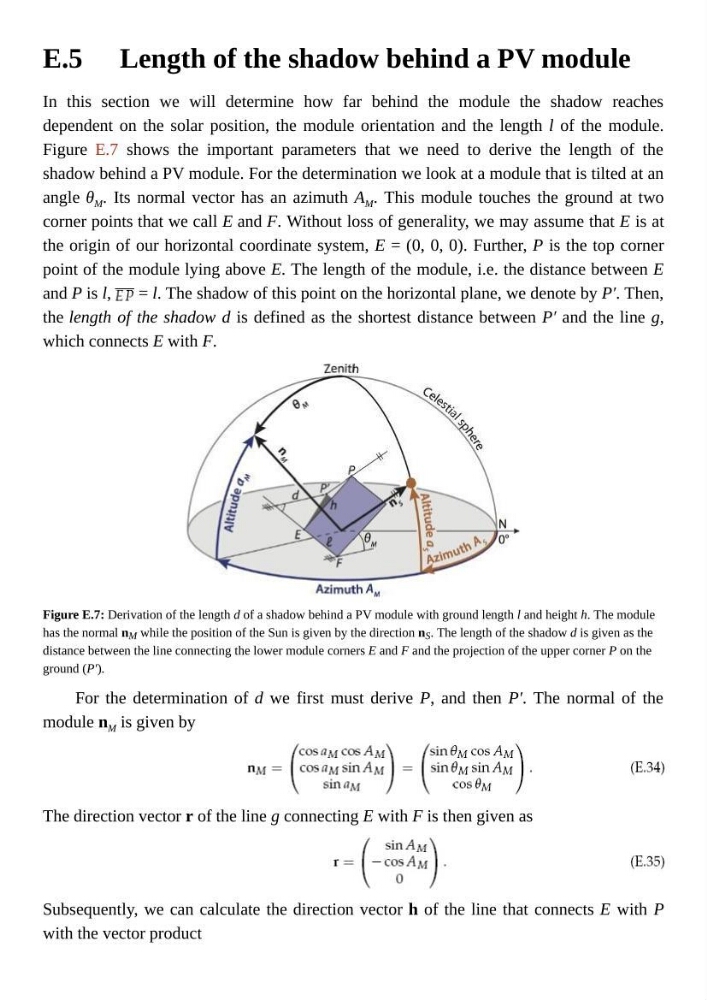
Figure E.7 shows the important parameters that we need to derive the length of the
shadow behind a PV module. For the determination we look at a module that is tilted at an
angle θ M . Its normal vector has an azimuth A M . This module touches the ground at two
corner points that we call E and F. Without loss of generality, we may assume that E is at
the origin of our horizontal coordinate system, E = (0, 0, 0). Further, P is the top corner
point of the module lying above E. The length of the module, i.e. the distance between E
and P is l, = l. The shadow of this point on the horizontal plane, we denote by P′. Then,
the length of the shadow d is defined as the shortest distance between P′ and the line g,
which connects E with F.
Figure E.7: Derivation of the length d of a shadow behind a PV module with ground length l and height h. The module
has the normal n M while the position of the Sun is given by the direction n S . The length of the shadow d is given as the
distance between the line connecting the lower module corners E and F and the projection of the upper corner P on the
ground (P′).
For the determination of d we first must derive P, and then P′. The normal of the
module n M is given by
The direction vector r of the line g connecting E with F is then given as
Subsequently, we can calculate the direction vector h of the line that connects E with P
with the vector product
In this section we will determine how far behind the module the shadow reaches
dependent on the solar position, the module orientation and the length l of the module.
Figure E.7 shows the important parameters that we need to derive the length of the
shadow behind a PV module. For the determination we look at a module that is tilted at an
angle θ M . Its normal vector has an azimuth A M . This module touches the ground at two
corner points that we call E and F. Without loss of generality, we may assume that E is at
the origin of our horizontal coordinate system, E = (0, 0, 0). Further, P is the top corner
point of the module lying above E. The length of the module, i.e. the distance between E
and P is l, = l. The shadow of this point on the horizontal plane, we denote by P′. Then,
the length of the shadow d is defined as the shortest distance between P′ and the line g,
which connects E with F.
Figure E.7: Derivation of the length d of a shadow behind a PV module with ground length l and height h. The module
has the normal n M while the position of the Sun is given by the direction n S . The length of the shadow d is given as the
distance between the line connecting the lower module corners E and F and the projection of the upper corner P on the
ground (P′).
For the determination of d we first must derive P, and then P′. The normal of the
module n M is given by
The direction vector r of the line g connecting E with F is then given as
Subsequently, we can calculate the direction vector h of the line that connects E with P
with the vector product