

21.2
21.2.1
combusting fossil fuels.
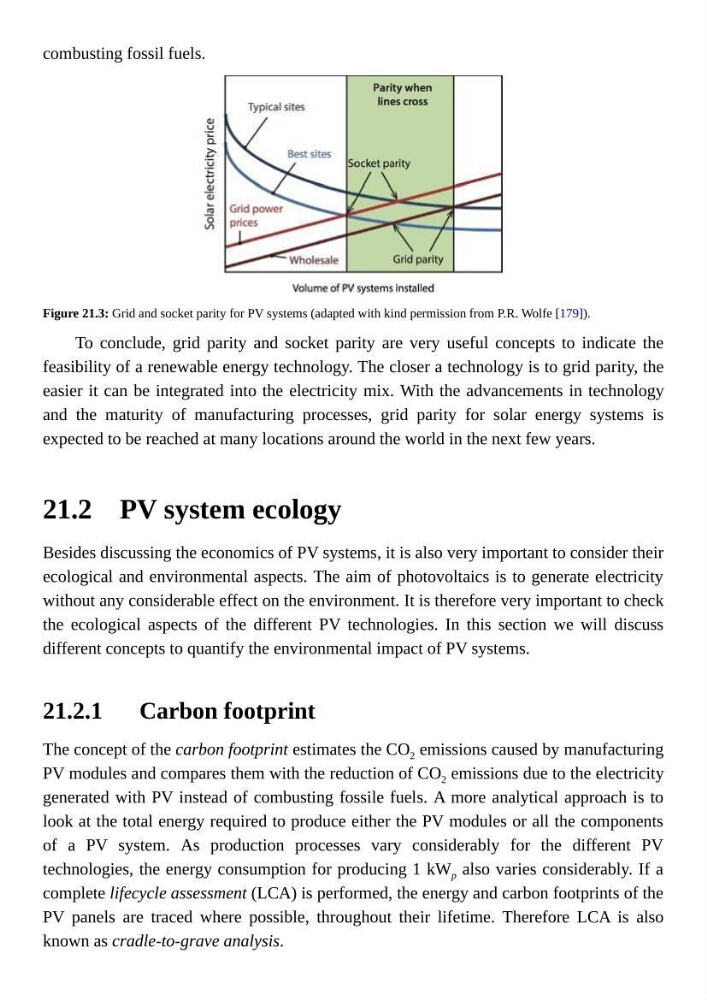
Figure 21.3: Grid and socket parity for PV systems (adapted with kind permission from P.R. Wolfe [179]).
To conclude, grid parity and socket parity are very useful concepts to indicate the
feasibility of a renewable energy technology. The closer a technology is to grid parity, the
easier it can be integrated into the electricity mix. With the advancements in technology
and the maturity of manufacturing processes, grid parity for solar energy systems is
expected to be reached at many locations around the world in the next few years.
PV system ecology
Besides discussing the economics of PV systems, it is also very important to consider their
ecological and environmental aspects. The aim of photovoltaics is to generate electricity
without any considerable effect on the environment. It is therefore very important to check
the ecological aspects of the different PV technologies. In this section we will discuss
different concepts to quantify the environmental impact of PV systems.
Carbon footprint
The concept of the carbon footprint estimates the CO 2 emissions caused by manufacturing
PV modules and compares them with the reduction of CO 2 emissions due to the electricity
generated with PV instead of combusting fossile fuels. A more analytical approach is to
look at the total energy required to produce either the PV modules or all the components
of a PV system. As production processes vary considerably for the different PV
technologies, the energy consumption for producing 1 kW p also varies considerably. If a
complete lifecycle assessment (LCA) is performed, the energy and carbon footprints of the
PV panels are traced where possible, throughout their lifetime. Therefore LCA is also
known as cradle-to-grave analysis.
21.2.1
combusting fossil fuels.
Figure 21.3: Grid and socket parity for PV systems (adapted with kind permission from P.R. Wolfe [179]).
To conclude, grid parity and socket parity are very useful concepts to indicate the
feasibility of a renewable energy technology. The closer a technology is to grid parity, the
easier it can be integrated into the electricity mix. With the advancements in technology
and the maturity of manufacturing processes, grid parity for solar energy systems is
expected to be reached at many locations around the world in the next few years.
PV system ecology
Besides discussing the economics of PV systems, it is also very important to consider their
ecological and environmental aspects. The aim of photovoltaics is to generate electricity
without any considerable effect on the environment. It is therefore very important to check
the ecological aspects of the different PV technologies. In this section we will discuss
different concepts to quantify the environmental impact of PV systems.
Carbon footprint
The concept of the carbon footprint estimates the CO 2 emissions caused by manufacturing
PV modules and compares them with the reduction of CO 2 emissions due to the electricity
generated with PV instead of combusting fossile fuels. A more analytical approach is to
look at the total energy required to produce either the PV modules or all the components
of a PV system. As production processes vary considerably for the different PV
technologies, the energy consumption for producing 1 kW p also varies considerably. If a
complete lifecycle assessment (LCA) is performed, the energy and carbon footprints of the
PV panels are traced where possible, throughout their lifetime. Therefore LCA is also
known as cradle-to-grave analysis.