

228
temperature but reciprocally with the choline chloride concentration. Generally,
most of the deep eutectic solvents have higher surface tension than conventional
solvents. Deep eutectic solvent with low surface tension can be applied as an adhesive or wetting agent in the extraction techniques (Li and Row 2016).
6.3.6 Polarity and Solubilizing Properties
Deep eutectic solvent’s polarity is an important parameter regarding the miscibility
of the deep eutectic solvent in other solvents or either in the sample solution (Dai
et al. 2013a, b). Increasing the temperature leads to a decrease in the polarity of
deep eutectic solvent because of the reduction of the hydrogen bond donating acidity of deep eutectic solvent, as observed with choline chloride/glycerol deep eutectic solvent (Tang et al. 2014). Also, a linear correlation exists between the polarity
of deep eutectic solvent and the choline chloride concentration.
Deep eutectic solvents are known to have good solubilizing properties for polar
and weak polar compounds, including drugs, pharmaceutical ingredients, metal
oxides, carbon dioxide, and elemental species such as lead, mercury, cadmium, etc.
(Aroso et al. 2016). Also, deep eutectic solvent proved better solubilizing effect,
therefore better extractability compared to conventional solvents (Fernández et al.
2018). These properties may be rationalized, at least partially, by the “like dissolves
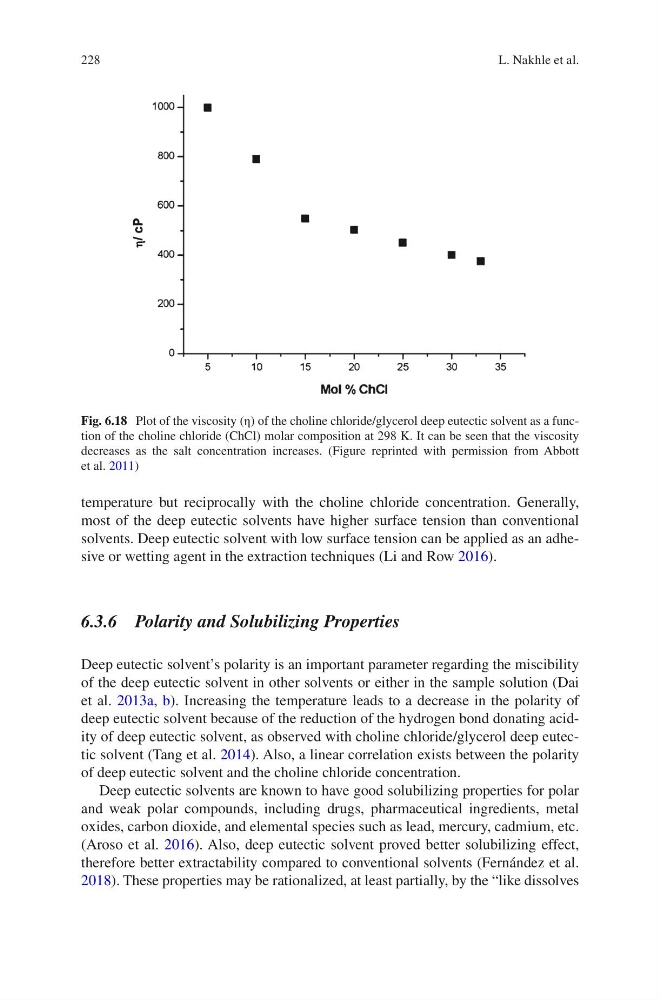
Fig. 6.18 Plot of the viscosity (η) of the choline chloride/glycerol deep eutectic solvent as a function of the choline chloride (ChCl) molar composition at 298 K. It can be seen that the viscosity
decreases as the salt concentration increases. (Figure reprinted with permission from Abbott
et al. 2011)
L. Nakhle et al.
temperature but reciprocally with the choline chloride concentration. Generally,
most of the deep eutectic solvents have higher surface tension than conventional
solvents. Deep eutectic solvent with low surface tension can be applied as an adhesive or wetting agent in the extraction techniques (Li and Row 2016).
6.3.6 Polarity and Solubilizing Properties
Deep eutectic solvent’s polarity is an important parameter regarding the miscibility
of the deep eutectic solvent in other solvents or either in the sample solution (Dai
et al. 2013a, b). Increasing the temperature leads to a decrease in the polarity of
deep eutectic solvent because of the reduction of the hydrogen bond donating acidity of deep eutectic solvent, as observed with choline chloride/glycerol deep eutectic solvent (Tang et al. 2014). Also, a linear correlation exists between the polarity
of deep eutectic solvent and the choline chloride concentration.
Deep eutectic solvents are known to have good solubilizing properties for polar
and weak polar compounds, including drugs, pharmaceutical ingredients, metal
oxides, carbon dioxide, and elemental species such as lead, mercury, cadmium, etc.
(Aroso et al. 2016). Also, deep eutectic solvent proved better solubilizing effect,
therefore better extractability compared to conventional solvents (Fernández et al.
2018). These properties may be rationalized, at least partially, by the “like dissolves
Fig. 6.18 Plot of the viscosity (η) of the choline chloride/glycerol deep eutectic solvent as a function of the choline chloride (ChCl) molar composition at 298 K. It can be seen that the viscosity
decreases as the salt concentration increases. (Figure reprinted with permission from Abbott
et al. 2011)
L. Nakhle et al.