

199
of the application of microwave extraction technique with deep eutectic solvents as
extraction solvents are listed in Table 6.6.
Comparing to other conventional techniques, microwave extraction was faster
and allows the automation of the extraction, but it is more costly and demand
cleanup steps (Chen et al. 2016). Also, it shows higher extraction efficiency using
deep eutectic solvent than other conventional solvents. The maximum extraction
yield of baicalin using deep eutectic solvent-based microwave extraction was
slightly higher than the extraction by 70 vol% ethanol-based hot reflux-assisted
extraction and higher than ultrasound extraction (Cvjetko Bubalo et al. 2016;
Chanioti and Tzia 2018; Wang et al. 2018).
6.2.4 Vortex Extraction
This technique is a rapid microextraction technique. The suspension is subjected to
mechanical stirring by a vortex stirrer, which further favors the dispersion of the
donor phase in the aqueous phase. In this way, the analytes are extracted in the tiny
droplets formed. Subsequently, the suspension is centrifuged to separate the two
phases (González et al. 2018; Ojeda and Rojas 2018). This leads to a greater efficiency of the extraction procedure. Table 6.7 displays some examples of the application of vortex extraction technique with deep eutectic solvents as extraction solvents.
This process was pursued by García et al. (2016) for the extraction of phenolic
compounds. An increase in the extraction yield of oleacein and oleocanthal of
20–33% and approximately 68%, respectively, was proved by extraction with the
deep eutectic solvent with respect to the conventional solvent (80% methanol:water
(v/v)) (García et al. 2016). Wang et al. (2017) explored the potency of deep eutectic
solvent to extract and quantify rhodamine B. Its recovery value using deep eutectic
solvent was 75% higher than in control experiments using water (10% recovery).
Compared to methanol, deep eutectic solvent showed high selectivity for rhodamine
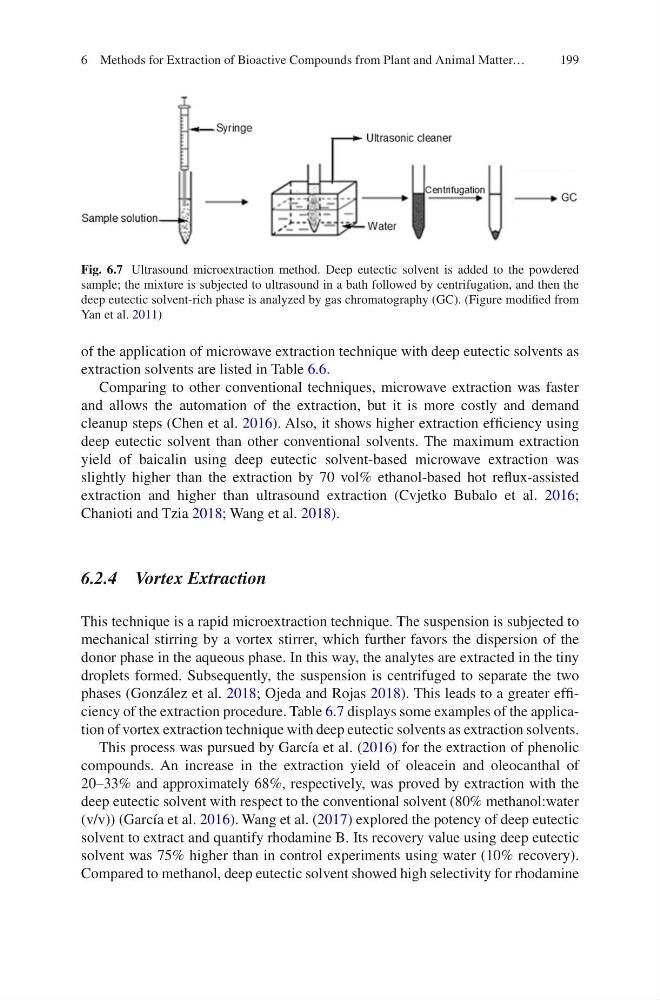
Fig. 6.7 Ultrasound microextraction method. Deep eutectic solvent is added to the powdered
sample; the mixture is subjected to ultrasound in a bath followed by centrifugation, and then the
deep eutectic solvent-rich phase is analyzed by gas chromatography (GC). (Figure modified from
Yan et al. 2011)
6 Methods for Extraction of Bioactive Compounds from Plant and Animal Matter…
of the application of microwave extraction technique with deep eutectic solvents as
extraction solvents are listed in Table 6.6.
Comparing to other conventional techniques, microwave extraction was faster
and allows the automation of the extraction, but it is more costly and demand
cleanup steps (Chen et al. 2016). Also, it shows higher extraction efficiency using
deep eutectic solvent than other conventional solvents. The maximum extraction
yield of baicalin using deep eutectic solvent-based microwave extraction was
slightly higher than the extraction by 70 vol% ethanol-based hot reflux-assisted
extraction and higher than ultrasound extraction (Cvjetko Bubalo et al. 2016;
Chanioti and Tzia 2018; Wang et al. 2018).
6.2.4 Vortex Extraction
This technique is a rapid microextraction technique. The suspension is subjected to
mechanical stirring by a vortex stirrer, which further favors the dispersion of the
donor phase in the aqueous phase. In this way, the analytes are extracted in the tiny
droplets formed. Subsequently, the suspension is centrifuged to separate the two
phases (González et al. 2018; Ojeda and Rojas 2018). This leads to a greater efficiency of the extraction procedure. Table 6.7 displays some examples of the application of vortex extraction technique with deep eutectic solvents as extraction solvents.
This process was pursued by García et al. (2016) for the extraction of phenolic
compounds. An increase in the extraction yield of oleacein and oleocanthal of
20–33% and approximately 68%, respectively, was proved by extraction with the
deep eutectic solvent with respect to the conventional solvent (80% methanol:water
(v/v)) (García et al. 2016). Wang et al. (2017) explored the potency of deep eutectic
solvent to extract and quantify rhodamine B. Its recovery value using deep eutectic
solvent was 75% higher than in control experiments using water (10% recovery).
Compared to methanol, deep eutectic solvent showed high selectivity for rhodamine
Fig. 6.7 Ultrasound microextraction method. Deep eutectic solvent is added to the powdered
sample; the mixture is subjected to ultrasound in a bath followed by centrifugation, and then the
deep eutectic solvent-rich phase is analyzed by gas chromatography (GC). (Figure modified from
Yan et al. 2011)
6 Methods for Extraction of Bioactive Compounds from Plant and Animal Matter…