

195
Bovine serum albumin was chosen as a model protein. All tested deep eutectic
solvent showed around 93–99% extraction efficiency of this protein (Li et al. 2016).
In addition, the presence of relatively high salt concentration resulted in a competition between the salt ions and bovine serum albumin for water molecules. Due to
the decrease of the amount of water required for the solubilization of the protein, the
solubility of bovine serum albumin in the salt phase was tremendously decreased;
this results in the increase of its concentration in the deep eutectic solvent phase.
UV-Vis, FT-IR, and circular dichroïsm experiments showed no interaction and no
interference between all deep eutectic solvents and bovine serum albumin and that
the conformation of bovine serum albumin was maintained during extraction. The
extraction process is mainly due to the aggregation of protein molecules that are
expected to be surrounded by deep eutectic solvent. Dynamic light scattering experiments showed that before extraction, the particle sizes in deep eutectic solvent
solution were around 615 nm and those of bovine serum albumin aqueous protein
solution were around 4 nm, 18 nm, and 255 nm. After extraction, the size of the
observed particles became about 5560 nm. Apparently, the size of this newly formed
aggregate was greater than that of deep eutectic solvent particles and protein particles. Therefore, deep eutectic solvent-protein aggregate could be formed (Xu et al.
2015). Examples of the application of aqueous two-phase system technique with
deep eutectic solvents as extraction solvents are presented in Table 6.4.
Li et al. (2016) used six betaine-based deep eutectic solvents differing by their
hydrophilic property, viscosity, and density for the extraction of proteins. The
extraction efficiency using the optimal deep eutectic solvent was higher than 99%
as the bovine serum albumin band (66 kD), obtained by SDS-PAGE analysis, was
present in the deep eutectic solvent-rich top phase but was not detectable in the bottom phase. This method was validated for accuracy, repeatability, and environment
stability experiments investigated under the following optimized conditions
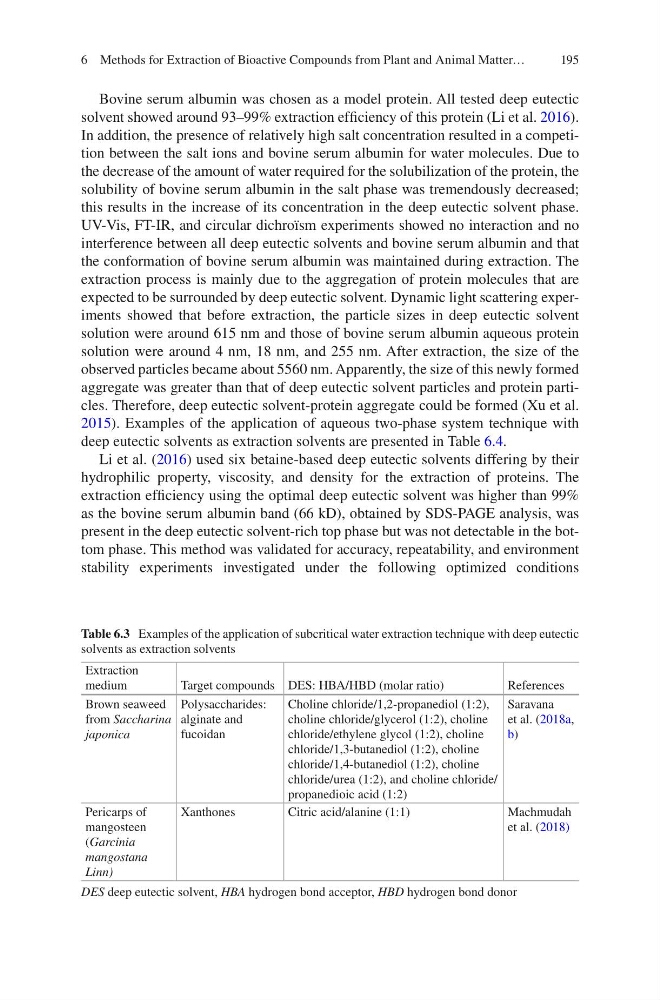
Table 6.3 Examples of the application of subcritical water extraction technique with deep eutectic
solvents as extraction solvents
Extraction
medium
Target compounds DES: HBA/HBD (molar ratio)
References
Brown seaweed
from Saccharina
japonica
Polysaccharides:
alginate and
fucoidan
Choline chloride/1,2-propanediol (1:2),
choline chloride/glycerol (1:2), choline
chloride/ethylene glycol (1:2), choline
chloride/1,3-butanediol (1:2), choline
chloride/1,4-butanediol (1:2), choline
chloride/urea (1:2), and choline chloride/
propanedioic acid (1:2)
Saravana
et al. (2018a,
b)
Pericarps of
mangosteen
(Garcinia
mangostana
Linn)
Xanthones
Citric acid/alanine (1:1)
Machmudah
et al. (2018)
DES deep eutectic solvent, HBA hydrogen bond acceptor, HBD hydrogen bond donor
6 Methods for Extraction of Bioactive Compounds from Plant and Animal Matter…
Bovine serum albumin was chosen as a model protein. All tested deep eutectic
solvent showed around 93–99% extraction efficiency of this protein (Li et al. 2016).
In addition, the presence of relatively high salt concentration resulted in a competition between the salt ions and bovine serum albumin for water molecules. Due to
the decrease of the amount of water required for the solubilization of the protein, the
solubility of bovine serum albumin in the salt phase was tremendously decreased;
this results in the increase of its concentration in the deep eutectic solvent phase.
UV-Vis, FT-IR, and circular dichroïsm experiments showed no interaction and no
interference between all deep eutectic solvents and bovine serum albumin and that
the conformation of bovine serum albumin was maintained during extraction. The
extraction process is mainly due to the aggregation of protein molecules that are
expected to be surrounded by deep eutectic solvent. Dynamic light scattering experiments showed that before extraction, the particle sizes in deep eutectic solvent
solution were around 615 nm and those of bovine serum albumin aqueous protein
solution were around 4 nm, 18 nm, and 255 nm. After extraction, the size of the
observed particles became about 5560 nm. Apparently, the size of this newly formed
aggregate was greater than that of deep eutectic solvent particles and protein particles. Therefore, deep eutectic solvent-protein aggregate could be formed (Xu et al.
2015). Examples of the application of aqueous two-phase system technique with
deep eutectic solvents as extraction solvents are presented in Table 6.4.
Li et al. (2016) used six betaine-based deep eutectic solvents differing by their
hydrophilic property, viscosity, and density for the extraction of proteins. The
extraction efficiency using the optimal deep eutectic solvent was higher than 99%
as the bovine serum albumin band (66 kD), obtained by SDS-PAGE analysis, was
present in the deep eutectic solvent-rich top phase but was not detectable in the bottom phase. This method was validated for accuracy, repeatability, and environment
stability experiments investigated under the following optimized conditions
Table 6.3 Examples of the application of subcritical water extraction technique with deep eutectic
solvents as extraction solvents
Extraction
medium
Target compounds DES: HBA/HBD (molar ratio)
References
Brown seaweed
from Saccharina
japonica
Polysaccharides:
alginate and
fucoidan
Choline chloride/1,2-propanediol (1:2),
choline chloride/glycerol (1:2), choline
chloride/ethylene glycol (1:2), choline
chloride/1,3-butanediol (1:2), choline
chloride/1,4-butanediol (1:2), choline
chloride/urea (1:2), and choline chloride/
propanedioic acid (1:2)
Saravana
et al. (2018a,
b)
Pericarps of
mangosteen
(Garcinia
mangostana
Linn)
Xanthones
Citric acid/alanine (1:1)
Machmudah
et al. (2018)
DES deep eutectic solvent, HBA hydrogen bond acceptor, HBD hydrogen bond donor
6 Methods for Extraction of Bioactive Compounds from Plant and Animal Matter…