

188
molar ratio) deep eutectic solvent. Ultrasonication was also applied for obtaining a
better yield because polar compounds are being extracted from nonpolar solutions.
According to the authors, this solvent exhibited a better extraction than water or
than the solutions of the individual components of the deep eutectic solvent (Gu
et al. 2014).
Solvent drop
Sample
Magnetic stirrer
Solvent drop
Sample
Magnetic stirrer
HS-SDME
DI-SDME
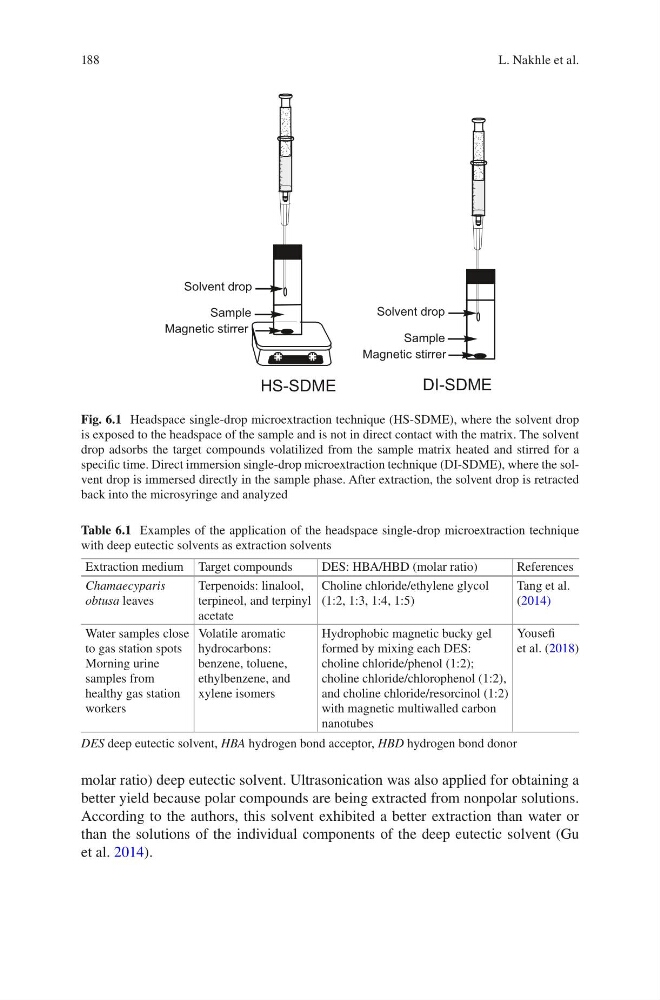
Fig. 6.1 Headspace single-drop microextraction technique (HS-SDME), where the solvent drop
is exposed to the headspace of the sample and is not in direct contact with the matrix. The solvent
drop adsorbs the target compounds volatilized from the sample matrix heated and stirred for a
specific time. Direct immersion single-drop microextraction technique (DI-SDME), where the solvent drop is immersed directly in the sample phase. After extraction, the solvent drop is retracted
back into the microsyringe and analyzed
Table 6.1 Examples of the application of the headspace single-drop microextraction technique
with deep eutectic solvents as extraction solvents
Extraction medium Target compounds
DES: HBA/HBD (molar ratio)
References
Chamaecyparis
obtusa leaves
Terpenoids: linalool,
terpineol, and terpinyl
acetate
Choline chloride/ethylene glycol
(1:2, 1:3, 1:4, 1:5)
Tang et al.
(2014)
Water samples close
to gas station spots
Morning urine
samples from
healthy gas station
workers
Volatile aromatic
hydrocarbons:
benzene, toluene,
ethylbenzene, and
xylene isomers
Hydrophobic magnetic bucky gel
formed by mixing each DES:
choline chloride/phenol (1:2);
choline chloride/chlorophenol (1:2),
and choline chloride/resorcinol (1:2)
with magnetic multiwalled carbon
nanotubes
Yousefi
et al. (2018)
DES deep eutectic solvent, HBA hydrogen bond acceptor, HBD hydrogen bond donor
L. Nakhle et al.
molar ratio) deep eutectic solvent. Ultrasonication was also applied for obtaining a
better yield because polar compounds are being extracted from nonpolar solutions.
According to the authors, this solvent exhibited a better extraction than water or
than the solutions of the individual components of the deep eutectic solvent (Gu
et al. 2014).
Solvent drop
Sample
Magnetic stirrer
Solvent drop
Sample
Magnetic stirrer
HS-SDME
DI-SDME
Fig. 6.1 Headspace single-drop microextraction technique (HS-SDME), where the solvent drop
is exposed to the headspace of the sample and is not in direct contact with the matrix. The solvent
drop adsorbs the target compounds volatilized from the sample matrix heated and stirred for a
specific time. Direct immersion single-drop microextraction technique (DI-SDME), where the solvent drop is immersed directly in the sample phase. After extraction, the solvent drop is retracted
back into the microsyringe and analyzed
Table 6.1 Examples of the application of the headspace single-drop microextraction technique
with deep eutectic solvents as extraction solvents
Extraction medium Target compounds
DES: HBA/HBD (molar ratio)
References
Chamaecyparis
obtusa leaves
Terpenoids: linalool,
terpineol, and terpinyl
acetate
Choline chloride/ethylene glycol
(1:2, 1:3, 1:4, 1:5)
Tang et al.
(2014)
Water samples close
to gas station spots
Morning urine
samples from
healthy gas station
workers
Volatile aromatic
hydrocarbons:
benzene, toluene,
ethylbenzene, and
xylene isomers
Hydrophobic magnetic bucky gel
formed by mixing each DES:
choline chloride/phenol (1:2);
choline chloride/chlorophenol (1:2),
and choline chloride/resorcinol (1:2)
with magnetic multiwalled carbon
nanotubes
Yousefi
et al. (2018)
DES deep eutectic solvent, HBA hydrogen bond acceptor, HBD hydrogen bond donor
L. Nakhle et al.