

5
amides, alcohols, and carboxylic acids. In addition, compounds like sugars, sugar
alcohols, and amino acids are also considered for natural deep eutectic solvents’
preparation (Dai et al. 2013). More recently, hydrophobic deep eutectic solvents
were introduced, and they are based on the use of hydrophobic compounds such as
tetrabutylammonium bromide (TBABr), menthol, thymol, and fatty acids as hydrogen bond acceptors together with long alkyl chain alcohols and carboxylic acids as
hydrogen bond donors (Florindo et al. 2019; Osch et al., 2015). Furthermore, deep
eutectic solvents can be made of active pharmaceutical ingredients like ibuprofen,
lidocaine, and phenylacetic acid. In that event, the solvents are named therapeutic
deep eutectic solvents (THEDES) (Duarte et al. 2017; Paiva et al. 2014). Some of
the frequently used hydrogen bond acceptor and hydrogen bond donor counterparts
described in the literature are illustrated in Fig. 1.2.
On the other hand, although natural deep eutectic solvents can sometimes be
considered as type III deep eutectic solvents, it is not always the case. That said,
natural deep eutectic solvents were recently classified into five main groups (Dai
et al. 2013; González et al. 2018):
• Ionic liquids, made of an acid and a base
• Neutral, made of only sugars or sugars and other polyalcohols
• Neutral with acids, made of sugar/polyalcohols and organic acids
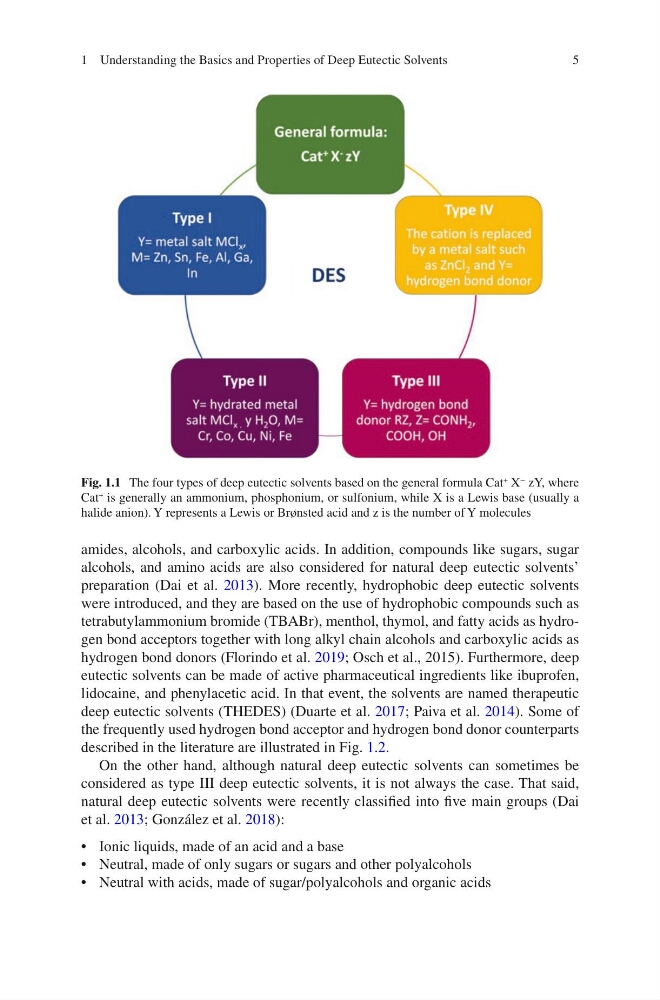
Fig. 1.1 The four types of deep eutectic solvents based on the general formula Cat
+ X
− zY, where
Cat
+ is generally an ammonium, phosphonium, or sulfonium, while X is a Lewis base (usually a
halide anion). Y represents a Lewis or Brønsted acid and z is the number of Y molecules
1 Understanding the Basics and Properties of Deep Eutectic Solvents
amides, alcohols, and carboxylic acids. In addition, compounds like sugars, sugar
alcohols, and amino acids are also considered for natural deep eutectic solvents’
preparation (Dai et al. 2013). More recently, hydrophobic deep eutectic solvents
were introduced, and they are based on the use of hydrophobic compounds such as
tetrabutylammonium bromide (TBABr), menthol, thymol, and fatty acids as hydrogen bond acceptors together with long alkyl chain alcohols and carboxylic acids as
hydrogen bond donors (Florindo et al. 2019; Osch et al., 2015). Furthermore, deep
eutectic solvents can be made of active pharmaceutical ingredients like ibuprofen,
lidocaine, and phenylacetic acid. In that event, the solvents are named therapeutic
deep eutectic solvents (THEDES) (Duarte et al. 2017; Paiva et al. 2014). Some of
the frequently used hydrogen bond acceptor and hydrogen bond donor counterparts
described in the literature are illustrated in Fig. 1.2.
On the other hand, although natural deep eutectic solvents can sometimes be
considered as type III deep eutectic solvents, it is not always the case. That said,
natural deep eutectic solvents were recently classified into five main groups (Dai
et al. 2013; González et al. 2018):
• Ionic liquids, made of an acid and a base
• Neutral, made of only sugars or sugars and other polyalcohols
• Neutral with acids, made of sugar/polyalcohols and organic acids
Fig. 1.1 The four types of deep eutectic solvents based on the general formula Cat
+ X
− zY, where
Cat
+ is generally an ammonium, phosphonium, or sulfonium, while X is a Lewis base (usually a
halide anion). Y represents a Lewis or Brønsted acid and z is the number of Y molecules
1 Understanding the Basics and Properties of Deep Eutectic Solvents