

220
N. Tshilande and L. Mammino
where the same bond has been rotated by 180° (to one or the other side, depending
on the rotated bond), suggesting that geometries in which R is bent out of the plane
identified by the benzene ring A are preferred to geometries in which R is bent
but remains on the plane. The values also show that the energy changes related to
changes in the geometry of R are not dramatic. The values from different calculation
methods show a discrepancy in the identification of the lowest energy conformer:
while HF and DFT identify the lowest energy conformer as the one in which R
is linear (outstretched) and on the plane of ring A, MP2 identifies it as one of the
lowest energy conformers in which R has an out-of-plane bent geometry (although
its energy difference with the linear geometry is so small that it can be considered
marginal).
3.3.3 Characteristics of the Intramolecular Hydrogen Bonds
The parameters of the first IHB (Tables S15–S17) do not appear to be influenced
by the nature of R: the O14···H15 and H17···O14 lengths are the same for the same
type of conformers in the three molecules. Consistently with the findings for other
ACPLs with a substituent at C3 and no substituent at C5, the H15···O14 length is
slightly shorter than the H17···O14 length, the O14···O8 distance is slightly shorter
than the O14···O12 distance and the O ˆ
HO bond angle is greater for the H15···O14
IHB, suggesting that the H15···O14 IHB is somewhat stronger than the H17···O14
IHB. The values of the parameters suggest that the first IHB is moderate-to-strong.
Tables S18–S20 compare the results of the three calculation methods for the
parameters of the first IHB in the calculated conformers with different geometries
of R and the same geometry of ABDE. The narrow ranges (Table 3) of their values
within each calculation method indicate only marginal influence by the geometry of
R on the IHB parameters. Figures S28–S30 compare the trends of the IHB length for
the different methods. The IHB length is longest in the HF results, shortest in the DFT
results and intermediate in the MP2 results. This is consistent with the tendency of
HF to underestimate H-bond strength and of DFT to overestimate it; the MP2 results
are thus expected to be closer to the actual values. The trends across conformers are
very similar for the three methods .
Tables S21–S23 report the distance between the H atom of the donor OH and the
closest C atom (C23) in the acceptor aromatic B ring, for the O–H···π IHBs. The
H15···C23 distances are shorter than the H16···C23 distances, suggesting that the
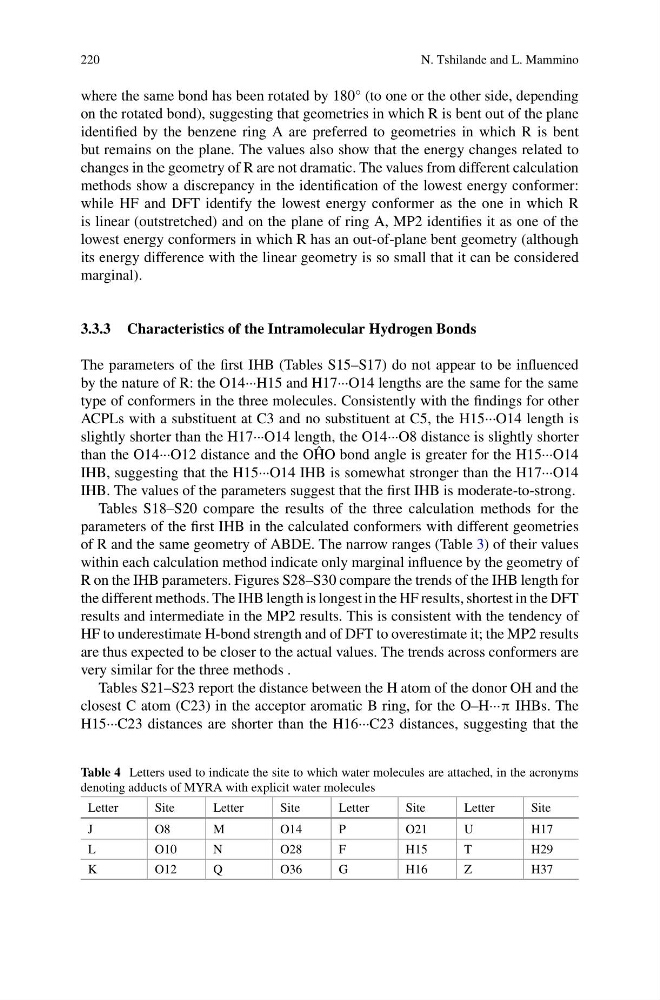
Table 4 Letters used to indicate the site to which water molecules are attached, in the acronyms
denoting adducts of MYRA with explicit water molecules
Letter
Site
Letter
Site
Letter
Site
Letter
Site
J
O8
M
O14
P
O21
U
H17
L
O10
N
O28
F
H15
T
H29
K
O12
Q
O36
G
H16
Z
H37
N. Tshilande and L. Mammino
where the same bond has been rotated by 180° (to one or the other side, depending
on the rotated bond), suggesting that geometries in which R is bent out of the plane
identified by the benzene ring A are preferred to geometries in which R is bent
but remains on the plane. The values also show that the energy changes related to
changes in the geometry of R are not dramatic. The values from different calculation
methods show a discrepancy in the identification of the lowest energy conformer:
while HF and DFT identify the lowest energy conformer as the one in which R
is linear (outstretched) and on the plane of ring A, MP2 identifies it as one of the
lowest energy conformers in which R has an out-of-plane bent geometry (although
its energy difference with the linear geometry is so small that it can be considered
marginal).
3.3.3 Characteristics of the Intramolecular Hydrogen Bonds
The parameters of the first IHB (Tables S15–S17) do not appear to be influenced
by the nature of R: the O14···H15 and H17···O14 lengths are the same for the same
type of conformers in the three molecules. Consistently with the findings for other
ACPLs with a substituent at C3 and no substituent at C5, the H15···O14 length is
slightly shorter than the H17···O14 length, the O14···O8 distance is slightly shorter
than the O14···O12 distance and the O ˆ
HO bond angle is greater for the H15···O14
IHB, suggesting that the H15···O14 IHB is somewhat stronger than the H17···O14
IHB. The values of the parameters suggest that the first IHB is moderate-to-strong.
Tables S18–S20 compare the results of the three calculation methods for the
parameters of the first IHB in the calculated conformers with different geometries
of R and the same geometry of ABDE. The narrow ranges (Table 3) of their values
within each calculation method indicate only marginal influence by the geometry of
R on the IHB parameters. Figures S28–S30 compare the trends of the IHB length for
the different methods. The IHB length is longest in the HF results, shortest in the DFT
results and intermediate in the MP2 results. This is consistent with the tendency of
HF to underestimate H-bond strength and of DFT to overestimate it; the MP2 results
are thus expected to be closer to the actual values. The trends across conformers are
very similar for the three methods .
Tables S21–S23 report the distance between the H atom of the donor OH and the
closest C atom (C23) in the acceptor aromatic B ring, for the O–H···π IHBs. The
H15···C23 distances are shorter than the H16···C23 distances, suggesting that the
Table 4 Letters used to indicate the site to which water molecules are attached, in the acronyms
denoting adducts of MYRA with explicit water molecules
Letter
Site
Letter
Site
Letter
Site
Letter
Site
J
O8
M
O14
P
O21
U
H17
L
O10
N
O28
F
H15
T
H29
K
O12
Q
O36
G
H16
Z
H37