

214
N. Tshilande and L. Mammino
2
1
3
6
4
5
9
23
19
22
20
O
30
31
35
32
34
33
24
25
27
26
O
O
O
O
O
7
O
13
H
H
H
H
H
8
15
10
16
17
H
11
21
28
29
14
37
36
12
A
B
D
E
CH 3
18
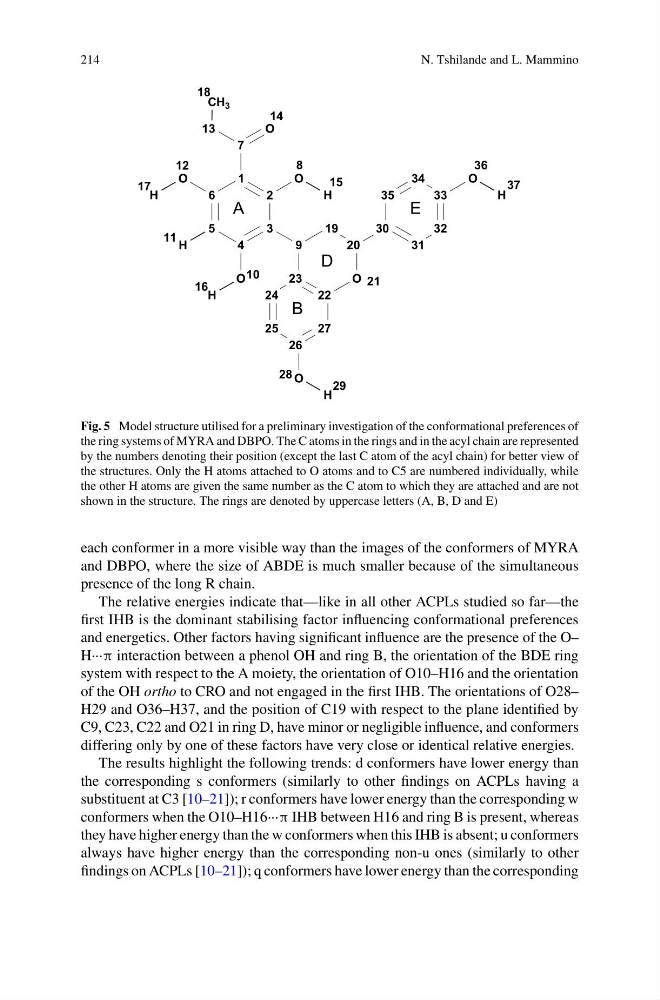
Fig. 5 Model structure utilised for a preliminary investigation of the conformational preferences of
the ring systems of MYRA and DBPO. The C atoms in the rings and in the acyl chain are represented
by the numbers denoting their position (except the last C atom of the acyl chain) for better view of
the structures. Only the H atoms attached to O atoms and to C5 are numbered individually, while
the other H atoms are given the same number as the C atom to which they are attached and are not
shown in the structure. The rings are denoted by uppercase letters (A, B, D and E)
each conformer in a more visible way than the images of the conformers of MYRA
and DBPO, where the size of ABDE is much smaller because of the simultaneous
presence of the long R chain.
The relative energies indicate that—like in all other ACPLs studied so far—the
first IHB is the dominant stabilising factor influencing conformational preferences
and energetics. Other factors having significant influence are the presence of the O–
H···π interaction between a phenol OH and ring B, the orientation of the BDE ring
system with respect to the A moiety, the orientation of O10–H16 and the orientation
of the OH ortho to CRO and not engaged in the first IHB. The orientations of O28–
H29 and O36–H37, and the position of C19 with respect to the plane identified by
C9, C23, C22 and O21 in ring D, have minor or negligible influence, and conformers
differing only by one of these factors have very close or identical relative energies.
The results highlight the following trends: d conformers have lower energy than
the corresponding s conformers (similarly to other findings on ACPLs having a
substituent at C3 [10–21]); r conformers have lower energy than the corresponding w
conformers when the O10–H16···π IHB between H16 and ring B is present, whereas
they have higher energy than the w conformers when this IHB is absent; u conformers
always have higher energy than the corresponding non-u ones (similarly to other
findings on ACPLs [10–21]); q conformers have lower energy than the corresponding
N. Tshilande and L. Mammino
2
1
3
6
4
5
9
23
19
22
20
O
30
31
35
32
34
33
24
25
27
26
O
O
O
O
O
7
O
13
H
H
H
H
H
8
15
10
16
17
H
11
21
28
29
14
37
36
12
A
B
D
E
CH 3
18
Fig. 5 Model structure utilised for a preliminary investigation of the conformational preferences of
the ring systems of MYRA and DBPO. The C atoms in the rings and in the acyl chain are represented
by the numbers denoting their position (except the last C atom of the acyl chain) for better view of
the structures. Only the H atoms attached to O atoms and to C5 are numbered individually, while
the other H atoms are given the same number as the C atom to which they are attached and are not
shown in the structure. The rings are denoted by uppercase letters (A, B, D and E)
each conformer in a more visible way than the images of the conformers of MYRA
and DBPO, where the size of ABDE is much smaller because of the simultaneous
presence of the long R chain.
The relative energies indicate that—like in all other ACPLs studied so far—the
first IHB is the dominant stabilising factor influencing conformational preferences
and energetics. Other factors having significant influence are the presence of the O–
H···π interaction between a phenol OH and ring B, the orientation of the BDE ring
system with respect to the A moiety, the orientation of O10–H16 and the orientation
of the OH ortho to CRO and not engaged in the first IHB. The orientations of O28–
H29 and O36–H37, and the position of C19 with respect to the plane identified by
C9, C23, C22 and O21 in ring D, have minor or negligible influence, and conformers
differing only by one of these factors have very close or identical relative energies.
The results highlight the following trends: d conformers have lower energy than
the corresponding s conformers (similarly to other findings on ACPLs having a
substituent at C3 [10–21]); r conformers have lower energy than the corresponding w
conformers when the O10–H16···π IHB between H16 and ring B is present, whereas
they have higher energy than the w conformers when this IHB is absent; u conformers
always have higher energy than the corresponding non-u ones (similarly to other
findings on ACPLs [10–21]); q conformers have lower energy than the corresponding