

Ab Initio and DFT Computational Study …
207
2
1
3
6
4
5
9
23
19
22
20
O
30
31
35
32
34
33
24
25
27
26
O
O
O
O
O
7
O
13
18
38
39
40
41
42
43
44
45
H
H
H
H
H
H
CH3
36
28
29
16
10
8
15
12
17
11
21
14
37
46
A
B
D
E
2
1
3
6
4
5
9
23
19
22
20
O
30
31
35
32
34
33
24
25
27
26
O
O
O
O
O
7
O
13
18
38
39
40
41
42
43
44
H
H
H
H
H
8
15
10
16
17
H
11
21
28
29
14
37
36
12
A
B
D
E
45
46
47
CH3
48
myristinin
cis-DBPO
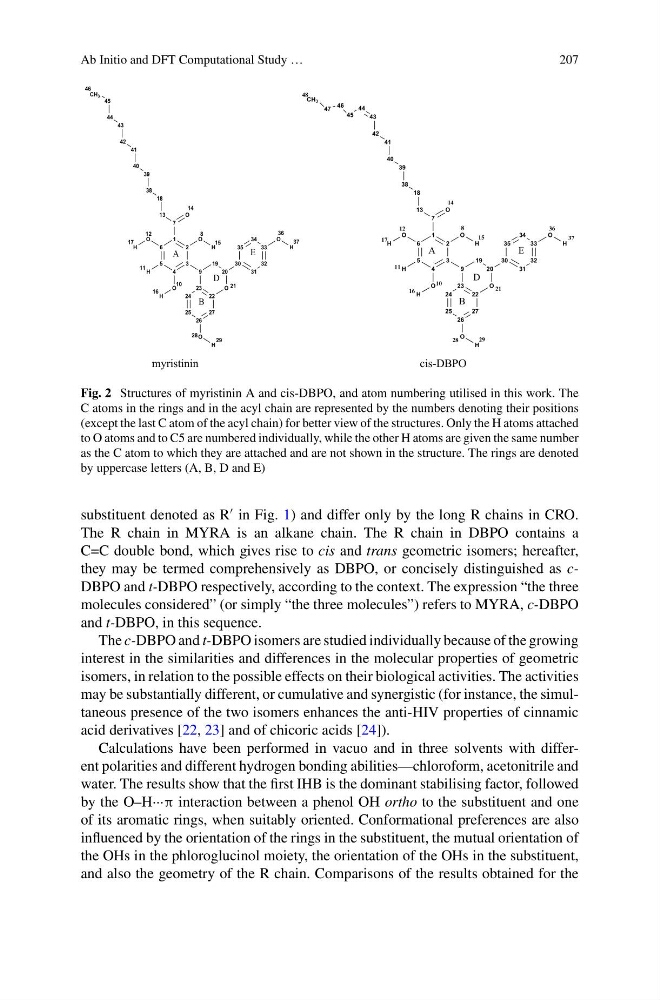
Fig. 2 Structures of myristinin A and cis-DBPO, and atom numbering utilised in this work. The
C atoms in the rings and in the acyl chain are represented by the numbers denoting their positions
(except the last C atom of the acyl chain) for better view of the structures. Only the H atoms attached
to O atoms and to C5 are numbered individually, while the other H atoms are given the same number
as the C atom to which they are attached and are not shown in the structure. The rings are denoted
by uppercase letters (A, B, D and E)
substituent denoted as R
in Fig. 1) and differ only by the long R chains in CRO.
The R chain in MYRA is an alkane chain. The R chain in DBPO contains a
C=C double bond, which gives rise to cis and trans geometric isomers; hereafter,
they may be termed comprehensively as DBPO, or concisely distinguished as cDBPO and t-DBPO respectively, according to the context. The expression “the three
molecules considered” (or simply “the three molecules”) refers to MYRA, c-DBPO
and t-DBPO, in this sequence.
The c-DBPO and t-DBPO isomers are studied individually because of the growing
interest in the similarities and differences in the molecular properties of geometric
isomers, in relation to the possible effects on their biological activities. The activities
may be substantially different, or cumulative and synergistic (for instance, the simultaneous presence of the two isomers enhances the anti-HIV properties of cinnamic
acid derivatives [22, 23] and of chicoric acids [24]).
Calculations have been performed in vacuo and in three solvents with different polarities and different hydrogen bonding abilities—chloroform, acetonitrile and
water. The results show that the first IHB is the dominant stabilising factor, followed
by the O–H···π interaction between a phenol OH ortho to the substituent and one
of its aromatic rings, when suitably oriented. Conformational preferences are also
influenced by the orientation of the rings in the substituent, the mutual orientation of
the OHs in the phloroglucinol moiety, the orientation of the OHs in the substituent,
and also the geometry of the R chain. Comparisons of the results obtained for the
207
2
1
3
6
4
5
9
23
19
22
20
O
30
31
35
32
34
33
24
25
27
26
O
O
O
O
O
7
O
13
18
38
39
40
41
42
43
44
45
H
H
H
H
H
H
CH3
36
28
29
16
10
8
15
12
17
11
21
14
37
46
A
B
D
E
2
1
3
6
4
5
9
23
19
22
20
O
30
31
35
32
34
33
24
25
27
26
O
O
O
O
O
7
O
13
18
38
39
40
41
42
43
44
H
H
H
H
H
8
15
10
16
17
H
11
21
28
29
14
37
36
12
A
B
D
E
45
46
47
CH3
48
myristinin
cis-DBPO
Fig. 2 Structures of myristinin A and cis-DBPO, and atom numbering utilised in this work. The
C atoms in the rings and in the acyl chain are represented by the numbers denoting their positions
(except the last C atom of the acyl chain) for better view of the structures. Only the H atoms attached
to O atoms and to C5 are numbered individually, while the other H atoms are given the same number
as the C atom to which they are attached and are not shown in the structure. The rings are denoted
by uppercase letters (A, B, D and E)
substituent denoted as R
in Fig. 1) and differ only by the long R chains in CRO.
The R chain in MYRA is an alkane chain. The R chain in DBPO contains a
C=C double bond, which gives rise to cis and trans geometric isomers; hereafter,
they may be termed comprehensively as DBPO, or concisely distinguished as cDBPO and t-DBPO respectively, according to the context. The expression “the three
molecules considered” (or simply “the three molecules”) refers to MYRA, c-DBPO
and t-DBPO, in this sequence.
The c-DBPO and t-DBPO isomers are studied individually because of the growing
interest in the similarities and differences in the molecular properties of geometric
isomers, in relation to the possible effects on their biological activities. The activities
may be substantially different, or cumulative and synergistic (for instance, the simultaneous presence of the two isomers enhances the anti-HIV properties of cinnamic
acid derivatives [22, 23] and of chicoric acids [24]).
Calculations have been performed in vacuo and in three solvents with different polarities and different hydrogen bonding abilities—chloroform, acetonitrile and
water. The results show that the first IHB is the dominant stabilising factor, followed
by the O–H···π interaction between a phenol OH ortho to the substituent and one
of its aromatic rings, when suitably oriented. Conformational preferences are also
influenced by the orientation of the rings in the substituent, the mutual orientation of
the OHs in the phloroglucinol moiety, the orientation of the OHs in the substituent,
and also the geometry of the R chain. Comparisons of the results obtained for the