

Complexes of Furonewguinone B with a Cu 2+ Ion. A DFT Study
165
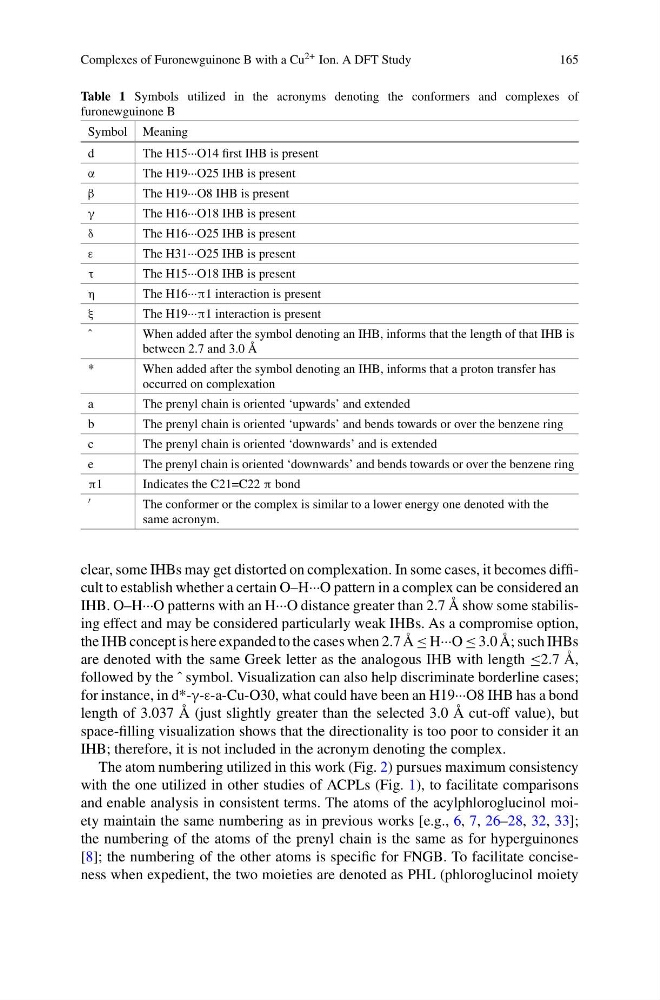
Table 1 Symbols utilized in the acronyms denoting the conformers and complexes of
furonewguinone B
Symbol Meaning
d
The H15···O14 first IHB is present
α
The H19···O25 IHB is present
β
The H19···O8 IHB is present
γ
The H16···O18 IHB is present
δ
The H16···O25 IHB is present
ε
The H31···O25 IHB is present
τ
The H15···O18 IHB is present
η
The H16···π1 interaction is present
ξ
The H19···π1 interaction is present
ˆ
When added after the symbol denoting an IHB, informs that the length of that IHB is
between 2.7 and 3.0 Å
*
When added after the symbol denoting an IHB, informs that a proton transfer has
occurred on complexation
a
The prenyl chain is oriented ‘upwards’ and extended
b
The prenyl chain is oriented ‘upwards’ and bends towards or over the benzene ring
c
The prenyl chain is oriented ‘downwards’ and is extended
e
The prenyl chain is oriented ‘downwards’ and bends towards or over the benzene ring
π1
Indicates the C21=C22 π bond
The conformer or the complex is similar to a lower energy one denoted with the
same acronym.
clear, some IHBs may get distorted on complexation. In some cases, it becomes difficult to establish whether a certain O–H···O pattern in a complex can be considered an
IHB. O–H···O patterns with an H···O distance greater than 2.7 Å show some stabilising effect and may be considered particularly weak IHBs. As a compromise option,
the IHB concept is here expanded to the cases when 2.7 Å ≤ H···O ≤ 3.0 Å; such IHBs
are denoted with the same Greek letter as the analogous IHB with length ≤2.7 Å,
followed by the ˆ symbol. Visualization can also help discriminate borderline cases;
for instance, in d*-γ-ε-a-Cu-O30, what could have been an H19···O8 IHB has a bond
length of 3.037 Å (just slightly greater than the selected 3.0 Å cut-off value), but
space-filling visualization shows that the directionality is too poor to consider it an
IHB; therefore, it is not included in the acronym denoting the complex.
The atom numbering utilized in this work (Fig. 2) pursues maximum consistency
with the one utilized in other studies of ACPLs (Fig. 1), to facilitate comparisons
and enable analysis in consistent terms. The atoms of the acylphloroglucinol moiety maintain the same numbering as in previous works [e.g., 6, 7, 26–28, 32, 33];
the numbering of the atoms of the prenyl chain is the same as for hyperguinones
[8]; the numbering of the other atoms is specific for FNGB. To facilitate conciseness when expedient, the two moieties are denoted as PHL (phloroglucinol moiety
165
Table 1 Symbols utilized in the acronyms denoting the conformers and complexes of
furonewguinone B
Symbol Meaning
d
The H15···O14 first IHB is present
α
The H19···O25 IHB is present
β
The H19···O8 IHB is present
γ
The H16···O18 IHB is present
δ
The H16···O25 IHB is present
ε
The H31···O25 IHB is present
τ
The H15···O18 IHB is present
η
The H16···π1 interaction is present
ξ
The H19···π1 interaction is present
ˆ
When added after the symbol denoting an IHB, informs that the length of that IHB is
between 2.7 and 3.0 Å
*
When added after the symbol denoting an IHB, informs that a proton transfer has
occurred on complexation
a
The prenyl chain is oriented ‘upwards’ and extended
b
The prenyl chain is oriented ‘upwards’ and bends towards or over the benzene ring
c
The prenyl chain is oriented ‘downwards’ and is extended
e
The prenyl chain is oriented ‘downwards’ and bends towards or over the benzene ring
π1
Indicates the C21=C22 π bond
The conformer or the complex is similar to a lower energy one denoted with the
same acronym.
clear, some IHBs may get distorted on complexation. In some cases, it becomes difficult to establish whether a certain O–H···O pattern in a complex can be considered an
IHB. O–H···O patterns with an H···O distance greater than 2.7 Å show some stabilising effect and may be considered particularly weak IHBs. As a compromise option,
the IHB concept is here expanded to the cases when 2.7 Å ≤ H···O ≤ 3.0 Å; such IHBs
are denoted with the same Greek letter as the analogous IHB with length ≤2.7 Å,
followed by the ˆ symbol. Visualization can also help discriminate borderline cases;
for instance, in d*-γ-ε-a-Cu-O30, what could have been an H19···O8 IHB has a bond
length of 3.037 Å (just slightly greater than the selected 3.0 Å cut-off value), but
space-filling visualization shows that the directionality is too poor to consider it an
IHB; therefore, it is not included in the acronym denoting the complex.
The atom numbering utilized in this work (Fig. 2) pursues maximum consistency
with the one utilized in other studies of ACPLs (Fig. 1), to facilitate comparisons
and enable analysis in consistent terms. The atoms of the acylphloroglucinol moiety maintain the same numbering as in previous works [e.g., 6, 7, 26–28, 32, 33];
the numbering of the atoms of the prenyl chain is the same as for hyperguinones
[8]; the numbering of the other atoms is specific for FNGB. To facilitate conciseness when expedient, the two moieties are denoted as PHL (phloroglucinol moiety