

61
marketed in Japan, but information are scarce), are mainly used as complexing agents
to increase the aqueous solubility of poorly water-soluble drugs, to increase their stability and bioavailability. Cyclodextrins are also used to replace organic solvents in
parenteral and topical formulations, to reduce gastrointestinal irritation, and to
increase dermal availability of drugs. Initially, cyclodextrins were mainly used in solid
dosage forms for oral administration, but rapidly, other administration routes were
proposed such as ocular, nasal, parenteral, rectal, or dermal route. For instance,
RAMEB is included in Clorocil
®
eye drop (Oftalder, Portugal) and Aerodiol
®
nasal
spray (Servier, France). Both are non-parenteral, and the latter was withdrawn from
the market because of economic reasons.
Food applications also started to appear in the mid-1970s. Japan authorized the use
of cyclodextrin as a food additive in 1976 (Szejtli 1982a, 1998; Vaution et al. 1987;
Hedges et al. 1995; Hashimoto 1996; Hedges 1998). Powdered flavors, e.g., apple and
citrus fruits; spices, e.g., horseradish wasabi and mustard; and herbs such as peppermint were marketed. Other marketed food products containing cyclodextrins or made
by cyclodextrin-aided technology included chocolate (Choco Bar™), chewing gum
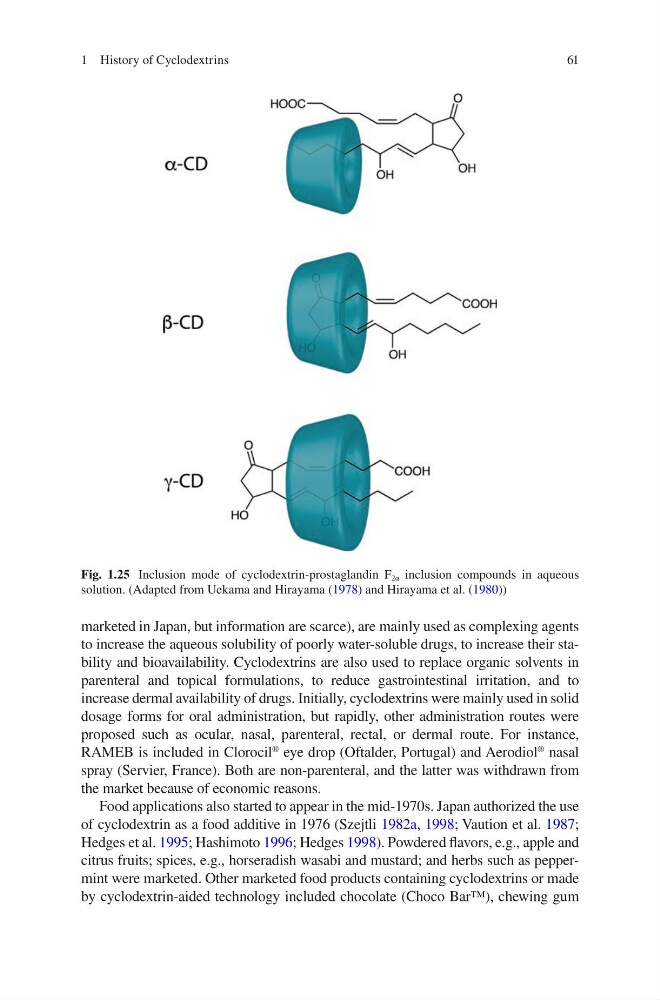
Fig. 1.25 Inclusion mode of cyclodextrin-prostaglandin F 2α inclusion compounds in aqueous
solution. (Adapted from Uekama and Hirayama (1978) and Hirayama et al. (1980))
1 History of Cyclodextrins
marketed in Japan, but information are scarce), are mainly used as complexing agents
to increase the aqueous solubility of poorly water-soluble drugs, to increase their stability and bioavailability. Cyclodextrins are also used to replace organic solvents in
parenteral and topical formulations, to reduce gastrointestinal irritation, and to
increase dermal availability of drugs. Initially, cyclodextrins were mainly used in solid
dosage forms for oral administration, but rapidly, other administration routes were
proposed such as ocular, nasal, parenteral, rectal, or dermal route. For instance,
RAMEB is included in Clorocil
®
eye drop (Oftalder, Portugal) and Aerodiol
®
nasal
spray (Servier, France). Both are non-parenteral, and the latter was withdrawn from
the market because of economic reasons.
Food applications also started to appear in the mid-1970s. Japan authorized the use
of cyclodextrin as a food additive in 1976 (Szejtli 1982a, 1998; Vaution et al. 1987;
Hedges et al. 1995; Hashimoto 1996; Hedges 1998). Powdered flavors, e.g., apple and
citrus fruits; spices, e.g., horseradish wasabi and mustard; and herbs such as peppermint were marketed. Other marketed food products containing cyclodextrins or made
by cyclodextrin-aided technology included chocolate (Choco Bar™), chewing gum
Fig. 1.25 Inclusion mode of cyclodextrin-prostaglandin F 2α inclusion compounds in aqueous
solution. (Adapted from Uekama and Hirayama (1978) and Hirayama et al. (1980))
1 History of Cyclodextrins