

382
treatment step for the detoxification of municipal effluents. Their results clearly
indicated that ECP materials are efficient as non-conventional adsorbents to treat
complex mixtures. Bioassays also confirmed the environmental benefits obtained
after ECP polymer treatment: the decrease in pollutant concentrations in effluents
resulted in a significant reduction of toxicity water. The authors also showed that
both inclusion complex formation of pollutants with cyclodextrin and physisorption
due to the polymer network played a role in the adsorption mechanism. These
chemical and biological results are very encouraging. Now, the industry should be
convinced to use these materials in their wastewater treatment plants as we mentioned in our last review (Morin-Crini et al. 2018a).
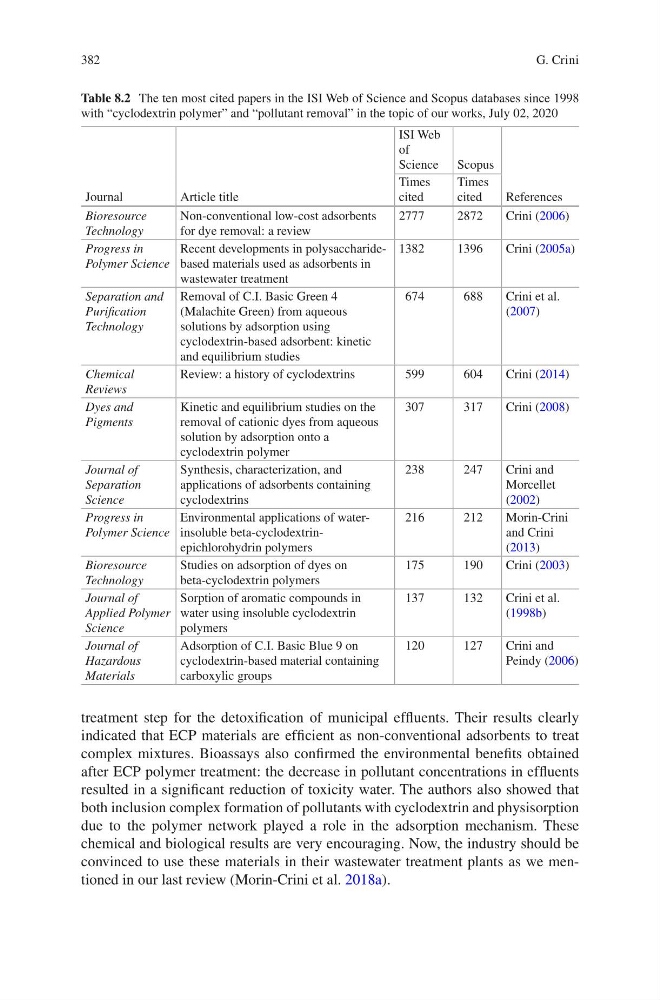
Table 8.2 The ten most cited papers in the ISI Web of Science and Scopus databases since 1998
with “cyclodextrin polymer” and “pollutant removal” in the topic of our works, July 02, 2020
Journal
Article title
ISI Web
of
Science Scopus
References
Times
cited
Times
cited
Bioresource
Technology
Non-conventional low-cost adsorbents
for dye removal: a review
2777
2872
Crini (2006)
Progress in
Polymer Science
Recent developments in polysaccharidebased materials used as adsorbents in
wastewater treatment
1382
1396
Crini (2005a)
Separation and
Purification
Technology
Removal of C.I. Basic Green 4
(Malachite Green) from aqueous
solutions by adsorption using
cyclodextrin-based adsorbent: kinetic
and equilibrium studies
674
688
Crini et al.
(2007)
Chemical
Reviews
Review: a history of cyclodextrins
599
604
Crini (2014)
Dyes and
Pigments
Kinetic and equilibrium studies on the
removal of cationic dyes from aqueous
solution by adsorption onto a
cyclodextrin polymer
307
317
Crini (2008)
Journal of
Separation
Science
Synthesis, characterization, and
applications of adsorbents containing
cyclodextrins
238
247
Crini and
Morcellet
(2002)
Progress in
Polymer Science
Environmental applications of waterinsoluble beta-cyclodextrinepichlorohydrin polymers
216
212
Morin-Crini
and Crini
(2013)
Bioresource
Technology
Studies on adsorption of dyes on
beta-cyclodextrin polymers
175
190
Crini (2003)
Journal of
Applied Polymer
Science
Sorption of aromatic compounds in
water using insoluble cyclodextrin
polymers
137
132
Crini et al.
(1998b)
Journal of
Hazardous
Materials
Adsorption of C.I. Basic Blue 9 on
cyclodextrin-based material containing
carboxylic groups
120
127
Crini and
Peindy (2006)
G. Crini
treatment step for the detoxification of municipal effluents. Their results clearly
indicated that ECP materials are efficient as non-conventional adsorbents to treat
complex mixtures. Bioassays also confirmed the environmental benefits obtained
after ECP polymer treatment: the decrease in pollutant concentrations in effluents
resulted in a significant reduction of toxicity water. The authors also showed that
both inclusion complex formation of pollutants with cyclodextrin and physisorption
due to the polymer network played a role in the adsorption mechanism. These
chemical and biological results are very encouraging. Now, the industry should be
convinced to use these materials in their wastewater treatment plants as we mentioned in our last review (Morin-Crini et al. 2018a).
Table 8.2 The ten most cited papers in the ISI Web of Science and Scopus databases since 1998
with “cyclodextrin polymer” and “pollutant removal” in the topic of our works, July 02, 2020
Journal
Article title
ISI Web
of
Science Scopus
References
Times
cited
Times
cited
Bioresource
Technology
Non-conventional low-cost adsorbents
for dye removal: a review
2777
2872
Crini (2006)
Progress in
Polymer Science
Recent developments in polysaccharidebased materials used as adsorbents in
wastewater treatment
1382
1396
Crini (2005a)
Separation and
Purification
Technology
Removal of C.I. Basic Green 4
(Malachite Green) from aqueous
solutions by adsorption using
cyclodextrin-based adsorbent: kinetic
and equilibrium studies
674
688
Crini et al.
(2007)
Chemical
Reviews
Review: a history of cyclodextrins
599
604
Crini (2014)
Dyes and
Pigments
Kinetic and equilibrium studies on the
removal of cationic dyes from aqueous
solution by adsorption onto a
cyclodextrin polymer
307
317
Crini (2008)
Journal of
Separation
Science
Synthesis, characterization, and
applications of adsorbents containing
cyclodextrins
238
247
Crini and
Morcellet
(2002)
Progress in
Polymer Science
Environmental applications of waterinsoluble beta-cyclodextrinepichlorohydrin polymers
216
212
Morin-Crini
and Crini
(2013)
Bioresource
Technology
Studies on adsorption of dyes on
beta-cyclodextrin polymers
175
190
Crini (2003)
Journal of
Applied Polymer
Science
Sorption of aromatic compounds in
water using insoluble cyclodextrin
polymers
137
132
Crini et al.
(1998b)
Journal of
Hazardous
Materials
Adsorption of C.I. Basic Blue 9 on
cyclodextrin-based material containing
carboxylic groups
120
127
Crini and
Peindy (2006)
G. Crini