

319
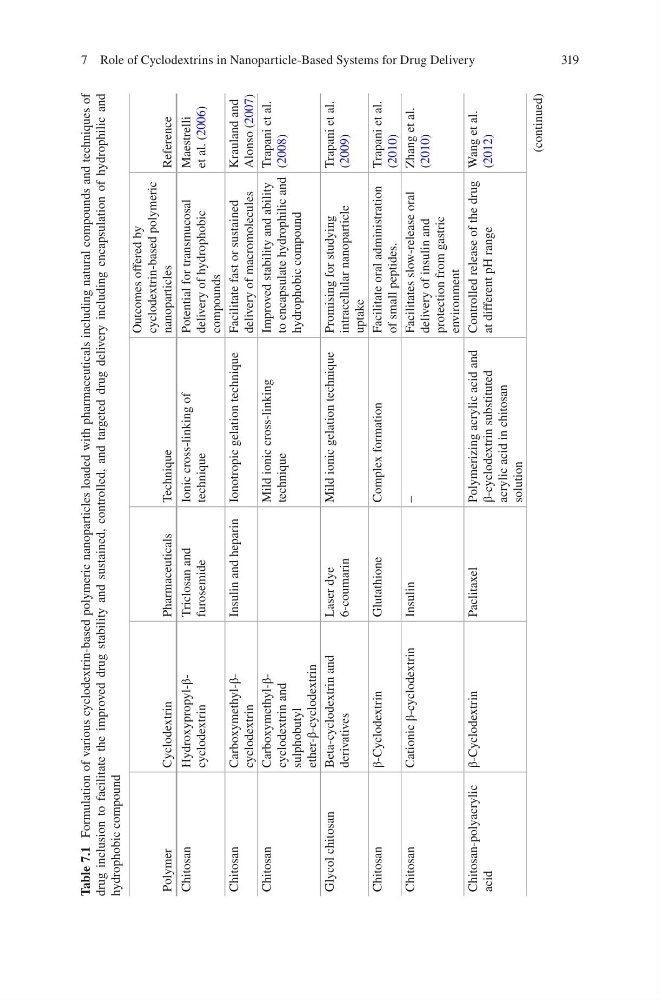
Table 7.1 Formulation of various cyclodextrin-based polymeric nanoparticles loaded with pharmaceuticals including natural compounds and techniques of
drug inclusion to facilitate the improved drug stability and sustained, controlled, and targeted drug delivery including encapsulation of hydrophilic and
hydrophobic compound
Polymer
Cyclodextrin
Pharmaceuticals
Technique
Outcomes offered by
cyclodextrin-based polymeric
nanoparticles
Reference
Chitosan
Hydroxypropyl-βcyclodextrin
Triclosan and
furosemide
Ionic cross-linking of
technique
Potential for transmucosal
delivery of hydrophobic
compounds
Maestrelli
et al. (2006)
Chitosan
Carboxymethyl-βcyclodextrin
Insulin and heparin Ionotropic gelation technique
Facilitate fast or sustained
delivery of macromolecules
Krauland and
Alonso (2007)
Chitosan
Carboxymethyl-βcyclodextrin and
sulphobutyl
ether-β-cyclodextrin
Mild ionic cross-linking
technique
Improved stability and ability
to encapsulate hydrophilic and
hydrophobic compound
Trapani et al.
(2008)
Glycol chitosan
Beta-cyclodextrin and
derivatives
Laser dye
6-coumarin
Mild ionic gelation technique Promising for studying
intracellular nanoparticle
uptake
Trapani et al.
(2009)
Chitosan
β-Cyclodextrin
Glutathione
Complex formation
Facilitate oral administration
of small peptides.
Trapani et al.
(2010)
Chitosan
Cationic
β-cyclodextrin
Insulin
–
Facilitates slow-release oral
delivery of insulin and
protection from gastric
environment
Zhang et al.
(2010)
Chitosan-polyacrylic
acid
β-Cyclodextrin
Paclitaxel
Polymerizing acrylic acid and
β-cyclodextrin substituted
acrylic acid in chitosan
solution
Controlled release of the drug
at different pH range
Wang et al.
(2012)
(continued)
7 Role of Cyclodextrins in Nanoparticle-Based Systems for Drug Delivery
Table 7.1 Formulation of various cyclodextrin-based polymeric nanoparticles loaded with pharmaceuticals including natural compounds and techniques of
drug inclusion to facilitate the improved drug stability and sustained, controlled, and targeted drug delivery including encapsulation of hydrophilic and
hydrophobic compound
Polymer
Cyclodextrin
Pharmaceuticals
Technique
Outcomes offered by
cyclodextrin-based polymeric
nanoparticles
Reference
Chitosan
Hydroxypropyl-βcyclodextrin
Triclosan and
furosemide
Ionic cross-linking of
technique
Potential for transmucosal
delivery of hydrophobic
compounds
Maestrelli
et al. (2006)
Chitosan
Carboxymethyl-βcyclodextrin
Insulin and heparin Ionotropic gelation technique
Facilitate fast or sustained
delivery of macromolecules
Krauland and
Alonso (2007)
Chitosan
Carboxymethyl-βcyclodextrin and
sulphobutyl
ether-β-cyclodextrin
Mild ionic cross-linking
technique
Improved stability and ability
to encapsulate hydrophilic and
hydrophobic compound
Trapani et al.
(2008)
Glycol chitosan
Beta-cyclodextrin and
derivatives
Laser dye
6-coumarin
Mild ionic gelation technique Promising for studying
intracellular nanoparticle
uptake
Trapani et al.
(2009)
Chitosan
β-Cyclodextrin
Glutathione
Complex formation
Facilitate oral administration
of small peptides.
Trapani et al.
(2010)
Chitosan
Cationic
β-cyclodextrin
Insulin
–
Facilitates slow-release oral
delivery of insulin and
protection from gastric
environment
Zhang et al.
(2010)
Chitosan-polyacrylic
acid
β-Cyclodextrin
Paclitaxel
Polymerizing acrylic acid and
β-cyclodextrin substituted
acrylic acid in chitosan
solution
Controlled release of the drug
at different pH range
Wang et al.
(2012)
(continued)
7 Role of Cyclodextrins in Nanoparticle-Based Systems for Drug Delivery