

307
Furthermore, Schardinger performed many experiments with cyclodextrins and was
acknowledged as an originator of cyclodextrin chemistry by experts. In the decade
of 1930, Freudenberg discovered γ-cyclodextrin, and he earned the credit of the first
patent publication, including the first fundamental article on the role of cyclodextrins in drug formulations (Loftsson and Duchêne 2007). Till 1970 to present, cyclodextrin has been recognized as a valuable pharmaceutical excipient in the formulation
development of numerous active pharmaceutical excipients, including novel drug
delivery systems.
Therefore, to fulfill the need of the pharmaceutical industry for purified cyclodextrin, researchers have demonstrated several biotechnological techniques to obtain
purified cyclodextrin products (Kurkov and Loftsson 2013). Literature reveals that
cyclodextrins and their derivatives have been used in conventional and novel drug
delivery systems such as emulsions, microspheres, liposomes, and nanoparticles.
Following this, to overcome the issue of poor water solubility of natural cyclodextrins,
several cyclodextrin derivatives were synthesized with the substitution of hydroxyl
groups. Otherwise, cyclodextrins have been used to enhance the drug loading capacity
of polymeric microspheres. Additionally, novel surface- active cyclodextrin derivatives have also been developed to impart a cutting edge in formulation development
(Bilensoy et al. 2005).
Cyclodextrins and their derivatives have been successfully employed to create
novel nanomaterials. More recently, these products have been incorporated in polymer systems to develop nanoparticles that are suitable in the solubility of the hydrophobic drug. Cyclodextrin conjugated nanoparticles offer numerous advantages
such as enhanced drug solubility, serve as drug carriers to a specific target site such
as cancer cells with minimum toxicity to normal cells, greater surface area over
microparticles, and higher stability over liposomes.
This chapter discusses on cyclodextrin-based nanoparticles to explain their versatility and high potential for advanced drug delivery, protein and peptide delivery,
and gene delivery. It also highlights the role of cyclodextrins in specific types of
nanoparticles such as gold, silver, and magnetic, polymeric, and lipid-based
nanoparticles. Additionally, pharmaceutical applications of amphiphilic cyclodextrin nanoparticles and miscellaneous administration routes of cyclodextrin-based
nanoparticles are also discussed.
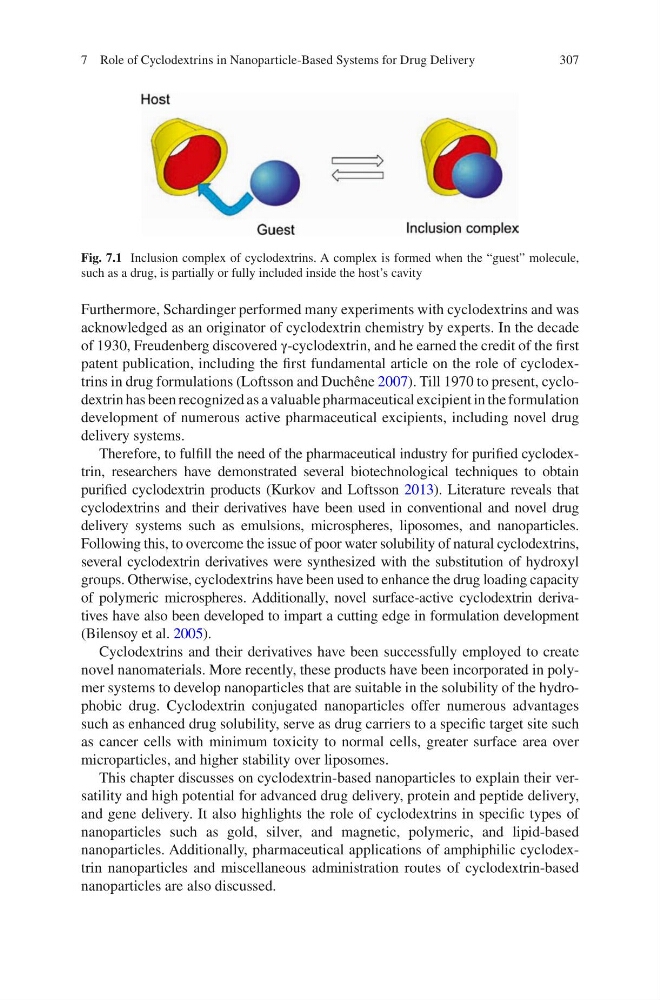
Fig. 7.1 Inclusion complex of cyclodextrins. A complex is formed when the “guest” molecule,
such as a drug, is partially or fully included inside the host’s cavity
7 Role of Cyclodextrins in Nanoparticle-Based Systems for Drug Delivery
Furthermore, Schardinger performed many experiments with cyclodextrins and was
acknowledged as an originator of cyclodextrin chemistry by experts. In the decade
of 1930, Freudenberg discovered γ-cyclodextrin, and he earned the credit of the first
patent publication, including the first fundamental article on the role of cyclodextrins in drug formulations (Loftsson and Duchêne 2007). Till 1970 to present, cyclodextrin has been recognized as a valuable pharmaceutical excipient in the formulation
development of numerous active pharmaceutical excipients, including novel drug
delivery systems.
Therefore, to fulfill the need of the pharmaceutical industry for purified cyclodextrin, researchers have demonstrated several biotechnological techniques to obtain
purified cyclodextrin products (Kurkov and Loftsson 2013). Literature reveals that
cyclodextrins and their derivatives have been used in conventional and novel drug
delivery systems such as emulsions, microspheres, liposomes, and nanoparticles.
Following this, to overcome the issue of poor water solubility of natural cyclodextrins,
several cyclodextrin derivatives were synthesized with the substitution of hydroxyl
groups. Otherwise, cyclodextrins have been used to enhance the drug loading capacity
of polymeric microspheres. Additionally, novel surface- active cyclodextrin derivatives have also been developed to impart a cutting edge in formulation development
(Bilensoy et al. 2005).
Cyclodextrins and their derivatives have been successfully employed to create
novel nanomaterials. More recently, these products have been incorporated in polymer systems to develop nanoparticles that are suitable in the solubility of the hydrophobic drug. Cyclodextrin conjugated nanoparticles offer numerous advantages
such as enhanced drug solubility, serve as drug carriers to a specific target site such
as cancer cells with minimum toxicity to normal cells, greater surface area over
microparticles, and higher stability over liposomes.
This chapter discusses on cyclodextrin-based nanoparticles to explain their versatility and high potential for advanced drug delivery, protein and peptide delivery,
and gene delivery. It also highlights the role of cyclodextrins in specific types of
nanoparticles such as gold, silver, and magnetic, polymeric, and lipid-based
nanoparticles. Additionally, pharmaceutical applications of amphiphilic cyclodextrin nanoparticles and miscellaneous administration routes of cyclodextrin-based
nanoparticles are also discussed.
Fig. 7.1 Inclusion complex of cyclodextrins. A complex is formed when the “guest” molecule,
such as a drug, is partially or fully included inside the host’s cavity
7 Role of Cyclodextrins in Nanoparticle-Based Systems for Drug Delivery