

283
decorated with chains of different nature and lengths. In this case, we have unimeric
cyclodextrins, and the host-guest interactions are not as relevant. Other remarkable
materials involving cyclodextrins and polymers are polyrotaxanes. For such architectures, the threading of the cyclodextrin rings onto the polymer chains and the
subsequent association among these structures yield interesting biomedical applications involving new biomaterials, such as hydrogels and scaffolds in tissue engineering. Although the functionalization of inorganic supports with cyclodextrins
has been known for years and many successful results have been achieved in separation technologies, the studies on the potential applications of polyrotaxanes and
amphiphilic cyclodextrins are more recent.
The first references dealing with the potential use of cyclodextrin-containing
covalent structures as macromolecular carriers date back to the 1980s. Since then,
they have been incorporated into many constructions, such as hydrogels, nanosponges, dendrimers, interpenetrating networks, molecular imprinted polymers, or
electrospinned fibers. In addition, some of these systems have proved to be responsive to stimuli, leading to the design of smart multifunctional biomaterials which
can be triggered by different factors.
6.2 Cyclodextrin Polymers
6.2.1 Historical Perspective of Cyclodextrin Polymers
Following the timeline of the three main classes of cyclodextrin polymers, i.e.,
cross-linked networks, polymerization of cyclodextrin monomers, and grafting, the
starting point belongs to those with covalent cross-linked cyclodextrin units. The
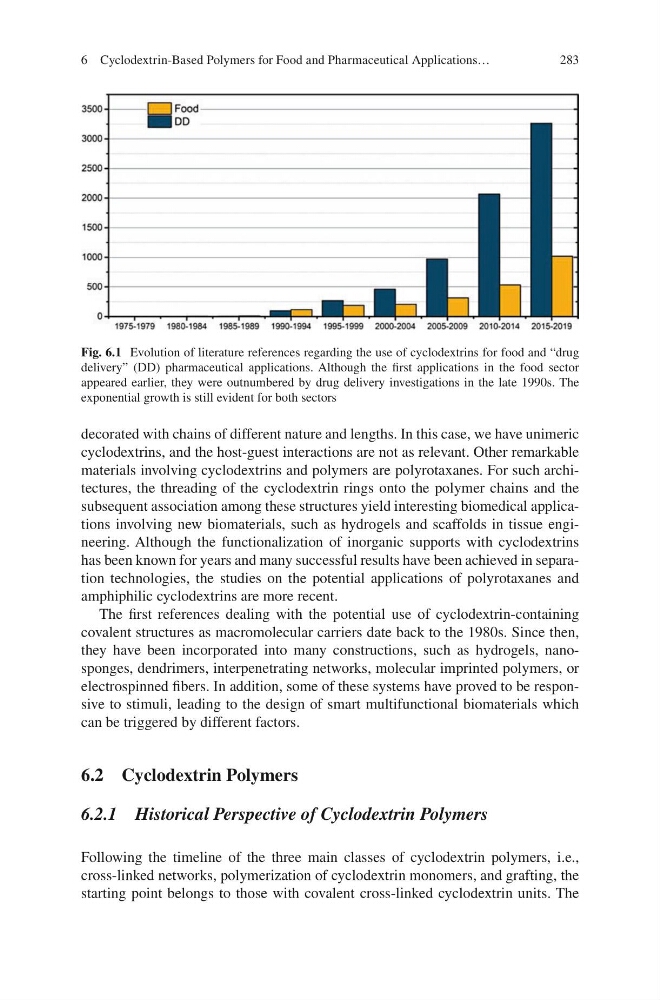
Fig. 6.1 Evolution of literature references regarding the use of cyclodextrins for food and “drug
delivery” (DD) pharmaceutical applications. Although the first applications in the food sector
appeared earlier, they were outnumbered by drug delivery investigations in the late 1990s. The
exponential growth is still evident for both sectors
6 Cyclodextrin-Based Polymers for Food and Pharmaceutical Applications…
decorated with chains of different nature and lengths. In this case, we have unimeric
cyclodextrins, and the host-guest interactions are not as relevant. Other remarkable
materials involving cyclodextrins and polymers are polyrotaxanes. For such architectures, the threading of the cyclodextrin rings onto the polymer chains and the
subsequent association among these structures yield interesting biomedical applications involving new biomaterials, such as hydrogels and scaffolds in tissue engineering. Although the functionalization of inorganic supports with cyclodextrins
has been known for years and many successful results have been achieved in separation technologies, the studies on the potential applications of polyrotaxanes and
amphiphilic cyclodextrins are more recent.
The first references dealing with the potential use of cyclodextrin-containing
covalent structures as macromolecular carriers date back to the 1980s. Since then,
they have been incorporated into many constructions, such as hydrogels, nanosponges, dendrimers, interpenetrating networks, molecular imprinted polymers, or
electrospinned fibers. In addition, some of these systems have proved to be responsive to stimuli, leading to the design of smart multifunctional biomaterials which
can be triggered by different factors.
6.2 Cyclodextrin Polymers
6.2.1 Historical Perspective of Cyclodextrin Polymers
Following the timeline of the three main classes of cyclodextrin polymers, i.e.,
cross-linked networks, polymerization of cyclodextrin monomers, and grafting, the
starting point belongs to those with covalent cross-linked cyclodextrin units. The
Fig. 6.1 Evolution of literature references regarding the use of cyclodextrins for food and “drug
delivery” (DD) pharmaceutical applications. Although the first applications in the food sector
appeared earlier, they were outnumbered by drug delivery investigations in the late 1990s. The
exponential growth is still evident for both sectors
6 Cyclodextrin-Based Polymers for Food and Pharmaceutical Applications…