

228
Nanoparticles Stabilized by Thiolated Cyclodextrins
Alvarez et al. (2000) reported the use of thiolated cyclodextrins for the stabilization
of platinum and palladium nanoparticles in water for the catalytic hydrogenation of
allylamine. More precisely, solutions of MCl 4
2−
(M = Pt or Pd) sodium salts in a
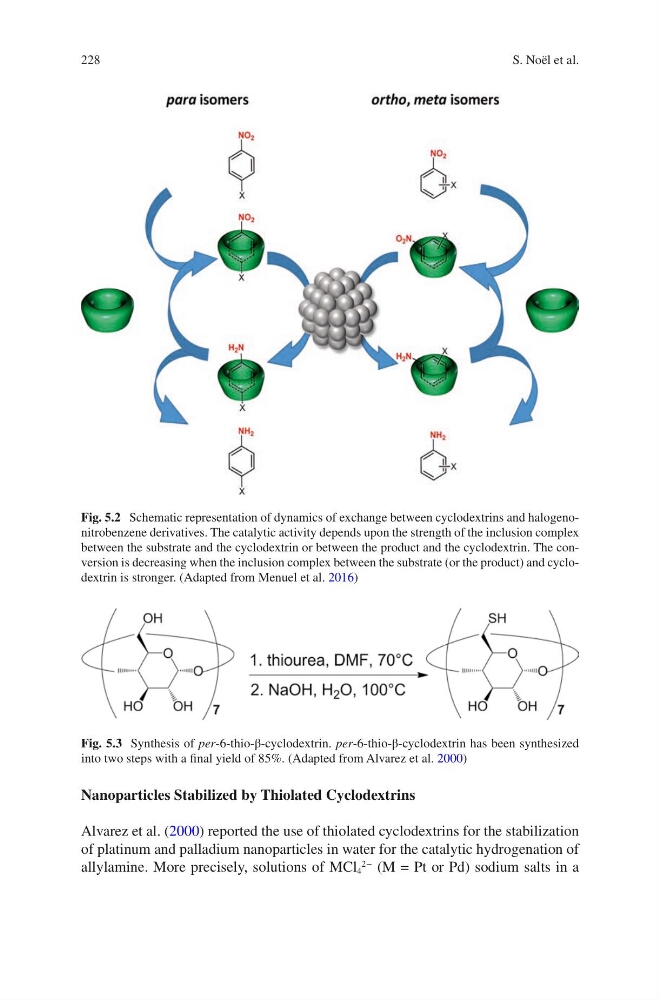
Fig. 5.2 Schematic representation of dynamics of exchange between cyclodextrins and halogenonitrobenzene derivatives. The catalytic activity depends upon the strength of the inclusion complex
between the substrate and the cyclodextrin or between the product and the cyclodextrin. The conversion is decreasing when the inclusion complex between the substrate (or the product) and cyclodextrin is stronger. (Adapted from Menuel et al. 2016)
Fig. 5.3 Synthesis of per-6-thio-β-cyclodextrin. per-6-thio-β-cyclodextrin has been synthesized
into two steps with a final yield of 85%. (Adapted from Alvarez et al. 2000)
S. Noël et al.
Nanoparticles Stabilized by Thiolated Cyclodextrins
Alvarez et al. (2000) reported the use of thiolated cyclodextrins for the stabilization
of platinum and palladium nanoparticles in water for the catalytic hydrogenation of
allylamine. More precisely, solutions of MCl 4
2−
(M = Pt or Pd) sodium salts in a
Fig. 5.2 Schematic representation of dynamics of exchange between cyclodextrins and halogenonitrobenzene derivatives. The catalytic activity depends upon the strength of the inclusion complex
between the substrate and the cyclodextrin or between the product and the cyclodextrin. The conversion is decreasing when the inclusion complex between the substrate (or the product) and cyclodextrin is stronger. (Adapted from Menuel et al. 2016)
Fig. 5.3 Synthesis of per-6-thio-β-cyclodextrin. per-6-thio-β-cyclodextrin has been synthesized
into two steps with a final yield of 85%. (Adapted from Alvarez et al. 2000)
S. Noël et al.