

206
mobile phase showed a hypsochromic shift due to cyclodextrin complexing (Vikmon
1982). With 550 nm detection wavelength setting, area of individual negative peaks
existing in resulted chromatograms was directly proportional to the concentration of
each cyclodextrin constituent of the sample.
4.2.5 Production of Cyclodextrin Derivatives
In the second half of the 1970s, it has been already recognized that beta- cyclodextrin
having limited aqueous solubility cannot be used for parenteral applications because
it forms insoluble complexes with lipids such as cholesterol resulting in renal toxicity. Therefore, a cyclodextrin derivative of high solubility was needed.
2-Hydroxypropyl-beta-cyclodextrin seemed to be the best candidate for this purpose. On the other hand, a cyclodextrin derivative not soluble at all was also required
for certain applications. This was the cross-linked cyclodextrin polymer with
extremely high molecular weight, swelling in a large extent in water and preserving
the molecular inclusion capabilities. The experimental production of these two
cyclodextrin derivatives was started in Chinoin.
2-Hydroxypropyl-Beta-Cyclodextrin
Between the 1970s and 1980s, cyclodextrin technologists were looking for the right
type of cyclodextrin to fulfill the broken promise of parent beta-cyclodextrin due to
its poor solubility in water, for utilizing it in pharmaceutical products. Chemical
modifications were undertaken to improve aqueous solubility of parent betacyclodextrin, an improvement that was recognized to result in disruption of the
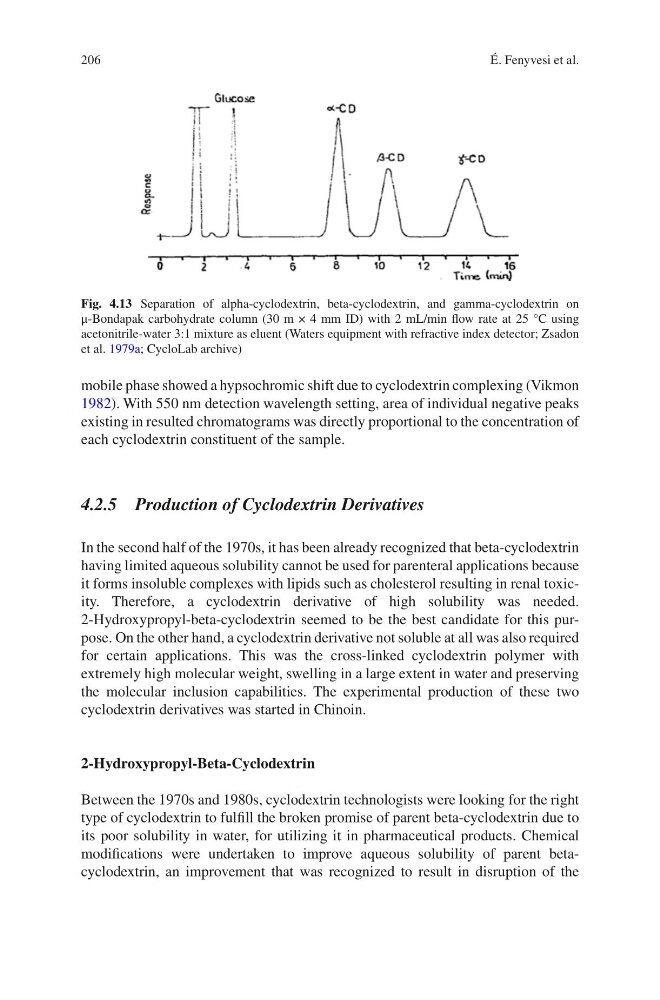
Fig. 4.13 Separation of alpha-cyclodextrin, beta-cyclodextrin, and gamma-cyclodextrin on
μ-Bondapak carbohydrate column (30 m × 4 mm ID) with 2 mL/min flow rate at 25 °C using
acetonitrile- water 3:1 mixture as eluent (Waters equipment with refractive index detector; Zsadon
et al. 1979a; CycloLab archive)
É. Fenyvesi et al.
mobile phase showed a hypsochromic shift due to cyclodextrin complexing (Vikmon
1982). With 550 nm detection wavelength setting, area of individual negative peaks
existing in resulted chromatograms was directly proportional to the concentration of
each cyclodextrin constituent of the sample.
4.2.5 Production of Cyclodextrin Derivatives
In the second half of the 1970s, it has been already recognized that beta- cyclodextrin
having limited aqueous solubility cannot be used for parenteral applications because
it forms insoluble complexes with lipids such as cholesterol resulting in renal toxicity. Therefore, a cyclodextrin derivative of high solubility was needed.
2-Hydroxypropyl-beta-cyclodextrin seemed to be the best candidate for this purpose. On the other hand, a cyclodextrin derivative not soluble at all was also required
for certain applications. This was the cross-linked cyclodextrin polymer with
extremely high molecular weight, swelling in a large extent in water and preserving
the molecular inclusion capabilities. The experimental production of these two
cyclodextrin derivatives was started in Chinoin.
2-Hydroxypropyl-Beta-Cyclodextrin
Between the 1970s and 1980s, cyclodextrin technologists were looking for the right
type of cyclodextrin to fulfill the broken promise of parent beta-cyclodextrin due to
its poor solubility in water, for utilizing it in pharmaceutical products. Chemical
modifications were undertaken to improve aqueous solubility of parent betacyclodextrin, an improvement that was recognized to result in disruption of the
Fig. 4.13 Separation of alpha-cyclodextrin, beta-cyclodextrin, and gamma-cyclodextrin on
μ-Bondapak carbohydrate column (30 m × 4 mm ID) with 2 mL/min flow rate at 25 °C using
acetonitrile- water 3:1 mixture as eluent (Waters equipment with refractive index detector; Zsadon
et al. 1979a; CycloLab archive)
É. Fenyvesi et al.