

133
racemic mixture of (+) and (−) enantiomers of vincadifformine on a β-cyclodextrinpolymer column (5 × 90 cm, pH 5.5, flow rate 300 mL/h, 25 °C) in one run. The
relative retention volumes were 1.9–2.1 for the (+) enantiomer and 2.2–2.4 for (−)
enantiomer (Szejtli 1985a, 1987e).
Later, insoluble β-cyclodextrin polymer was used as thin-layer chromatographic
adsorbent, and the method was a very simple tool used to separate a wide variety of
compounds with similar chemical structure (Cserháti et al. 1995). Table 2.6 summarized the known possibilities of the applications of cyclodextrins in chromatographic methods according to Professor Szejtli, “which did not implicate that no
further combinations will be exploited in the future” (Szejtli 1987a, e).
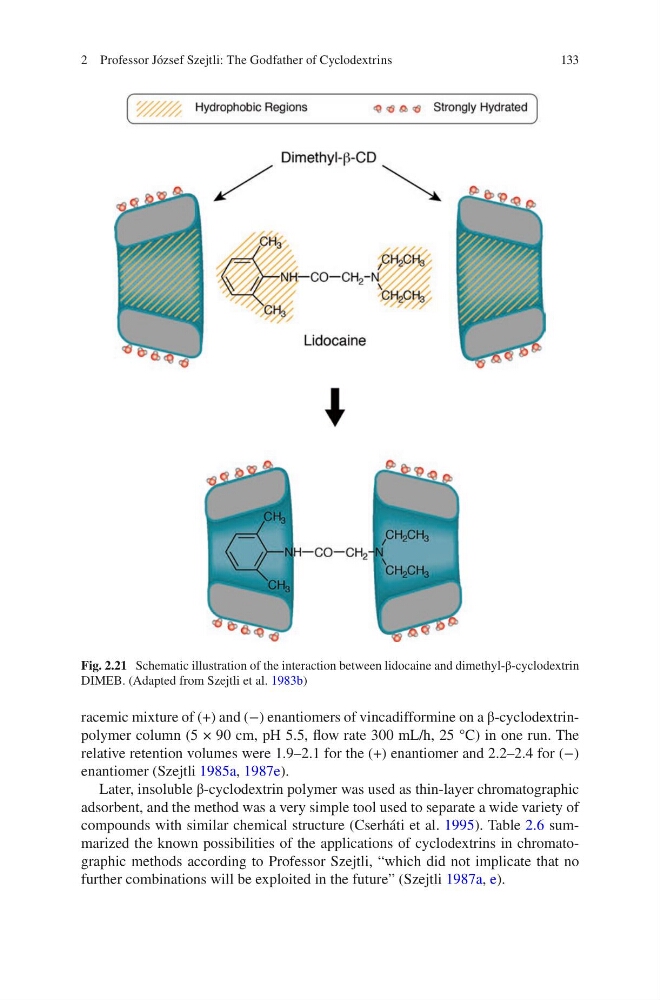
Fig. 2.21 Schematic illustration of the interaction between lidocaine and dimethyl-β-cyclodextrin
DIMEB. (Adapted from Szejtli et al. 1983b)
2 Professor József Szejtli: The Godfather of Cyclodextrins
racemic mixture of (+) and (−) enantiomers of vincadifformine on a β-cyclodextrinpolymer column (5 × 90 cm, pH 5.5, flow rate 300 mL/h, 25 °C) in one run. The
relative retention volumes were 1.9–2.1 for the (+) enantiomer and 2.2–2.4 for (−)
enantiomer (Szejtli 1985a, 1987e).
Later, insoluble β-cyclodextrin polymer was used as thin-layer chromatographic
adsorbent, and the method was a very simple tool used to separate a wide variety of
compounds with similar chemical structure (Cserháti et al. 1995). Table 2.6 summarized the known possibilities of the applications of cyclodextrins in chromatographic methods according to Professor Szejtli, “which did not implicate that no
further combinations will be exploited in the future” (Szejtli 1987a, e).
Fig. 2.21 Schematic illustration of the interaction between lidocaine and dimethyl-β-cyclodextrin
DIMEB. (Adapted from Szejtli et al. 1983b)
2 Professor József Szejtli: The Godfather of Cyclodextrins