

130
at Detmold (Germany, April 21–23, 1982). During this lecture, Professor Szejtli
demonstrated that “cyclodextrins can be utilized for molecular encapsulation of flavors and fragrances and for water retention improving homogeneous pure active
substances.”
The main advantages of cyclodextrin complexation in cosmetics and toiletry
were the protection of active ingredients, e.g., against oxidation, hydrolysis, or loss
by evaporation, the solubilization of the guest substances in water, e.g., increase of
the rate of solubilization or avoid the use of organic solvents, the elimination or at
least reduction of undesired tastes and odors, the protection against microbial contaminations, and the improvement of handling, e.g., of liquid or oily substances as
powders (Szejtli 1982c). In contrast to starch, cyclodextrins were not a nutrient
medium for microorganisms. In this paper, Professor Szejtli also suggested that
cyclodextrin polymers can be utilized in smoke filters (Szejtli 1982c).
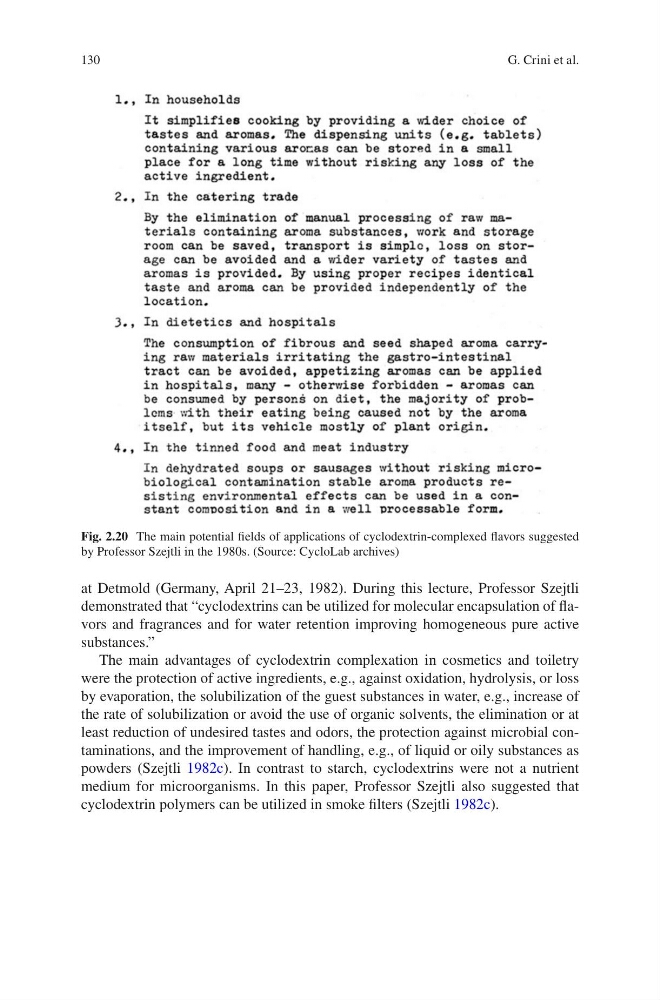
Fig. 2.20 The main potential fields of applications of cyclodextrin-complexed flavors suggested
by Professor Szejtli in the 1980s. (Source: CycloLab archives)
G. Crini et al.
at Detmold (Germany, April 21–23, 1982). During this lecture, Professor Szejtli
demonstrated that “cyclodextrins can be utilized for molecular encapsulation of flavors and fragrances and for water retention improving homogeneous pure active
substances.”
The main advantages of cyclodextrin complexation in cosmetics and toiletry
were the protection of active ingredients, e.g., against oxidation, hydrolysis, or loss
by evaporation, the solubilization of the guest substances in water, e.g., increase of
the rate of solubilization or avoid the use of organic solvents, the elimination or at
least reduction of undesired tastes and odors, the protection against microbial contaminations, and the improvement of handling, e.g., of liquid or oily substances as
powders (Szejtli 1982c). In contrast to starch, cyclodextrins were not a nutrient
medium for microorganisms. In this paper, Professor Szejtli also suggested that
cyclodextrin polymers can be utilized in smoke filters (Szejtli 1982c).
Fig. 2.20 The main potential fields of applications of cyclodextrin-complexed flavors suggested
by Professor Szejtli in the 1980s. (Source: CycloLab archives)
G. Crini et al.