

107
2.2.6 Awards and Distinctions
Professor Szejtli was a member of various academic committees and organizing
boards of symposia, e.g., Cyclodextrin Symposia, Symposia on Molecular
Recognition. He has received a D.Sc. degree by the Hungarian Academy of Science
(1976) and has been Professor since 1980 at Kossuth L. University, Debrecen
(Szente 1994). Professor Szejtli received many distinctions for his cyclodextrin
research, e.g., Academic Award of Budapest (1986), Gold Medal of the Incheba of
Brastislava (1988), the Moët-Hennessy Prize of Paris (1991), and the Széchenyi
Prize (Budapest, 2003).
2.2.7 Szejtli Prize
At the 80th anniversary of his birth, in 2013, CycloLab established the Szejtli Prize
(Fig. 2.6) to preserve his legacy, keep his memory alive, and recognize his groundbreaking achievements in the area of cyclodextrin research, development, and commercialization of related technologies. This prize aimed to award young researchers
demonstrating outstanding results in the cyclodextrin science and technology. It is
presented biennially during the International Cyclodextrin Symposium.
The first award was assigned in 2014 to Professor Keiichi Motoyama, Kumamoto
University, Japan, in Saarbrücken, at the 17th International Cyclodextrin Symposium
for his works in the design of new active pharmaceutical ingredients as anticancer
agents. The winner of Szejtli Prize 2016 was Professor Tamer Uyar, Bilkent
University, Turkey, for his studies on electrospinning of functional nanofibers with
cyclodextrins. In 2018, Dr. Nicolas Blanchemain, University of Lille, France,
received the award for his works in the applications of cyclodextrins in biomedicine.
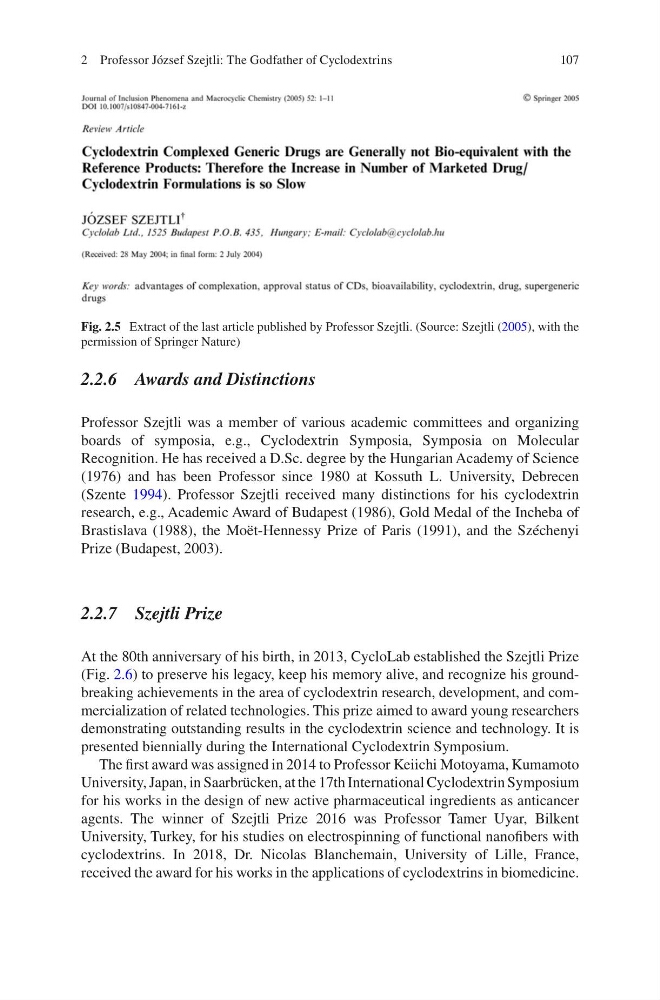
Fig. 2.5 Extract of the last article published by Professor Szejtli. (Source: Szejtli (2005), with the
permission of Springer Nature)
2 Professor József Szejtli: The Godfather of Cyclodextrins
2.2.6 Awards and Distinctions
Professor Szejtli was a member of various academic committees and organizing
boards of symposia, e.g., Cyclodextrin Symposia, Symposia on Molecular
Recognition. He has received a D.Sc. degree by the Hungarian Academy of Science
(1976) and has been Professor since 1980 at Kossuth L. University, Debrecen
(Szente 1994). Professor Szejtli received many distinctions for his cyclodextrin
research, e.g., Academic Award of Budapest (1986), Gold Medal of the Incheba of
Brastislava (1988), the Moët-Hennessy Prize of Paris (1991), and the Széchenyi
Prize (Budapest, 2003).
2.2.7 Szejtli Prize
At the 80th anniversary of his birth, in 2013, CycloLab established the Szejtli Prize
(Fig. 2.6) to preserve his legacy, keep his memory alive, and recognize his groundbreaking achievements in the area of cyclodextrin research, development, and commercialization of related technologies. This prize aimed to award young researchers
demonstrating outstanding results in the cyclodextrin science and technology. It is
presented biennially during the International Cyclodextrin Symposium.
The first award was assigned in 2014 to Professor Keiichi Motoyama, Kumamoto
University, Japan, in Saarbrücken, at the 17th International Cyclodextrin Symposium
for his works in the design of new active pharmaceutical ingredients as anticancer
agents. The winner of Szejtli Prize 2016 was Professor Tamer Uyar, Bilkent
University, Turkey, for his studies on electrospinning of functional nanofibers with
cyclodextrins. In 2018, Dr. Nicolas Blanchemain, University of Lille, France,
received the award for his works in the applications of cyclodextrins in biomedicine.
Fig. 2.5 Extract of the last article published by Professor Szejtli. (Source: Szejtli (2005), with the
permission of Springer Nature)
2 Professor József Szejtli: The Godfather of Cyclodextrins