

36
Sensemaking in Safety Critical and Complex Situations
installation, e.g. by considering the presence of hazards and conditions which may
deteriorate barrier performance. This forms the installations safety ( barrier) strategy;
the results from a process that, based on the risk picture, describes what barrier functions and barrier elements shall be ( or have been) implemented in order to reduce risk
( PSA, 2013). For operational barrier elements this translates into ensuring that the
Performance
shaping
factors
Hazard
Barrier function
Accident
Technical barrier
element
Operational
barrier element
Organisational
barrier element
Losses in terms of:
- Environmental release
- Injuries & fatalities
- Damage to, or
destruction of asset
- Reputation
- Etc.
Conditions or events
involving:
- Flammables
- Kinetic energy
- Electricity
- Gravity
- Chemical agents
- Etc.
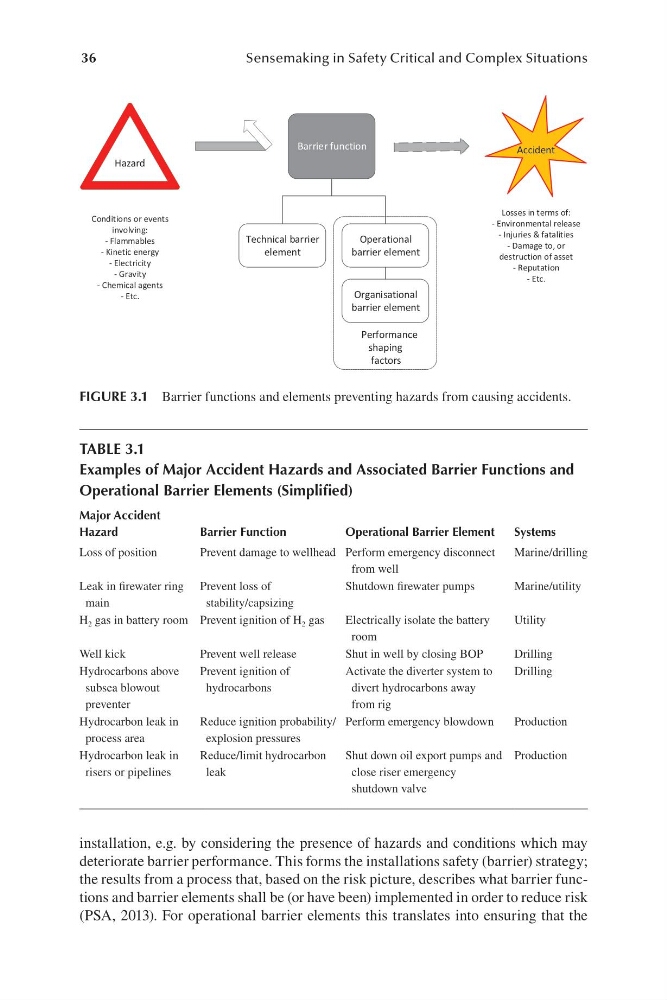
FIGURE 3.1 Barrier functions and elements preventing hazards from causing accidents.
TABLE 3.1
Examples of Major Accident Hazards and Associated Barrier Functions and
Operational Barrier Elements ( Simplified)
Major Accident
Hazard
Barrier Function
Operational Barrier Element
Systems
Loss of position
Prevent damage to wellhead Perform emergency disconnect
Marine/drilling
from well
Leak in firewater ring Prevent loss of
Shutdown firewater pumps
Marine/utility
main
stability/capsizing
H 2 gas in battery room Prevent ignition of H 2 gas
Electrically isolate the battery
Utility
room
Well kick
Prevent well release
Shut in well by closing BOP
Drilling
Hydrocarbons above
Prevent ignition of
Activate the diverter system to
Drilling
subsea blowout
hydrocarbons
divert hydrocarbons away
preventer
from rig
Hydrocarbon leak in
Reduce ignition probability/ Perform emergency blowdown
Production
process area
explosion pressures
Hydrocarbon leak in
Reduce/limit hydrocarbon
Shut down oil export pumps and Production
risers or pipelines
leak
close riser emergency
shutdown valve
Sensemaking in Safety Critical and Complex Situations
installation, e.g. by considering the presence of hazards and conditions which may
deteriorate barrier performance. This forms the installations safety ( barrier) strategy;
the results from a process that, based on the risk picture, describes what barrier functions and barrier elements shall be ( or have been) implemented in order to reduce risk
( PSA, 2013). For operational barrier elements this translates into ensuring that the
Performance
shaping
factors
Hazard
Barrier function
Accident
Technical barrier
element
Operational
barrier element
Organisational
barrier element
Losses in terms of:
- Environmental release
- Injuries & fatalities
- Damage to, or
destruction of asset
- Reputation
- Etc.
Conditions or events
involving:
- Flammables
- Kinetic energy
- Electricity
- Gravity
- Chemical agents
- Etc.
FIGURE 3.1 Barrier functions and elements preventing hazards from causing accidents.
TABLE 3.1
Examples of Major Accident Hazards and Associated Barrier Functions and
Operational Barrier Elements ( Simplified)
Major Accident
Hazard
Barrier Function
Operational Barrier Element
Systems
Loss of position
Prevent damage to wellhead Perform emergency disconnect
Marine/drilling
from well
Leak in firewater ring Prevent loss of
Shutdown firewater pumps
Marine/utility
main
stability/capsizing
H 2 gas in battery room Prevent ignition of H 2 gas
Electrically isolate the battery
Utility
room
Well kick
Prevent well release
Shut in well by closing BOP
Drilling
Hydrocarbons above
Prevent ignition of
Activate the diverter system to
Drilling
subsea blowout
hydrocarbons
divert hydrocarbons away
preventer
from rig
Hydrocarbon leak in
Reduce ignition probability/ Perform emergency blowdown
Production
process area
explosion pressures
Hydrocarbon leak in
Reduce/limit hydrocarbon
Shut down oil export pumps and Production
risers or pipelines
leak
close riser emergency
shutdown valve