

251
HMI Measures for Improved Sensemaking
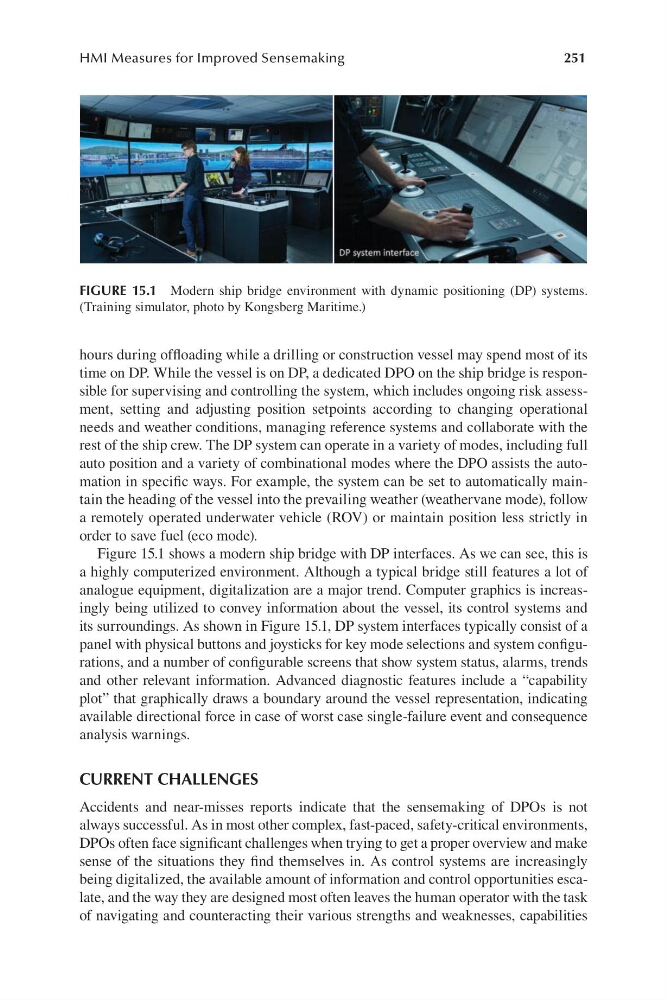
FIGURE 15.1 Modern ship bridge environment with dynamic positioning (D P) systems.
( Training simulator, photo by Kongsberg Maritime.)
hours during offloading while a drilling or construction vessel may spend most of its
time on DP. While the vessel is on DP, a dedicated DPO on the ship bridge is responsible for supervising and controlling the system, which includes ongoing risk assessment, setting and adjusting position setpoints according to changing operational
needs and weather conditions, managing reference systems and collaborate with the
rest of the ship crew. The DP system can operate in a variety of modes, including full
auto position and a variety of combinational modes where the DPO assists the automation in specific ways. For example, the system can be set to automatically maintain the heading of the vessel into the prevailing weather ( weathervane mode), follow
a remotely operated underwater vehicle ( ROV) or maintain position less strictly in
order to save fuel (e co mode).
Figure 15.1 shows a modern ship bridge with DP interfaces. As we can see, this is
a highly computerized environment. Although a typical bridge still features a lot of
analogue equipment, digitalization are a major trend. Computer graphics is increasingly being utilized to convey information about the vessel, its control systems and
its surroundings. As shown in F igure 15.1, DP system interfaces typically consist of a
panel with physical buttons and joysticks for key mode selections and system configurations, and a number of configurable screens that show system status, alarms, trends
and other relevant information. Advanced diagnostic features include a “ capability
plot” that graphically draws a boundary around the vessel representation, indicating
available directional force in case of worst case single-failure event and consequence
analysis warnings.
CURRENT CHALLENGES
Accidents and near-misses reports indicate that the sensemaking of DPOs is not
always successful. As in most other complex, f ast-paced, safety-critical environments,
DPOs often face significant challenges when trying to get a proper overview and make
sense of the situations they find themselves in. As control systems are increasingly
being digitalized, the available amount of information and control opportunities escalate, and the way they are designed most often leaves the human operator with the task
of navigating and counteracting their various strengths and weaknesses, capabilities
HMI Measures for Improved Sensemaking
FIGURE 15.1 Modern ship bridge environment with dynamic positioning (D P) systems.
( Training simulator, photo by Kongsberg Maritime.)
hours during offloading while a drilling or construction vessel may spend most of its
time on DP. While the vessel is on DP, a dedicated DPO on the ship bridge is responsible for supervising and controlling the system, which includes ongoing risk assessment, setting and adjusting position setpoints according to changing operational
needs and weather conditions, managing reference systems and collaborate with the
rest of the ship crew. The DP system can operate in a variety of modes, including full
auto position and a variety of combinational modes where the DPO assists the automation in specific ways. For example, the system can be set to automatically maintain the heading of the vessel into the prevailing weather ( weathervane mode), follow
a remotely operated underwater vehicle ( ROV) or maintain position less strictly in
order to save fuel (e co mode).
Figure 15.1 shows a modern ship bridge with DP interfaces. As we can see, this is
a highly computerized environment. Although a typical bridge still features a lot of
analogue equipment, digitalization are a major trend. Computer graphics is increasingly being utilized to convey information about the vessel, its control systems and
its surroundings. As shown in F igure 15.1, DP system interfaces typically consist of a
panel with physical buttons and joysticks for key mode selections and system configurations, and a number of configurable screens that show system status, alarms, trends
and other relevant information. Advanced diagnostic features include a “ capability
plot” that graphically draws a boundary around the vessel representation, indicating
available directional force in case of worst case single-failure event and consequence
analysis warnings.
CURRENT CHALLENGES
Accidents and near-misses reports indicate that the sensemaking of DPOs is not
always successful. As in most other complex, f ast-paced, safety-critical environments,
DPOs often face significant challenges when trying to get a proper overview and make
sense of the situations they find themselves in. As control systems are increasingly
being digitalized, the available amount of information and control opportunities escalate, and the way they are designed most often leaves the human operator with the task
of navigating and counteracting their various strengths and weaknesses, capabilities