

219
Application of Sensemaking
Goals
Constraints
Characteristics
Situation
Roles & Responsibilities
Define
Frame (DF)
Use Anchors to Elicit Frame
Use Context to Elicit Frame
Define Conditions
Seek
Frame
(SF)
Seek Data
Draw Inference/Conclusion
Fill Slots to Frame
Add Slots to Frame
Combine Frames
Use Existing Knowledge
Confirm &
Elaborate
Frame (CEF)
Explain
Refine Data
Minimize Irrelevant Data
Preserve
Frame
(PF)
Data Quality
Test Frame
Violated Expectancy
Question
Frame
(QF)
Identify Alternative Frames
Evaluate Alternative Frames
Compare
Frame
(CF)
Establish New Anchors
Recover Discarded Data
Re-interpret Data
Revise Goals
Reframe
(RF)
Sensemaking: Data/Frame Model
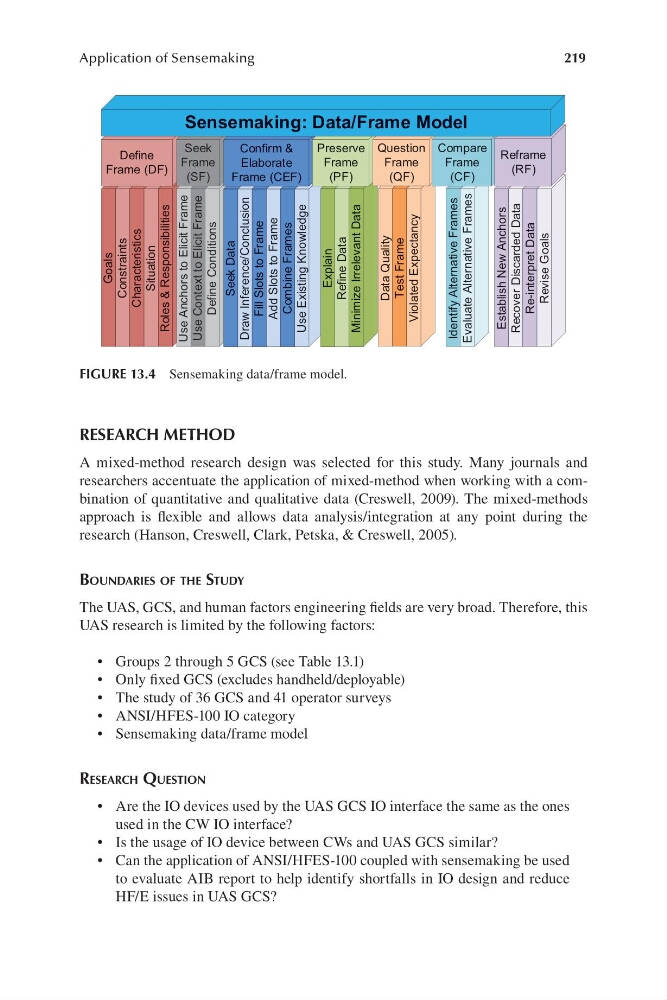
FIGURE 13.4 Sensemaking data/ frame model.
RESEARCH METHOD
A m ixed-method research design was selected for this study. Many journals and
researchers accentuate the application of mixed-method when working with a combination of quantitative and qualitative data (C reswell, 2009). The m ixed-methods
approach is flexible and allows data analysis/i ntegration at any point during the
research (H anson, Creswell, Clark, Petska, & Creswell, 2005).
bounDarieS of the StuDy
The UAS, GCS, and human factors engineering fields are very broad. Therefore, this
UAS research is limited by the following factors:
• Groups 2 through 5 GCS ( see Table 13.1)
• Only fixed GCS ( excludes handheld/ deployable)
• The study of 36 GCS and 41 operator surveys
• ANSI/HFES-100 IO category
• Sensemaking data/f rame model
reSearch queStion
• Are the IO devices used by the UAS GCS IO interface the same as the ones
used in the CW IO interface?
• Is the usage of IO device between CWs and UAS GCS similar?
• Can the application of ANSI/ HFES-100 coupled with sensemaking be used
to evaluate AIB report to help identify shortfalls in IO design and reduce
HF/ E issues in UAS GCS?
Application of Sensemaking
Goals
Constraints
Characteristics
Situation
Roles & Responsibilities
Define
Frame (DF)
Use Anchors to Elicit Frame
Use Context to Elicit Frame
Define Conditions
Seek
Frame
(SF)
Seek Data
Draw Inference/Conclusion
Fill Slots to Frame
Add Slots to Frame
Combine Frames
Use Existing Knowledge
Confirm &
Elaborate
Frame (CEF)
Explain
Refine Data
Minimize Irrelevant Data
Preserve
Frame
(PF)
Data Quality
Test Frame
Violated Expectancy
Question
Frame
(QF)
Identify Alternative Frames
Evaluate Alternative Frames
Compare
Frame
(CF)
Establish New Anchors
Recover Discarded Data
Re-interpret Data
Revise Goals
Reframe
(RF)
Sensemaking: Data/Frame Model
FIGURE 13.4 Sensemaking data/ frame model.
RESEARCH METHOD
A m ixed-method research design was selected for this study. Many journals and
researchers accentuate the application of mixed-method when working with a combination of quantitative and qualitative data (C reswell, 2009). The m ixed-methods
approach is flexible and allows data analysis/i ntegration at any point during the
research (H anson, Creswell, Clark, Petska, & Creswell, 2005).
bounDarieS of the StuDy
The UAS, GCS, and human factors engineering fields are very broad. Therefore, this
UAS research is limited by the following factors:
• Groups 2 through 5 GCS ( see Table 13.1)
• Only fixed GCS ( excludes handheld/ deployable)
• The study of 36 GCS and 41 operator surveys
• ANSI/HFES-100 IO category
• Sensemaking data/f rame model
reSearch queStion
• Are the IO devices used by the UAS GCS IO interface the same as the ones
used in the CW IO interface?
• Is the usage of IO device between CWs and UAS GCS similar?
• Can the application of ANSI/ HFES-100 coupled with sensemaking be used
to evaluate AIB report to help identify shortfalls in IO design and reduce
HF/ E issues in UAS GCS?