

111
Addressing Human Factors in Ship Design
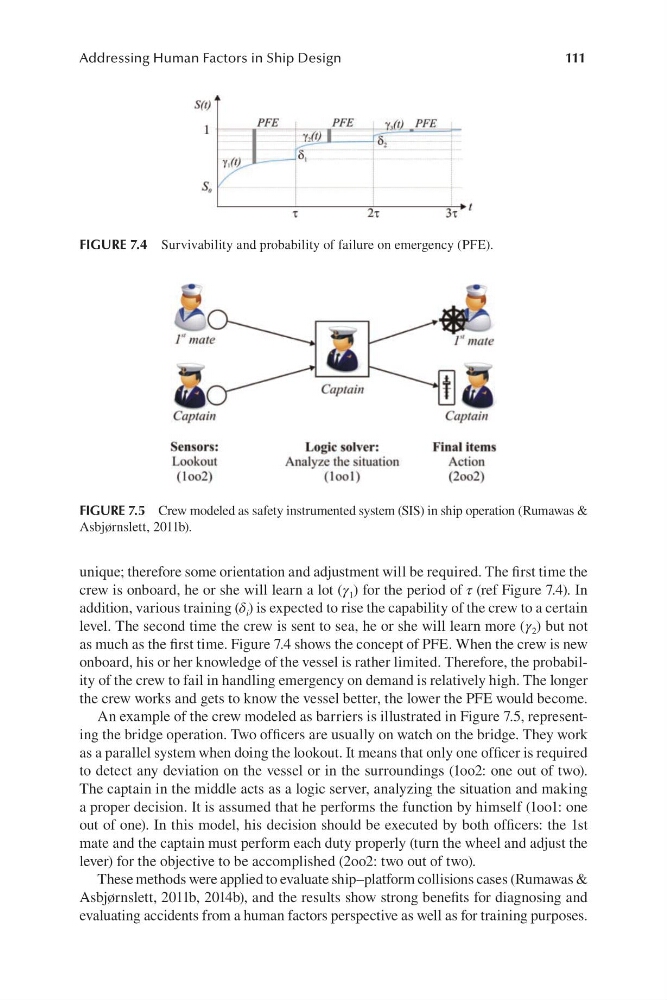
FIGURE 7.4 Survivability and probability of failure on emergency ( PFE).
FIGURE 7.5 Crew modeled as safety instrumented system ( SIS) in ship operation (R umawas &
Asbjørnslett, 2011b).
unique; therefore some orientation and adjustment will be required. The first time the
crew is onboard, he or she will learn a lot (γ 1 ) for the period of τ ( ref Figure 7.4). In
addition, various training (δ i ) is expected to rise the capability of the crew to a certain
level. The second time the crew is sent to sea, he or she will learn more (γ 2 ) but not
as much as the first time. Figure 7.4 shows the concept of PFE. When the crew is new
onboard, his or her knowledge of the vessel is rather limited. Therefore, the probability of the crew to fail in handling emergency on demand is relatively high. The longer
the crew works and gets to know the vessel better, the lower the PFE would become.
An example of the crew modeled as barriers is illustrated in F igure 7.5, representing the bridge operation. Two officers are usually on watch on the bridge. They work
as a parallel system when doing the lookout. It means that only one officer is required
to detect any deviation on the vessel or in the surroundings (1 oo2: one out of two).
The captain in the middle acts as a logic server, analyzing the situation and making
a proper decision. It is assumed that he performs the function by himself ( 1oo1: one
out of one). In this model, his decision should be executed by both officers: the 1st
mate and the captain must perform each duty properly (t urn the wheel and adjust the
lever) for the objective to be accomplished ( 2oo2: two out of two).
These methods were applied to evaluate s hip–platform collisions cases ( Rumawas &
Asbjørnslett, 2011b, 2014b), and the results show strong benefits for diagnosing and
evaluating accidents from a human factors perspective as well as for training purposes.
Addressing Human Factors in Ship Design
FIGURE 7.4 Survivability and probability of failure on emergency ( PFE).
FIGURE 7.5 Crew modeled as safety instrumented system ( SIS) in ship operation (R umawas &
Asbjørnslett, 2011b).
unique; therefore some orientation and adjustment will be required. The first time the
crew is onboard, he or she will learn a lot (γ 1 ) for the period of τ ( ref Figure 7.4). In
addition, various training (δ i ) is expected to rise the capability of the crew to a certain
level. The second time the crew is sent to sea, he or she will learn more (γ 2 ) but not
as much as the first time. Figure 7.4 shows the concept of PFE. When the crew is new
onboard, his or her knowledge of the vessel is rather limited. Therefore, the probability of the crew to fail in handling emergency on demand is relatively high. The longer
the crew works and gets to know the vessel better, the lower the PFE would become.
An example of the crew modeled as barriers is illustrated in F igure 7.5, representing the bridge operation. Two officers are usually on watch on the bridge. They work
as a parallel system when doing the lookout. It means that only one officer is required
to detect any deviation on the vessel or in the surroundings (1 oo2: one out of two).
The captain in the middle acts as a logic server, analyzing the situation and making
a proper decision. It is assumed that he performs the function by himself ( 1oo1: one
out of one). In this model, his decision should be executed by both officers: the 1st
mate and the captain must perform each duty properly (t urn the wheel and adjust the
lever) for the objective to be accomplished ( 2oo2: two out of two).
These methods were applied to evaluate s hip–platform collisions cases ( Rumawas &
Asbjørnslett, 2011b, 2014b), and the results show strong benefits for diagnosing and
evaluating accidents from a human factors perspective as well as for training purposes.