

564
The Chemistry and Technology of Petroleum
limits of hydrocracking conditions. And where the reaction conditions overlap, feedstocks to be
hydrotreated will generally be exposed to the reactor temperature for shorter periods; hence the
reason why hydrotreating conditions may be referred to as mild. All is relative.
Hydrotreating (nondestructive hydrogenation) is generally used for the purpose of improving
product quality without appreciable alteration of the boiling range. Mild processing conditions are
employed so that only the more unstable materials are attacked. Thus nitrogen, sulfur, and oxygen
compounds undergo hydrogenolysis to split out ammonia, hydrogen sulfide, and water, respectively.
Olefins are saturated, and unstable compounds, such as diolefins, which might lead to the formation
of gums or insoluble materials, are converted to more stable compounds. Heavy metals present in
the feedstock are also usually removed during hydrogen processing.
In addition to hydrodesulfurization and hydrodenitrogenation, the removal of aromatic constituents from some product streams has also become essential. The high aromatic content in diesel fuel
has been recognized both to lower the fuel quality and to contribute significantly to the formation
of undesired emissions in exhaust gases (Stanislaus and Cooper, 1994). Indeed, as a result of the
stringent environmental regulations, processes for aromatic reduction in middle distillates have
received considerable attention in recent years. Studies have shown that existing middle distillate
hydrotreaters designed to reduce sulfur and nitrogen levels would lower the diesel aromatics only
marginally (Stanislaus and Cooper, 1994).
There is a rough correlation between the quality of petroleum products and their hydrogen
content (Dolbear, 1998). It so happens that desirable aviation gasoline, kerosene, diesel fuel, and
lubricating oil are made up of hydrocarbons containing high proportions of hydrogen. In addition, it is usually possible to convert olefins and higher molecular weight constituents to paraffins
and monocyclic hydrocarbons by hydrogen-addition processes. These facts have for many years
encouraged attempts to employ hydrogenation for refining operations; despite considerable technical success, such processes were not economically possible until hydrogen became available
as a result of the rise of reforming, which converts naphthenes to aromatics with the release of
hydrogen.
Unsaturated compounds, such as olefins, are not indigenous to petroleum and produced
during cracking processes and need to be removed from product streams because of the tendency of unsaturated compounds and heteroatomic polar compounds to form gum and sediment
(Chapters 14 and 24). On the other hand, aromatic compounds are indigenous to petroleum and
some may be formed during cracking reactions. The most likely explanation is that the aromatic
compounds present in product streams are related to the aromatic compounds originally present in petroleum but now having shorter alkyl side-chains. Thus, in addition to olefins, product
Visbreaking
Hydrotreating
Hydropyrolysis
Hydrocracking
Hydrovisbreaking
Catalytic cracking
100%
80%
60%
40%
20%
0%
Coking
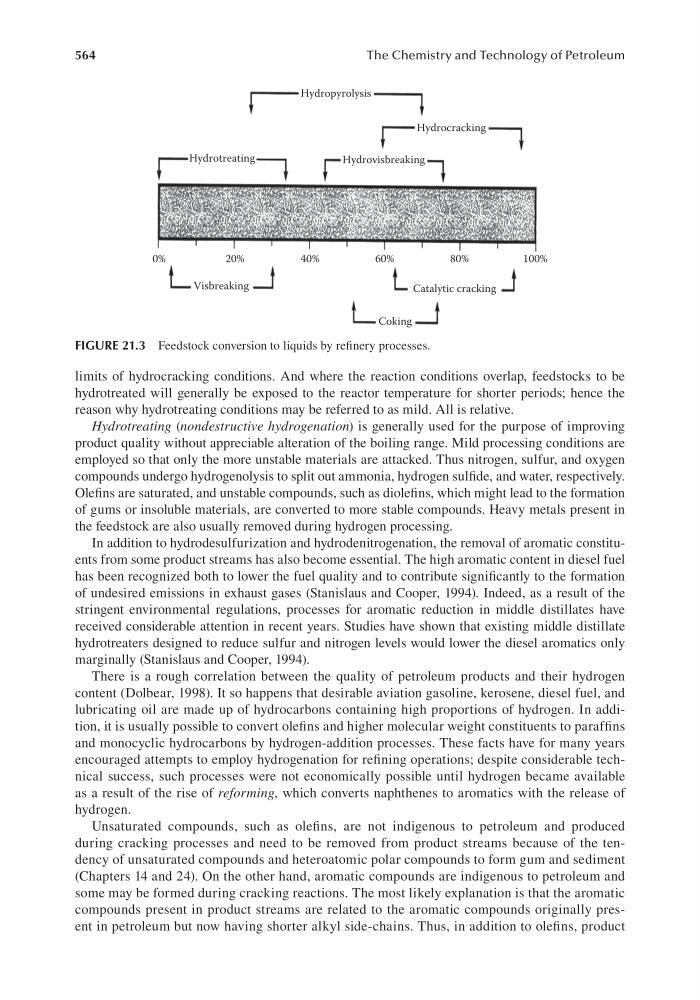
FIGURE 21.3 Feedstock conversion to liquids by refinery processes.