

544
The Chemistry and Technology of Petroleum
these compounds resulting in a drastic reduction (relative to the feedstock) of the nitrogen content
and the metals in the DAO. Although the DAO from propane deasphalting has the best quality,
the yield is usually less than the yield of DAO produced using a high molecular weight (higher
boiling) solvent.
The ratios of propane/oil required vary from 6–l to 10–1 by volume, with the ratio occasionally
being as high as 13–1. Since the critical temperature of propane is 97°C (206°F), this limits the
extraction temperature to about 82°C (180°F). Therefore, propane alone may not be suitable for high
viscosity feedstocks because of the relatively low operating temperature.
Isobutane and n-butane are more suitable for deasphalting high viscosity feedstocks, since their
critical temperatures are higher (134°C, 273°F, and 152°C, 306°F, respectively) than that of the critical
temperature of propane. Higher extraction temperatures can be used to reduce the viscosity of the
heavy feed and to increase the transfer rate of oil to solvent. Although n-pentane is less selective for
metals and carbon residue removal, it can increase the yield of DAO from a heavy feed by a factor
of 2–3 over propane (Speight, 2000). However, if the content of the metals and carbon residue of
the pentane-deasphalted oil is too high (defined by the ensuing process), the DAO may be unsuitable as a cracking feedstock. In certain cases, the nature of the cracking catalyst may dictate that
the pentane-deasphalted oil be blended with vacuum gas oil that, after further treatment such as
hydrodesulfurization, produces a good cracking feedstock.
Solvent composition is an important process variable for deasphalting units. The use of a single
solvent may (depending on the nature of the solvent) limit the range of feedstocks that can be processed in a deasphalting unit. When a deasphalting unit is required to handle a variety of feedstocks
and/or produce various yields of DAO (as is the case in these days of variable feedstock quality), a
dual solvent may be the only option to provide the desired flexibility. For example, a mixture of propane and n-butane might be suitable for feedstocks that vary from vacuum residua to both the heavy
resid to heavy gas oils that contain asphaltic materials. Adjusting the solvent composition allows the
most desirable product quantity and quality within the range of temperature control.
Besides the solvent composition, the solvent/oil ratio also plays an important role in a deasphalting operation. Solvent/oil ratios vary considerably and are governed by feedstock characteristics and
desired product qualities and, for each individual feedstock, there is a minimum operable solvent/
oil ratio. Generally, increasing the solvent/oil ratio almost invariably results in improving the DAO
quality at a given yield, but other factors must also be taken into consideration, and (generalities
aside) each plant and feedstock will have an optimum ratio.
The main consideration in the selection of the operating temperature is its effect on the yield of
DAO. For practical applications, the lower limits of operable temperature are set by the viscosity of
Aromatic
Asphaltenes
PD Tar
Naphthene
Paraffins
Deasphalted
oil
Resins
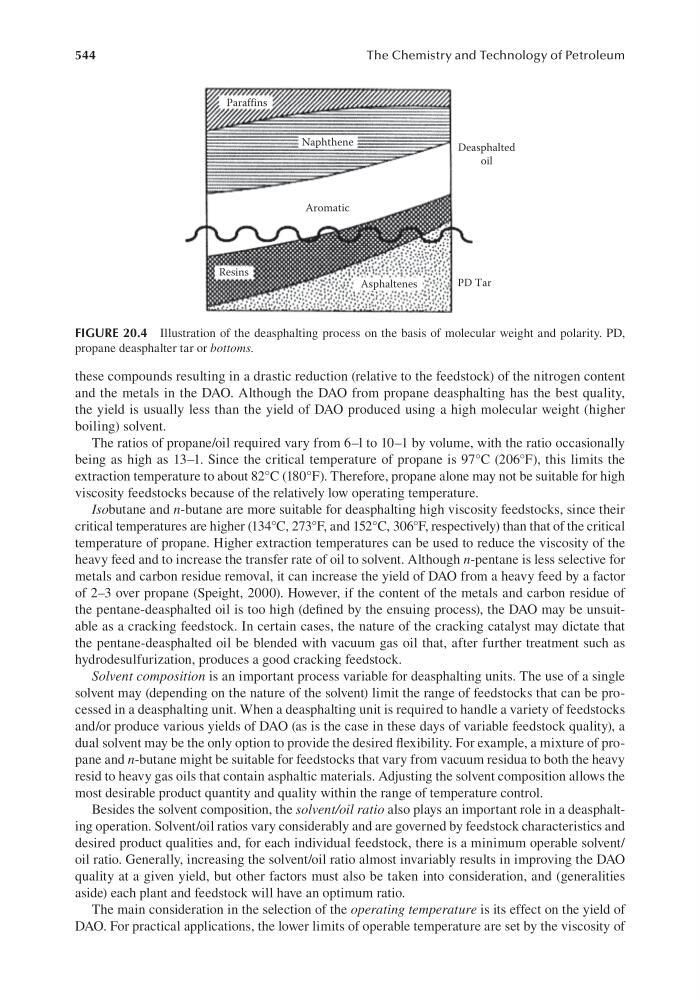
FIGURE 20.4 Illustration of the deasphalting process on the basis of molecular weight and polarity. PD,
propane deasphalter tar or bottoms.