

382
The Chemistry and Technology of Petroleum
0.2% w/w are considered to be satisfactory, results above 0.4% w/w. indicate a poor stability, but
differing values might be required, depending on the intended use of the product.
One test, or property, that is somewhat abstract in its application but which is becoming more
meaningful and popular is the solubility parameter (Chapters 12 and 13), which allows estimations
to be made of the ability of liquids to become miscible on the basis of miscibility of model compound types where the solubility parameter can be measured or calculated.
Although the solubility parameter is often difficult to define when complex mixtures are involved,
there has been some progress. For example, petroleum fractions have been assigned a similar solubility parameter to that of the solvent used in the separation. However, there is also the concept
(Speight, 1992) that the solubility parameter of petroleum fractions may be defined somewhat differently insofar as they can be estimated from data such as the atomic hydrogen-to-carbon ratios.
Whichever method is the best estimate may be immaterial as long as the data are used to the most
appropriate benefit and allow some measure of predictability.
Air supply to
heating unit
Filtration vessel
Power to heating unit
Power
controller
Temperature
controller
RTD signal
Filtration funnel
Filter support
Filtration flask
Vacuum
Vacuum
gauge
Heating unit
Special clamp
Viton O-ring
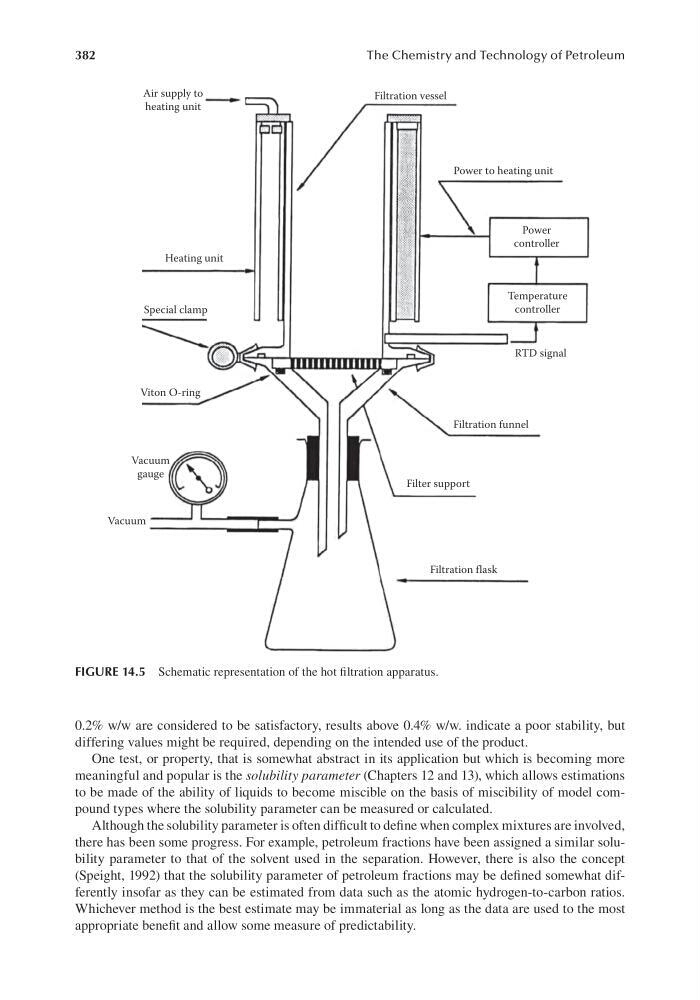
FIGURE 14.5 Schematic representation of the hot filtration apparatus.
The Chemistry and Technology of Petroleum
0.2% w/w are considered to be satisfactory, results above 0.4% w/w. indicate a poor stability, but
differing values might be required, depending on the intended use of the product.
One test, or property, that is somewhat abstract in its application but which is becoming more
meaningful and popular is the solubility parameter (Chapters 12 and 13), which allows estimations
to be made of the ability of liquids to become miscible on the basis of miscibility of model compound types where the solubility parameter can be measured or calculated.
Although the solubility parameter is often difficult to define when complex mixtures are involved,
there has been some progress. For example, petroleum fractions have been assigned a similar solubility parameter to that of the solvent used in the separation. However, there is also the concept
(Speight, 1992) that the solubility parameter of petroleum fractions may be defined somewhat differently insofar as they can be estimated from data such as the atomic hydrogen-to-carbon ratios.
Whichever method is the best estimate may be immaterial as long as the data are used to the most
appropriate benefit and allow some measure of predictability.
Air supply to
heating unit
Filtration vessel
Power to heating unit
Power
controller
Temperature
controller
RTD signal
Filtration funnel
Filter support
Filtration flask
Vacuum
Vacuum
gauge
Heating unit
Special clamp
Viton O-ring
FIGURE 14.5 Schematic representation of the hot filtration apparatus.