

336
The Chemistry and Technology of Petroleum
applicability of the technique to determine the presence of ring size distribution using the different
selectivity of the polynuclear aromatic systems (Speight, 1986b). The one-ring and two-ring polynuclear aromatic systems were more prominent in the chromatogram at 240 mm but were not at all
evident in the chromatogram at wavelengths above 300 nm. The converse was true for the three-ring
to six-ring systems. This was confirmed by examination of a standard solution of polynuclear aromatic
(one-ring to seven-ring) systems, which confirmed that one-ring to three-ring systems gave prominent
ultraviolet detector signals at <300 nm but gave no signals at >300 nm. On the other hand, compounds
with four-ring to seven-ring systems still gave signals at >300 nm but gave no signals at 365 nm.
These data provide strong indications of the ring size distribution of the polynuclear aromatic
systems in petroleum asphaltenes. For example, amphoteric species and basic nitrogen species contain polynuclear aromatic systems having two to six rings per system. On the other hand, the acid
subfractions (phenolic or carboxylic functions) and the neutral polar subfractions (amides and imino
functions) contain few, if any, polynuclear aromatic systems with more than three rings per system.
In no case was there any strong or conclusive evidence for polynuclear aromatic ring systems containing more than six condensed rings. In all cases, the evidence favored the preponderance of the
smaller one-ring to four-ring systems (Speight, 1986b, 1994).
It must not be forgotten that the method is subject to the limitation of the sensitivity of polynuclear aromatic systems and the fact that some of the asphaltene material (<2% w/w) was irreversibly adsorbed on the adsorbent. In this latter case, the missing material is polar material and any
deviation from the ring size distribution just outlined is not believed to be significant enough to
influence the general conclusions about the nature of the polynuclear aromatic systems in petroleum
asphaltenes.
These observations require some readjustment to the previous postulates of the asphaltene structure. Previously conceived hypotheses in which the polynuclear aromatic system is large (>10 rings)
are considered unlikely despite their frequent and recent occurrence in the literature. The thermolysis products are indicative of a much more open structure than has previously been recognized.
Indeed, the failure to detect (during the chromatographic examination) any strong evidence for the
existence of large multiring polynuclear aromatic systems in the asphaltene fractions is evidence
against structures invoking this concept.
The manner in which these moieties occur within the asphaltene fraction must, for the present,
remain largely speculative. Above all, it must be remembered that asphaltenes are a solubility class
Aromatics
Carbon residue, wt. %
Resins
Asphaltenes
Saturates
100
80
80
60
60
40
40
20
20
0
0
% of crude oil
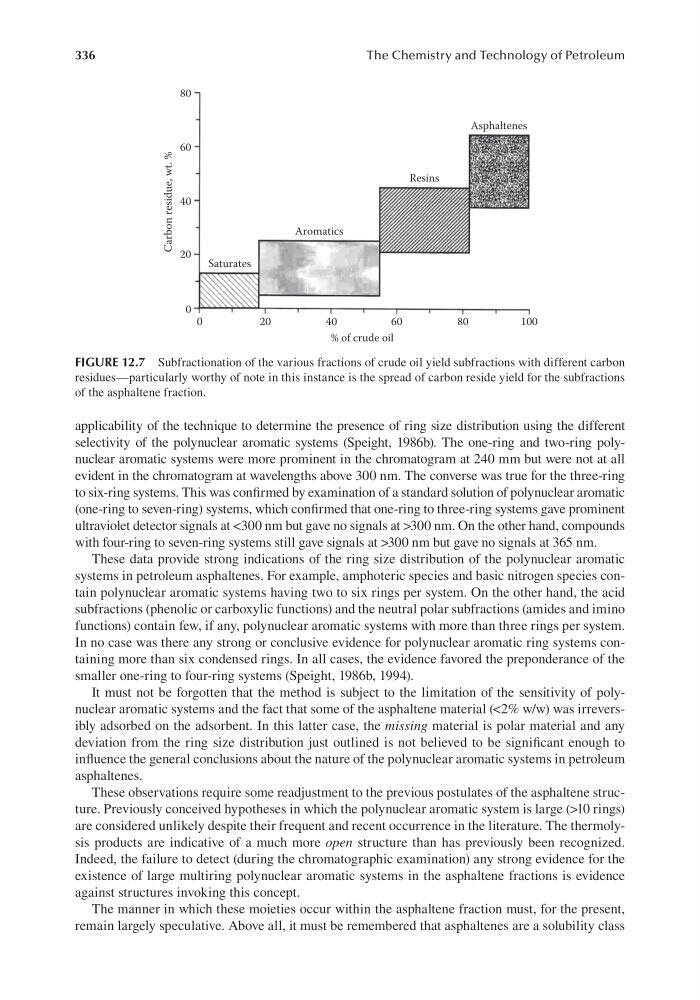
FIGURE 12.7 Subfractionation of the various fractions of crude oil yield subfractions with different carbon
residues—particularly worthy of note in this instance is the spread of carbon reside yield for the subfractions
of the asphaltene fraction.
The Chemistry and Technology of Petroleum
applicability of the technique to determine the presence of ring size distribution using the different
selectivity of the polynuclear aromatic systems (Speight, 1986b). The one-ring and two-ring polynuclear aromatic systems were more prominent in the chromatogram at 240 mm but were not at all
evident in the chromatogram at wavelengths above 300 nm. The converse was true for the three-ring
to six-ring systems. This was confirmed by examination of a standard solution of polynuclear aromatic
(one-ring to seven-ring) systems, which confirmed that one-ring to three-ring systems gave prominent
ultraviolet detector signals at <300 nm but gave no signals at >300 nm. On the other hand, compounds
with four-ring to seven-ring systems still gave signals at >300 nm but gave no signals at 365 nm.
These data provide strong indications of the ring size distribution of the polynuclear aromatic
systems in petroleum asphaltenes. For example, amphoteric species and basic nitrogen species contain polynuclear aromatic systems having two to six rings per system. On the other hand, the acid
subfractions (phenolic or carboxylic functions) and the neutral polar subfractions (amides and imino
functions) contain few, if any, polynuclear aromatic systems with more than three rings per system.
In no case was there any strong or conclusive evidence for polynuclear aromatic ring systems containing more than six condensed rings. In all cases, the evidence favored the preponderance of the
smaller one-ring to four-ring systems (Speight, 1986b, 1994).
It must not be forgotten that the method is subject to the limitation of the sensitivity of polynuclear aromatic systems and the fact that some of the asphaltene material (<2% w/w) was irreversibly adsorbed on the adsorbent. In this latter case, the missing material is polar material and any
deviation from the ring size distribution just outlined is not believed to be significant enough to
influence the general conclusions about the nature of the polynuclear aromatic systems in petroleum
asphaltenes.
These observations require some readjustment to the previous postulates of the asphaltene structure. Previously conceived hypotheses in which the polynuclear aromatic system is large (>10 rings)
are considered unlikely despite their frequent and recent occurrence in the literature. The thermolysis products are indicative of a much more open structure than has previously been recognized.
Indeed, the failure to detect (during the chromatographic examination) any strong evidence for the
existence of large multiring polynuclear aromatic systems in the asphaltene fractions is evidence
against structures invoking this concept.
The manner in which these moieties occur within the asphaltene fraction must, for the present,
remain largely speculative. Above all, it must be remembered that asphaltenes are a solubility class
Aromatics
Carbon residue, wt. %
Resins
Asphaltenes
Saturates
100
80
80
60
60
40
40
20
20
0
0
% of crude oil
FIGURE 12.7 Subfractionation of the various fractions of crude oil yield subfractions with different carbon
residues—particularly worthy of note in this instance is the spread of carbon reside yield for the subfractions
of the asphaltene fraction.