

232
The Chemistry and Technology of Petroleum
Obviously, there are precautions that must be taken when attempting to separate heavy feedstocks or polar feedstocks into constituent fractions. The disadvantages in using ill-defined adsorbents are that adsorbent performance differs with the same feed and, in certain instances, may even
cause chemical and physical modification of the feed constituents. The use of a chemical reactant
like sulfuric acid should only be advocated with caution since feeds react differently and may even
cause irreversible chemical changes and/or emulsion formation. These advantages may be of little
consequence when it is not, for various reasons, the intention to recover the various product fractions in toto or in the original state, but in terms of the compositional evaluation of different feedstocks the disadvantages are very real.
In summary, the terminology used for the identification of the various methods might differ.
However, in general terms, group-type analysis of petroleum is often identified by the acronyms for
the names: PONA (paraffins, olefins, naphthenes, and aromatics), PIONA (paraffins, iso- paraffins,
olefins, naphthenes, and aromatics), polynuclear aromatic hydrocarbon (paraffins, naphthenes,
Asphaltenes
(insolubles)
Polar compounds
First acidaffins
Second acidaffins
Saturates
Residual oil
(30% oleum)
Residual oil
(97% sulfuric acid)
Deasphaltened oil
(85% sulfuric acid)
Feedstock
(n-pentane)
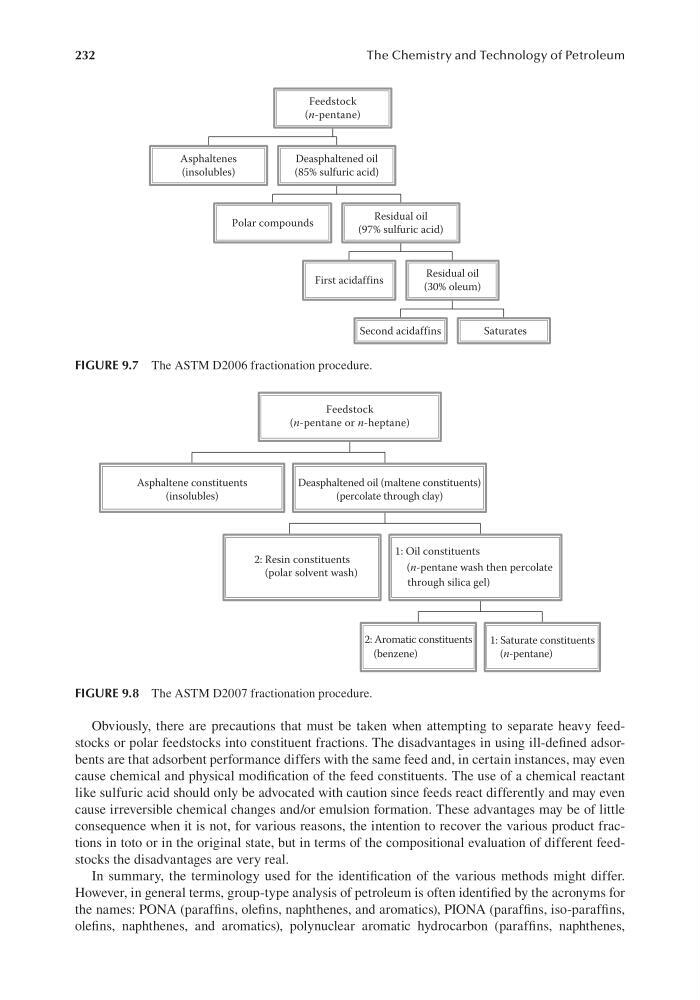
FIGURE 9.7 The ASTM D2006 fractionation procedure.
Asphaltene constituents
(insolubles)
2: Resin constituents
(polar solvent wash)
2: Aromatic constituents
1: Saturate constituents
(n-pentane wash then percolate
Deasphaltened oil (maltene constituents)
(percolate through clay)
Feedstock
(n-pentane or n-heptane)
through silica gel)
1: Oil constituents
(n-pentane)
(benzene)
FIGURE 9.8 The ASTM D2007 fractionation procedure.
The Chemistry and Technology of Petroleum
Obviously, there are precautions that must be taken when attempting to separate heavy feedstocks or polar feedstocks into constituent fractions. The disadvantages in using ill-defined adsorbents are that adsorbent performance differs with the same feed and, in certain instances, may even
cause chemical and physical modification of the feed constituents. The use of a chemical reactant
like sulfuric acid should only be advocated with caution since feeds react differently and may even
cause irreversible chemical changes and/or emulsion formation. These advantages may be of little
consequence when it is not, for various reasons, the intention to recover the various product fractions in toto or in the original state, but in terms of the compositional evaluation of different feedstocks the disadvantages are very real.
In summary, the terminology used for the identification of the various methods might differ.
However, in general terms, group-type analysis of petroleum is often identified by the acronyms for
the names: PONA (paraffins, olefins, naphthenes, and aromatics), PIONA (paraffins, iso- paraffins,
olefins, naphthenes, and aromatics), polynuclear aromatic hydrocarbon (paraffins, naphthenes,
Asphaltenes
(insolubles)
Polar compounds
First acidaffins
Second acidaffins
Saturates
Residual oil
(30% oleum)
Residual oil
(97% sulfuric acid)
Deasphaltened oil
(85% sulfuric acid)
Feedstock
(n-pentane)
FIGURE 9.7 The ASTM D2006 fractionation procedure.
Asphaltene constituents
(insolubles)
2: Resin constituents
(polar solvent wash)
2: Aromatic constituents
1: Saturate constituents
(n-pentane wash then percolate
Deasphaltened oil (maltene constituents)
(percolate through clay)
Feedstock
(n-pentane or n-heptane)
through silica gel)
1: Oil constituents
(n-pentane)
(benzene)
FIGURE 9.8 The ASTM D2007 fractionation procedure.