

192
The Chemistry and Technology of Petroleum
The abundance of the different members of the same homologous series varies considerably in
absolute and relative values. However, in any particular crude oil or crude oil fraction, there may be
a small number of constituents forming the greater part of the fraction, and these have been referred
to as the predominant constituents (Bestougeff, 1961). This generality may also apply to other constituents and is very dependent upon the nature of the source material as well as the relative amounts
of the individual source materials prevailing during maturation conditions (Chapter 3).
Polynaphthenes
Polynuclear
aromatics
Aromatics
Naphthenes
Paraans
CH 3 (CH 2 ) 4 CH 3
–H 2
–H 2
–H 2
+H 2
+H 2
+H 2
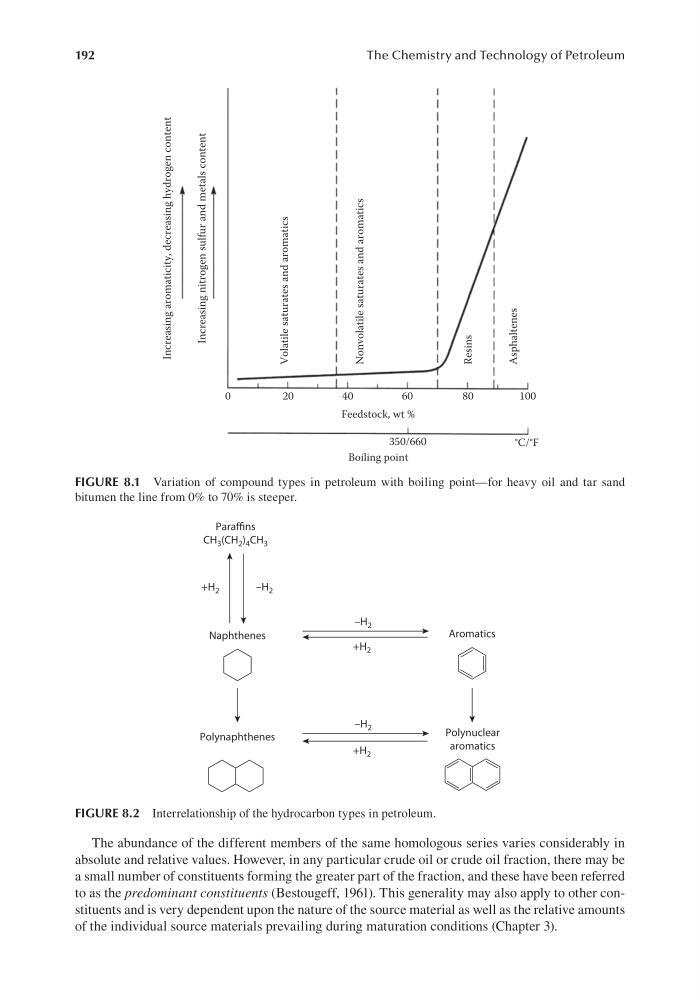
FIGURE 8.2 Interrelationship of the hydrocarbon types in petroleum.
Volatile saturates and aromatics
Increasing aromaticity, decreasing hydrogen content
Increasing nitrogen sulfur and metals content
Nonvolatile saturates and aromatics
Resins
Asphaltenes
100
80
350/660
60
40
Feedstock, wt %
20
0
°C/°F
Boiling point
FIGURE 8.1 Variation of compound types in petroleum with boiling point—for heavy oil and tar sand
bitumen the line from 0% to 70% is steeper.
The Chemistry and Technology of Petroleum
The abundance of the different members of the same homologous series varies considerably in
absolute and relative values. However, in any particular crude oil or crude oil fraction, there may be
a small number of constituents forming the greater part of the fraction, and these have been referred
to as the predominant constituents (Bestougeff, 1961). This generality may also apply to other constituents and is very dependent upon the nature of the source material as well as the relative amounts
of the individual source materials prevailing during maturation conditions (Chapter 3).
Polynaphthenes
Polynuclear
aromatics
Aromatics
Naphthenes
Paraans
CH 3 (CH 2 ) 4 CH 3
–H 2
–H 2
–H 2
+H 2
+H 2
+H 2
FIGURE 8.2 Interrelationship of the hydrocarbon types in petroleum.
Volatile saturates and aromatics
Increasing aromaticity, decreasing hydrogen content
Increasing nitrogen sulfur and metals content
Nonvolatile saturates and aromatics
Resins
Asphaltenes
100
80
350/660
60
40
Feedstock, wt %
20
0
°C/°F
Boiling point
FIGURE 8.1 Variation of compound types in petroleum with boiling point—for heavy oil and tar sand
bitumen the line from 0% to 70% is steeper.