

must include: furniture, information equipment, and storage furniture (Badan Standar Nasional
Pendidikan 2011)
2 METHODS
The research method was conducted using qualitative methods in the form of analyzing questionnaire and quantitative data with descriptive analysis from literature studies. Questionnaire data was
synchronized with literature studies obtained from books, research journals, and the internet. The
data was then be processed (then processed) and analyzed. The conclusions obtained from these
results were the basis for creating models of online learning spaces
The data collection includes primary and secondary data. The primary data collection was carried
out through a questionnaire and interview with the research subjects. Subjects were design student
that already have experience with online learning activities from the previous semester. The primary
data was supplemented by secondary data from print and electronic media.
3 ANALYSIS
3.1 Questionnaire data
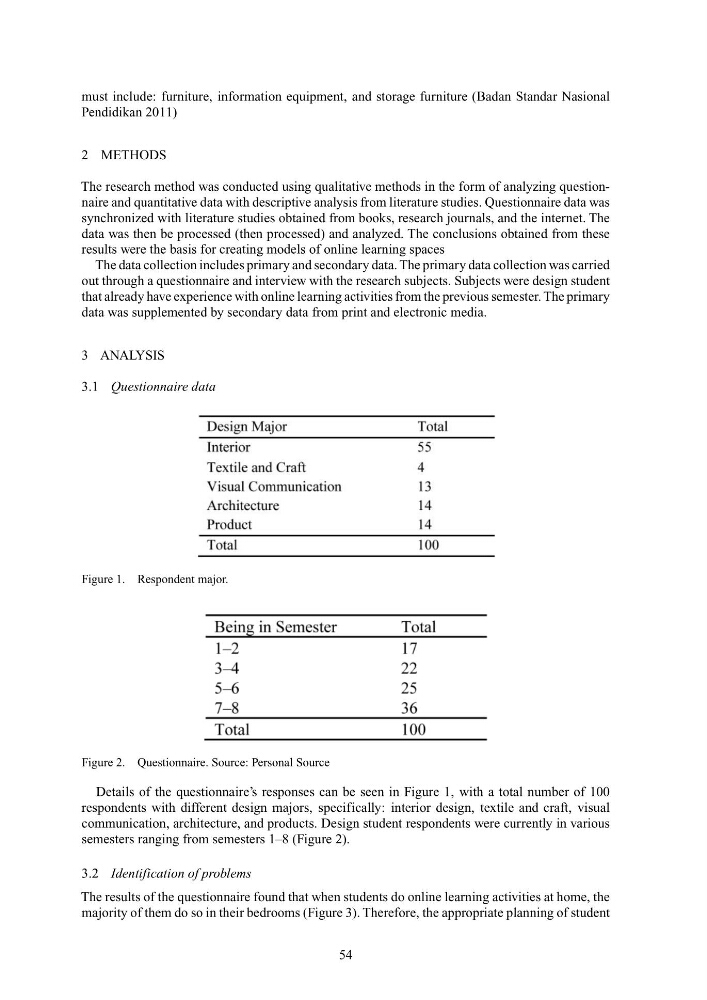
Figure 1. Respondent major.
Figure 2. Questionnaire. Source: Personal Source
Details of the questionnaire’s responses can be seen in Figure 1, with a total number of 100
respondents with different design majors, specifically: interior design, textile and craft, visual
communication, architecture, and products. Design student respondents were currently in various
semesters ranging from semesters 1–8 (Figure 2).
3.2 Identification of problems
The results of the questionnaire found that when students do online learning activities at home, the
majority of them do so in their bedrooms (Figure 3). Therefore, the appropriate planning of student
54
Pendidikan 2011)
2 METHODS
The research method was conducted using qualitative methods in the form of analyzing questionnaire and quantitative data with descriptive analysis from literature studies. Questionnaire data was
synchronized with literature studies obtained from books, research journals, and the internet. The
data was then be processed (then processed) and analyzed. The conclusions obtained from these
results were the basis for creating models of online learning spaces
The data collection includes primary and secondary data. The primary data collection was carried
out through a questionnaire and interview with the research subjects. Subjects were design student
that already have experience with online learning activities from the previous semester. The primary
data was supplemented by secondary data from print and electronic media.
3 ANALYSIS
3.1 Questionnaire data
Figure 1. Respondent major.
Figure 2. Questionnaire. Source: Personal Source
Details of the questionnaire’s responses can be seen in Figure 1, with a total number of 100
respondents with different design majors, specifically: interior design, textile and craft, visual
communication, architecture, and products. Design student respondents were currently in various
semesters ranging from semesters 1–8 (Figure 2).
3.2 Identification of problems
The results of the questionnaire found that when students do online learning activities at home, the
majority of them do so in their bedrooms (Figure 3). Therefore, the appropriate planning of student
54