

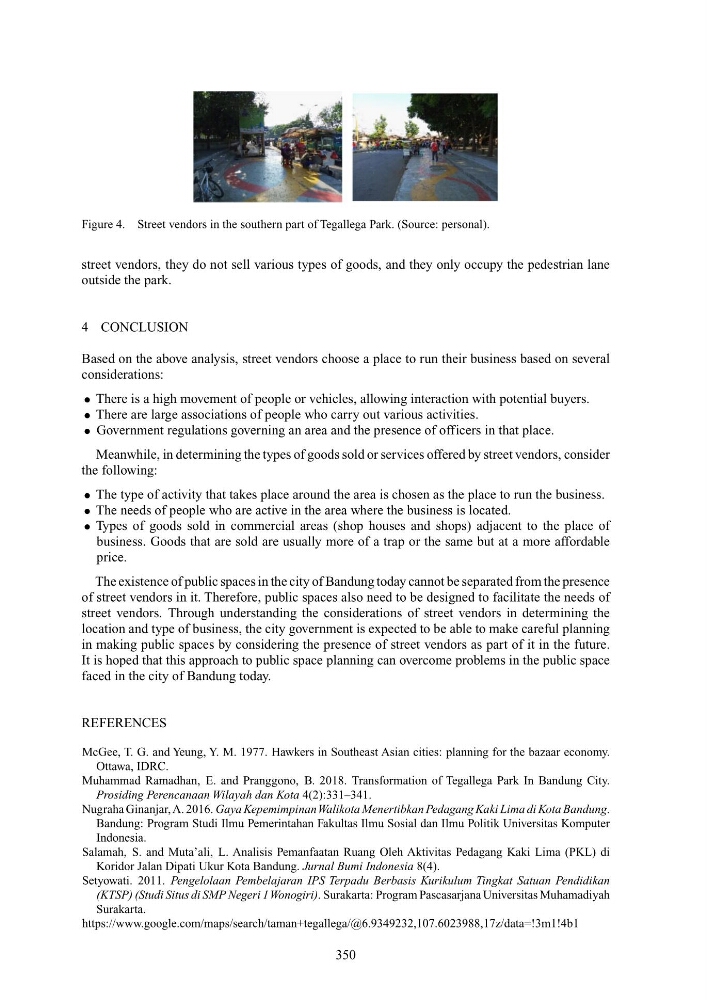
Figure 4. Street vendors in the southern part of Tegallega Park. (Source: personal).
street vendors, they do not sell various types of goods, and they only occupy the pedestrian lane
outside the park.
4 CONCLUSION
Based on the above analysis, street vendors choose a place to run their business based on several
considerations:
• There is a high movement of people or vehicles, allowing interaction with potential buyers.
• There are large associations of people who carry out various activities.
• Government regulations governing an area and the presence of officers in that place.
Meanwhile, in determining the types of goods sold or services offered by street vendors, consider
the following:
• The type of activity that takes place around the area is chosen as the place to run the business.
• The needs of people who are active in the area where the business is located.
• Types of goods sold in commercial areas (shop houses and shops) adjacent to the place of
business. Goods that are sold are usually more of a trap or the same but at a more affordable
price.
The existence of public spaces in the city of Bandung today cannot be separated from the presence
of street vendors in it. Therefore, public spaces also need to be designed to facilitate the needs of
street vendors. Through understanding the considerations of street vendors in determining the
location and type of business, the city government is expected to be able to make careful planning
in making public spaces by considering the presence of street vendors as part of it in the future.
It is hoped that this approach to public space planning can overcome problems in the public space
faced in the city of Bandung today.
REFERENCES
McGee, T. G. and Yeung, Y. M. 1977. Hawkers in Southeast Asian cities: planning for the bazaar economy.
Ottawa, IDRC.
Muhammad Ramadhan, E. and Pranggono, B. 2018. Transformation of Tegallega Park In Bandung City.
Prosiding Perencanaan Wilayah dan Kota 4(2):331–341.
Nugraha Ginanjar, A. 2016. Gaya KepemimpinanWalikota Menertibkan Pedagang Kaki Lima di Kota Bandung.
Bandung: Program Studi Ilmu Pemerintahan Fakultas Ilmu Sosial dan Ilmu Politik Universitas Komputer
Indonesia.
Salamah, S. and Muta’ali, L. Analisis Pemanfaatan Ruang Oleh Aktivitas Pedagang Kaki Lima (PKL) di
Koridor Jalan Dipati Ukur Kota Bandung. Jurnal Bumi Indonesia 8(4).
Setyowati. 2011. Pengelolaan Pembelajaran IPS Terpadu Berbasis Kurikulum Tingkat Satuan Pendidikan
(KTSP) (Studi Situs di SMP Negeri 1Wonogiri). Surakarta: Program Pascasarjana Universitas Muhamadiyah
Surakarta.
https://www.google.com/maps/search/taman+tegallega/@6.9349232,107.6023988,17z/data=!3m1!4b1
350
street vendors, they do not sell various types of goods, and they only occupy the pedestrian lane
outside the park.
4 CONCLUSION
Based on the above analysis, street vendors choose a place to run their business based on several
considerations:
• There is a high movement of people or vehicles, allowing interaction with potential buyers.
• There are large associations of people who carry out various activities.
• Government regulations governing an area and the presence of officers in that place.
Meanwhile, in determining the types of goods sold or services offered by street vendors, consider
the following:
• The type of activity that takes place around the area is chosen as the place to run the business.
• The needs of people who are active in the area where the business is located.
• Types of goods sold in commercial areas (shop houses and shops) adjacent to the place of
business. Goods that are sold are usually more of a trap or the same but at a more affordable
price.
The existence of public spaces in the city of Bandung today cannot be separated from the presence
of street vendors in it. Therefore, public spaces also need to be designed to facilitate the needs of
street vendors. Through understanding the considerations of street vendors in determining the
location and type of business, the city government is expected to be able to make careful planning
in making public spaces by considering the presence of street vendors as part of it in the future.
It is hoped that this approach to public space planning can overcome problems in the public space
faced in the city of Bandung today.
REFERENCES
McGee, T. G. and Yeung, Y. M. 1977. Hawkers in Southeast Asian cities: planning for the bazaar economy.
Ottawa, IDRC.
Muhammad Ramadhan, E. and Pranggono, B. 2018. Transformation of Tegallega Park In Bandung City.
Prosiding Perencanaan Wilayah dan Kota 4(2):331–341.
Nugraha Ginanjar, A. 2016. Gaya KepemimpinanWalikota Menertibkan Pedagang Kaki Lima di Kota Bandung.
Bandung: Program Studi Ilmu Pemerintahan Fakultas Ilmu Sosial dan Ilmu Politik Universitas Komputer
Indonesia.
Salamah, S. and Muta’ali, L. Analisis Pemanfaatan Ruang Oleh Aktivitas Pedagang Kaki Lima (PKL) di
Koridor Jalan Dipati Ukur Kota Bandung. Jurnal Bumi Indonesia 8(4).
Setyowati. 2011. Pengelolaan Pembelajaran IPS Terpadu Berbasis Kurikulum Tingkat Satuan Pendidikan
(KTSP) (Studi Situs di SMP Negeri 1Wonogiri). Surakarta: Program Pascasarjana Universitas Muhamadiyah
Surakarta.
https://www.google.com/maps/search/taman+tegallega/@6.9349232,107.6023988,17z/data=!3m1!4b1
350