

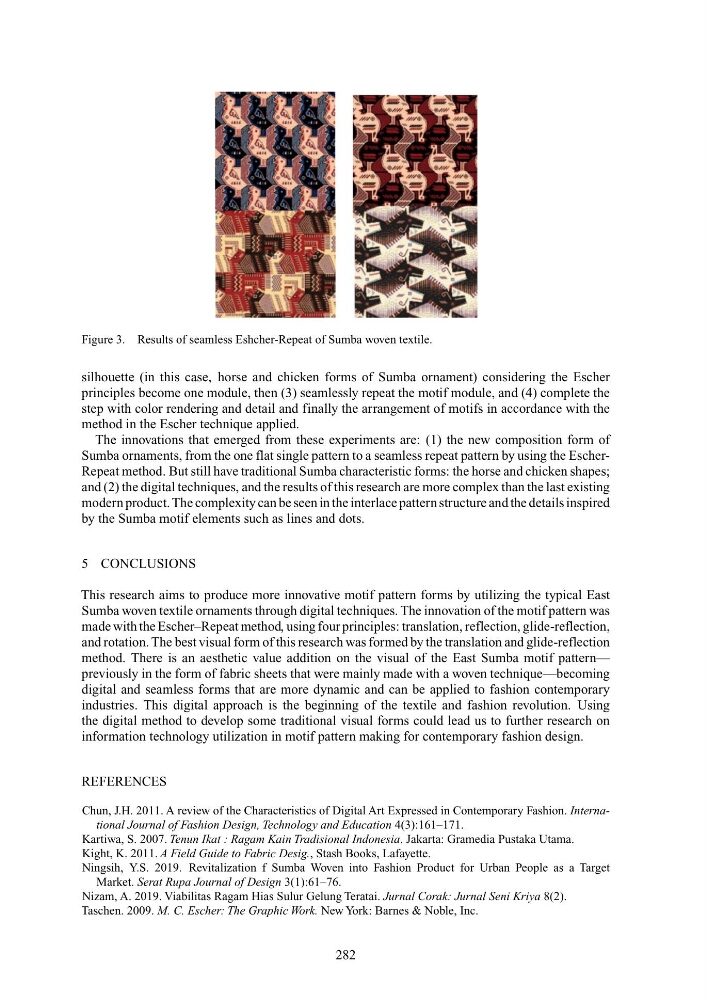
Figure 3. Results of seamless Eshcher-Repeat of Sumba woven textile.
silhouette (in this case, horse and chicken forms of Sumba ornament) considering the Escher
principles become one module, then (3) seamlessly repeat the motif module, and (4) complete the
step with color rendering and detail and finally the arrangement of motifs in accordance with the
method in the Escher technique applied.
The innovations that emerged from these experiments are: (1) the new composition form of
Sumba ornaments, from the one flat single pattern to a seamless repeat pattern by using the EscherRepeat method. But still have traditional Sumba characteristic forms: the horse and chicken shapes;
and (2) the digital techniques, and the results of this research are more complex than the last existing
modern product. The complexity can be seen in the interlace pattern structure and the details inspired
by the Sumba motif elements such as lines and dots.
5 CONCLUSIONS
This research aims to produce more innovative motif pattern forms by utilizing the typical East
Sumba woven textile ornaments through digital techniques. The innovation of the motif pattern was
made with the Escher–Repeat method, using four principles: translation, reflection, glide-reflection,
and rotation. The best visual form of this research was formed by the translation and glide-reflection
method. There is an aesthetic value addition on the visual of the East Sumba motif pattern—
previously in the form of fabric sheets that were mainly made with a woven technique—becoming
digital and seamless forms that are more dynamic and can be applied to fashion contemporary
industries. This digital approach is the beginning of the textile and fashion revolution. Using
the digital method to develop some traditional visual forms could lead us to further research on
information technology utilization in motif pattern making for contemporary fashion design.
REFERENCES
Chun, J.H. 2011. A review of the Characteristics of Digital Art Expressed in Contemporary Fashion. International Journal of Fashion Design, Technology and Education 4(3):161–171.
Kartiwa, S. 2007. Tenun Ikat : Ragam Kain Tradisional Indonesia. Jakarta: Gramedia Pustaka Utama.
Kight, K. 2011. A Field Guide to Fabric Desig., Stash Books, Lafayette.
Ningsih, Y.S. 2019. Revitalization f Sumba Woven into Fashion Product for Urban People as a Target
Market. Serat Rupa Journal of Design 3(1):61–76.
Nizam, A. 2019. Viabilitas Ragam Hias Sulur Gelung Teratai. Jurnal Corak: Jurnal Seni Kriya 8(2).
Taschen. 2009. M. C. Escher: The Graphic Work. New York: Barnes & Noble, Inc.
282
silhouette (in this case, horse and chicken forms of Sumba ornament) considering the Escher
principles become one module, then (3) seamlessly repeat the motif module, and (4) complete the
step with color rendering and detail and finally the arrangement of motifs in accordance with the
method in the Escher technique applied.
The innovations that emerged from these experiments are: (1) the new composition form of
Sumba ornaments, from the one flat single pattern to a seamless repeat pattern by using the EscherRepeat method. But still have traditional Sumba characteristic forms: the horse and chicken shapes;
and (2) the digital techniques, and the results of this research are more complex than the last existing
modern product. The complexity can be seen in the interlace pattern structure and the details inspired
by the Sumba motif elements such as lines and dots.
5 CONCLUSIONS
This research aims to produce more innovative motif pattern forms by utilizing the typical East
Sumba woven textile ornaments through digital techniques. The innovation of the motif pattern was
made with the Escher–Repeat method, using four principles: translation, reflection, glide-reflection,
and rotation. The best visual form of this research was formed by the translation and glide-reflection
method. There is an aesthetic value addition on the visual of the East Sumba motif pattern—
previously in the form of fabric sheets that were mainly made with a woven technique—becoming
digital and seamless forms that are more dynamic and can be applied to fashion contemporary
industries. This digital approach is the beginning of the textile and fashion revolution. Using
the digital method to develop some traditional visual forms could lead us to further research on
information technology utilization in motif pattern making for contemporary fashion design.
REFERENCES
Chun, J.H. 2011. A review of the Characteristics of Digital Art Expressed in Contemporary Fashion. International Journal of Fashion Design, Technology and Education 4(3):161–171.
Kartiwa, S. 2007. Tenun Ikat : Ragam Kain Tradisional Indonesia. Jakarta: Gramedia Pustaka Utama.
Kight, K. 2011. A Field Guide to Fabric Desig., Stash Books, Lafayette.
Ningsih, Y.S. 2019. Revitalization f Sumba Woven into Fashion Product for Urban People as a Target
Market. Serat Rupa Journal of Design 3(1):61–76.
Nizam, A. 2019. Viabilitas Ragam Hias Sulur Gelung Teratai. Jurnal Corak: Jurnal Seni Kriya 8(2).
Taschen. 2009. M. C. Escher: The Graphic Work. New York: Barnes & Noble, Inc.
282