

in Kalimantan, where ironwood grows and is replaced by oil palm plantations, resulting in the
availability of ironwood being scarce. Ironwood, which is now used for dyeing Sasirangan fabric,
results from waste from ironwood processing artisans.
In recent years, local brands have offered products made from natural ingredients with exclusive
product designs. The purpose of these brands is to remind and raise awareness that the fashion
industry has the potential for adverse impacts on the environment. Based on the phenomenon of
natural pollution, many parties, individuals and communities, and organizations have developed
an environmentally friendly fashion. The method used is the use of natural fibers and dyes.
The use of natural dyes for the fashion industry is becoming a trend marked by the increasing
number of brands using natural dyes. The brands in question are Kana Goods, Jarit, Manungs,
Javanese Batik Gallery, Nurzahra, Bluesville, Tarum, Imaji Studio, Kembang Tjelup, Osem, and
Seratus Kapas (Arumsari et al. 2018). In addition, there are Sasirangan fabric products that use
natural dyes. The color of natural coloring tends to be more in demand by markets overseas and
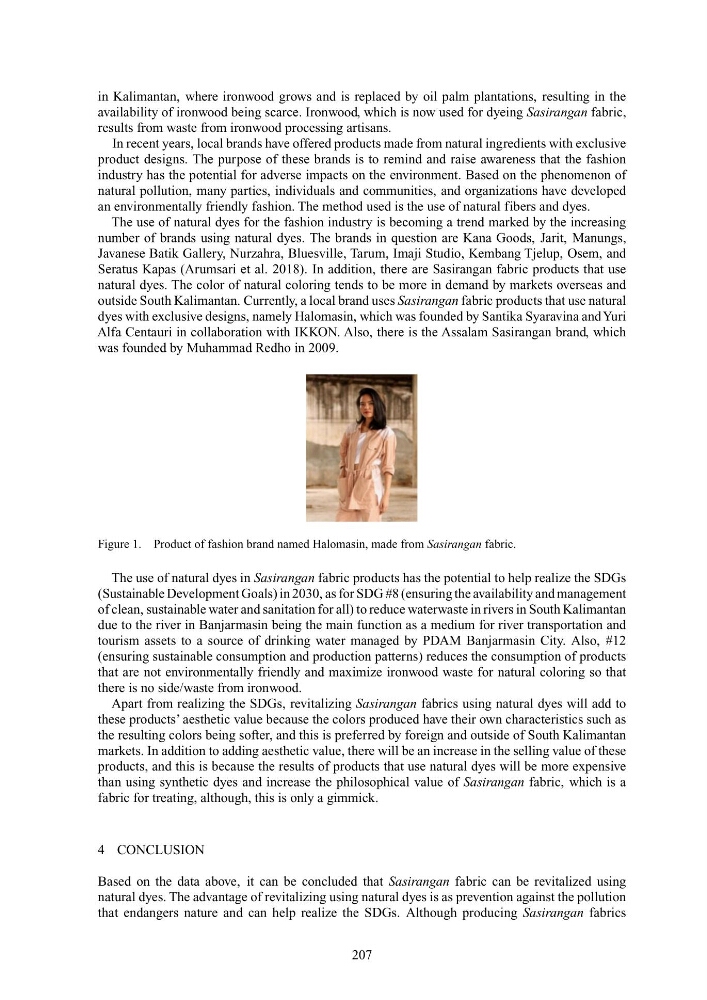
outside South Kalimantan. Currently, a local brand uses Sasirangan fabric products that use natural
dyes with exclusive designs, namely Halomasin, which was founded by Santika Syaravina and Yuri
Alfa Centauri in collaboration with IKKON. Also, there is the Assalam Sasirangan brand, which
was founded by Muhammad Redho in 2009.
Figure 1. Product of fashion brand named Halomasin, made from Sasirangan fabric.
The use of natural dyes in Sasirangan fabric products has the potential to help realize the SDGs
(Sustainable Development Goals) in 2030, as for SDG #8 (ensuring the availability and management
of clean, sustainable water and sanitation for all) to reduce waterwaste in rivers in South Kalimantan
due to the river in Banjarmasin being the main function as a medium for river transportation and
tourism assets to a source of drinking water managed by PDAM Banjarmasin City. Also, #12
(ensuring sustainable consumption and production patterns) reduces the consumption of products
that are not environmentally friendly and maximize ironwood waste for natural coloring so that
there is no side/waste from ironwood.
Apart from realizing the SDGs, revitalizing Sasirangan fabrics using natural dyes will add to
these products’ aesthetic value because the colors produced have their own characteristics such as
the resulting colors being softer, and this is preferred by foreign and outside of South Kalimantan
markets. In addition to adding aesthetic value, there will be an increase in the selling value of these
products, and this is because the results of products that use natural dyes will be more expensive
than using synthetic dyes and increase the philosophical value of Sasirangan fabric, which is a
fabric for treating, although, this is only a gimmick.
4 CONCLUSION
Based on the data above, it can be concluded that Sasirangan fabric can be revitalized using
natural dyes. The advantage of revitalizing using natural dyes is as prevention against the pollution
that endangers nature and can help realize the SDGs. Although producing Sasirangan fabrics
207
availability of ironwood being scarce. Ironwood, which is now used for dyeing Sasirangan fabric,
results from waste from ironwood processing artisans.
In recent years, local brands have offered products made from natural ingredients with exclusive
product designs. The purpose of these brands is to remind and raise awareness that the fashion
industry has the potential for adverse impacts on the environment. Based on the phenomenon of
natural pollution, many parties, individuals and communities, and organizations have developed
an environmentally friendly fashion. The method used is the use of natural fibers and dyes.
The use of natural dyes for the fashion industry is becoming a trend marked by the increasing
number of brands using natural dyes. The brands in question are Kana Goods, Jarit, Manungs,
Javanese Batik Gallery, Nurzahra, Bluesville, Tarum, Imaji Studio, Kembang Tjelup, Osem, and
Seratus Kapas (Arumsari et al. 2018). In addition, there are Sasirangan fabric products that use
natural dyes. The color of natural coloring tends to be more in demand by markets overseas and
outside South Kalimantan. Currently, a local brand uses Sasirangan fabric products that use natural
dyes with exclusive designs, namely Halomasin, which was founded by Santika Syaravina and Yuri
Alfa Centauri in collaboration with IKKON. Also, there is the Assalam Sasirangan brand, which
was founded by Muhammad Redho in 2009.
Figure 1. Product of fashion brand named Halomasin, made from Sasirangan fabric.
The use of natural dyes in Sasirangan fabric products has the potential to help realize the SDGs
(Sustainable Development Goals) in 2030, as for SDG #8 (ensuring the availability and management
of clean, sustainable water and sanitation for all) to reduce waterwaste in rivers in South Kalimantan
due to the river in Banjarmasin being the main function as a medium for river transportation and
tourism assets to a source of drinking water managed by PDAM Banjarmasin City. Also, #12
(ensuring sustainable consumption and production patterns) reduces the consumption of products
that are not environmentally friendly and maximize ironwood waste for natural coloring so that
there is no side/waste from ironwood.
Apart from realizing the SDGs, revitalizing Sasirangan fabrics using natural dyes will add to
these products’ aesthetic value because the colors produced have their own characteristics such as
the resulting colors being softer, and this is preferred by foreign and outside of South Kalimantan
markets. In addition to adding aesthetic value, there will be an increase in the selling value of these
products, and this is because the results of products that use natural dyes will be more expensive
than using synthetic dyes and increase the philosophical value of Sasirangan fabric, which is a
fabric for treating, although, this is only a gimmick.
4 CONCLUSION
Based on the data above, it can be concluded that Sasirangan fabric can be revitalized using
natural dyes. The advantage of revitalizing using natural dyes is as prevention against the pollution
that endangers nature and can help realize the SDGs. Although producing Sasirangan fabrics
207