

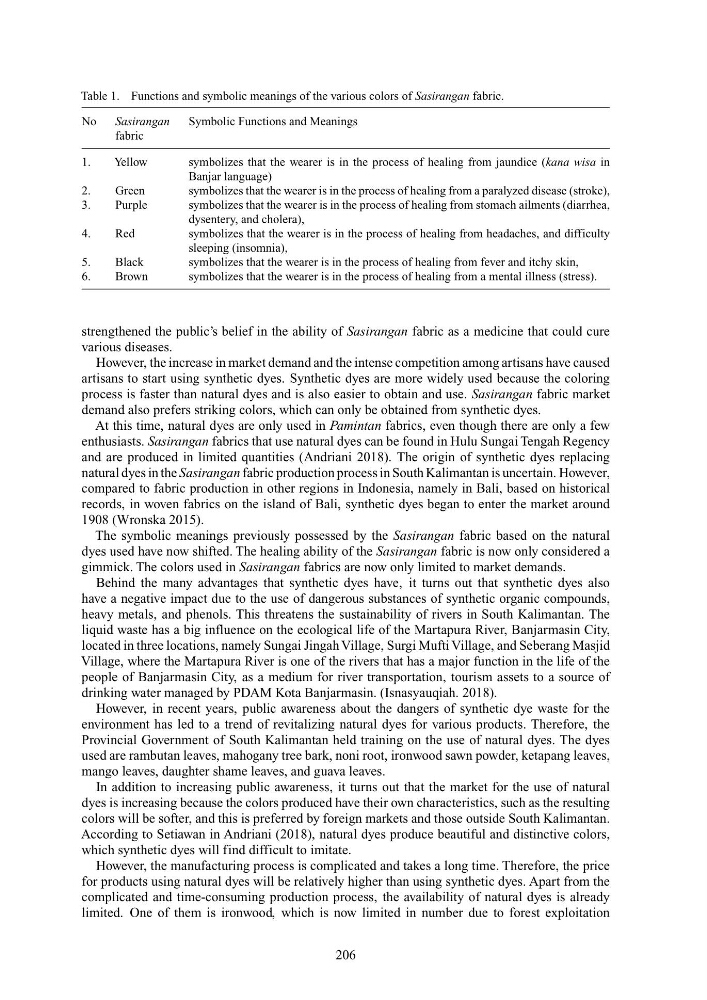
Table 1. Functions and symbolic meanings of the various colors of Sasirangan fabric.
No
Sasirangan
Symbolic Functions and Meanings
fabric
1.
Yellow
symbolizes that the wearer is in the process of healing from jaundice (kana wisa in
Banjar language)
2.
Green
symbolizes that the wearer is in the process of healing from a paralyzed disease (stroke),
3.
Purple
symbolizes that the wearer is in the process of healing from stomach ailments (diarrhea,
dysentery, and cholera),
4.
Red
symbolizes that the wearer is in the process of healing from headaches, and difficulty
sleeping (insomnia),
5.
Black
symbolizes that the wearer is in the process of healing from fever and itchy skin,
6.
Brown
symbolizes that the wearer is in the process of healing from a mental illness (stress).
strengthened the public’s belief in the ability of Sasirangan fabric as a medicine that could cure
various diseases.
However, the increase in market demand and the intense competition among artisans have caused
artisans to start using synthetic dyes. Synthetic dyes are more widely used because the coloring
process is faster than natural dyes and is also easier to obtain and use. Sasirangan fabric market
demand also prefers striking colors, which can only be obtained from synthetic dyes.
At this time, natural dyes are only used in Pamintan fabrics, even though there are only a few
enthusiasts. Sasirangan fabrics that use natural dyes can be found in Hulu Sungai Tengah Regency
and are produced in limited quantities (Andriani 2018). The origin of synthetic dyes replacing
natural dyes in the Sasirangan fabric production process in South Kalimantan is uncertain. However,
compared to fabric production in other regions in Indonesia, namely in Bali, based on historical
records, in woven fabrics on the island of Bali, synthetic dyes began to enter the market around
1908 (Wronska 2015).
The symbolic meanings previously possessed by the Sasirangan fabric based on the natural
dyes used have now shifted. The healing ability of the Sasirangan fabric is now only considered a
gimmick. The colors used in Sasirangan fabrics are now only limited to market demands.
Behind the many advantages that synthetic dyes have, it turns out that synthetic dyes also
have a negative impact due to the use of dangerous substances of synthetic organic compounds,
heavy metals, and phenols. This threatens the sustainability of rivers in South Kalimantan. The
liquid waste has a big influence on the ecological life of the Martapura River, Banjarmasin City,
located in three locations, namely Sungai Jingah Village, Surgi Mufti Village, and Seberang Masjid
Village, where the Martapura River is one of the rivers that has a major function in the life of the
people of Banjarmasin City, as a medium for river transportation, tourism assets to a source of
drinking water managed by PDAM Kota Banjarmasin. (Isnasyauqiah. 2018).
However, in recent years, public awareness about the dangers of synthetic dye waste for the
environment has led to a trend of revitalizing natural dyes for various products. Therefore, the
Provincial Government of South Kalimantan held training on the use of natural dyes. The dyes
used are rambutan leaves, mahogany tree bark, noni root, ironwood sawn powder, ketapang leaves,
mango leaves, daughter shame leaves, and guava leaves.
In addition to increasing public awareness, it turns out that the market for the use of natural
dyes is increasing because the colors produced have their own characteristics, such as the resulting
colors will be softer, and this is preferred by foreign markets and those outside South Kalimantan.
According to Setiawan in Andriani (2018), natural dyes produce beautiful and distinctive colors,
which synthetic dyes will find difficult to imitate.
However, the manufacturing process is complicated and takes a long time. Therefore, the price
for products using natural dyes will be relatively higher than using synthetic dyes. Apart from the
complicated and time-consuming production process, the availability of natural dyes is already
limited. One of them is ironwood, which is now limited in number due to forest exploitation
206
No
Sasirangan
Symbolic Functions and Meanings
fabric
1.
Yellow
symbolizes that the wearer is in the process of healing from jaundice (kana wisa in
Banjar language)
2.
Green
symbolizes that the wearer is in the process of healing from a paralyzed disease (stroke),
3.
Purple
symbolizes that the wearer is in the process of healing from stomach ailments (diarrhea,
dysentery, and cholera),
4.
Red
symbolizes that the wearer is in the process of healing from headaches, and difficulty
sleeping (insomnia),
5.
Black
symbolizes that the wearer is in the process of healing from fever and itchy skin,
6.
Brown
symbolizes that the wearer is in the process of healing from a mental illness (stress).
strengthened the public’s belief in the ability of Sasirangan fabric as a medicine that could cure
various diseases.
However, the increase in market demand and the intense competition among artisans have caused
artisans to start using synthetic dyes. Synthetic dyes are more widely used because the coloring
process is faster than natural dyes and is also easier to obtain and use. Sasirangan fabric market
demand also prefers striking colors, which can only be obtained from synthetic dyes.
At this time, natural dyes are only used in Pamintan fabrics, even though there are only a few
enthusiasts. Sasirangan fabrics that use natural dyes can be found in Hulu Sungai Tengah Regency
and are produced in limited quantities (Andriani 2018). The origin of synthetic dyes replacing
natural dyes in the Sasirangan fabric production process in South Kalimantan is uncertain. However,
compared to fabric production in other regions in Indonesia, namely in Bali, based on historical
records, in woven fabrics on the island of Bali, synthetic dyes began to enter the market around
1908 (Wronska 2015).
The symbolic meanings previously possessed by the Sasirangan fabric based on the natural
dyes used have now shifted. The healing ability of the Sasirangan fabric is now only considered a
gimmick. The colors used in Sasirangan fabrics are now only limited to market demands.
Behind the many advantages that synthetic dyes have, it turns out that synthetic dyes also
have a negative impact due to the use of dangerous substances of synthetic organic compounds,
heavy metals, and phenols. This threatens the sustainability of rivers in South Kalimantan. The
liquid waste has a big influence on the ecological life of the Martapura River, Banjarmasin City,
located in three locations, namely Sungai Jingah Village, Surgi Mufti Village, and Seberang Masjid
Village, where the Martapura River is one of the rivers that has a major function in the life of the
people of Banjarmasin City, as a medium for river transportation, tourism assets to a source of
drinking water managed by PDAM Kota Banjarmasin. (Isnasyauqiah. 2018).
However, in recent years, public awareness about the dangers of synthetic dye waste for the
environment has led to a trend of revitalizing natural dyes for various products. Therefore, the
Provincial Government of South Kalimantan held training on the use of natural dyes. The dyes
used are rambutan leaves, mahogany tree bark, noni root, ironwood sawn powder, ketapang leaves,
mango leaves, daughter shame leaves, and guava leaves.
In addition to increasing public awareness, it turns out that the market for the use of natural
dyes is increasing because the colors produced have their own characteristics, such as the resulting
colors will be softer, and this is preferred by foreign markets and those outside South Kalimantan.
According to Setiawan in Andriani (2018), natural dyes produce beautiful and distinctive colors,
which synthetic dyes will find difficult to imitate.
However, the manufacturing process is complicated and takes a long time. Therefore, the price
for products using natural dyes will be relatively higher than using synthetic dyes. Apart from the
complicated and time-consuming production process, the availability of natural dyes is already
limited. One of them is ironwood, which is now limited in number due to forest exploitation
206