

1 3
Top Curr Chem (Z) (2018) 376:6
dipole and the polarization of E THz . A THz field couples adjacent rotational
states J and J + 1 (i.e., the selection rule is ΔJ = ± 1) yielding 1-quantum coherences (1QCs) between adjacent states of the thermal ensemble. From the viewpoint
of classical field-dipole interactions, the THz electric field exerts a torque on the
dipoles, and the dipoles rotate at discrete 1QC frequencies f J,J+1 = 2Bc(J + 1). The
time-dependent THz emission from the rotating dipoles, given by the net dipolar
orientation ‹cos θ›, is the rotational free-induction decay (FID).
The THz pulse induces a net orientation of the molecular dipoles, i.e., nonzero
cos θ, but since the rotational coherences are at many different frequencies (determined by the different initial rotational levels J, many of which are thermally populated at ordinary temperatures), they rapidly go out of phase and the net orientation is lost. However, since the 1QC frequencies are all integer multiples of the
lowest frequency 2Bc, the dipoles go back in phase and there is a short-lived periodic “revival” of net dipole orientation cos θ with the quantum rotational revival
period [66] given by T rev = (2Bc)
−1
. Upon each revival, the net dipolar orientation
results in a macroscopic polarization in the sample, which emits a burst of coherent
THz-frequency radiation. The FID signal thus consists of a sequence of such bursts
(a)
(b)
(c)
(d)
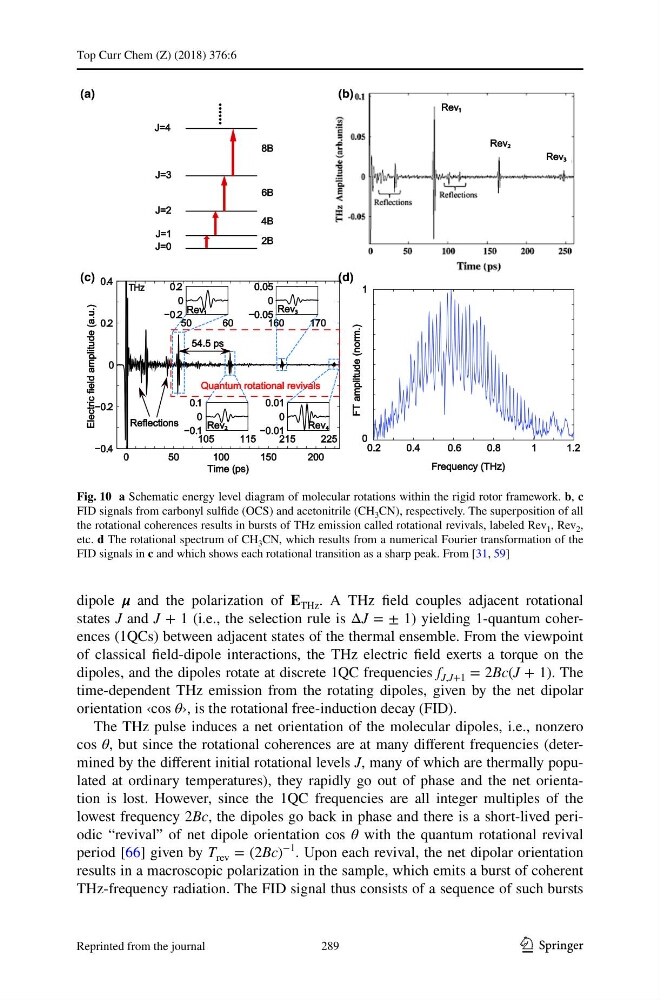
Fig. 10 a Schematic energy level diagram of molecular rotations within the rigid rotor framework. b, c
FID signals from carbonyl sulfide (OCS) and acetonitrile (CH 3 CN), respectively. The superposition of all
the rotational coherences results in bursts of THz emission called rotational revivals, labeled Rev 1 , Rev 2 ,
etc. d The rotational spectrum of CH 3 CN, which results from a numerical Fourier transformation of the
FID signals in c and which shows each rotational transition as a sharp peak. From [31, 59]
289
Reprinted from the journal
Top Curr Chem (Z) (2018) 376:6
dipole and the polarization of E THz . A THz field couples adjacent rotational
states J and J + 1 (i.e., the selection rule is ΔJ = ± 1) yielding 1-quantum coherences (1QCs) between adjacent states of the thermal ensemble. From the viewpoint
of classical field-dipole interactions, the THz electric field exerts a torque on the
dipoles, and the dipoles rotate at discrete 1QC frequencies f J,J+1 = 2Bc(J + 1). The
time-dependent THz emission from the rotating dipoles, given by the net dipolar
orientation ‹cos θ›, is the rotational free-induction decay (FID).
The THz pulse induces a net orientation of the molecular dipoles, i.e., nonzero
cos θ, but since the rotational coherences are at many different frequencies (determined by the different initial rotational levels J, many of which are thermally populated at ordinary temperatures), they rapidly go out of phase and the net orientation is lost. However, since the 1QC frequencies are all integer multiples of the
lowest frequency 2Bc, the dipoles go back in phase and there is a short-lived periodic “revival” of net dipole orientation cos θ with the quantum rotational revival
period [66] given by T rev = (2Bc)
−1
. Upon each revival, the net dipolar orientation
results in a macroscopic polarization in the sample, which emits a burst of coherent
THz-frequency radiation. The FID signal thus consists of a sequence of such bursts
(a)
(b)
(c)
(d)
Fig. 10 a Schematic energy level diagram of molecular rotations within the rigid rotor framework. b, c
FID signals from carbonyl sulfide (OCS) and acetonitrile (CH 3 CN), respectively. The superposition of all
the rotational coherences results in bursts of THz emission called rotational revivals, labeled Rev 1 , Rev 2 ,
etc. d The rotational spectrum of CH 3 CN, which results from a numerical Fourier transformation of the
FID signals in c and which shows each rotational transition as a sharp peak. From [31, 59]
289
Reprinted from the journal