

q r*k,r*l , is transformed into q pu,pv by the photodissociation process. Terms in the
summation in which u = v represent vibrational coherences of diiodide and appear
in the second dimension of the 2DRR spectrum. Similarly, vibrational coherences of
triiodide, q rj,rm (j = m), appear in the first dimension of the 2DRR spectrum. To
further illustrate this point, we present an energy level representation associated
with term 9 in Fig. 4.
Another unique aspect of terms 9–12 is that the third and fourth field-matter
interactions occur on opposite sides of the density operator (see Fig. 3).
Consequently, unlike terms 1–8, the two indices of the vibronic states in s 2 differ
from the two indices in s 1 . For example, in term 9, vibronic coherences associated
with the first and second dimensions are q rj,rm (j = m) and q pu,pv (u = v),
respectively. In contrast, the vibronic coherences associated with the first and
second dimensions in term 1 are q rj,rm (j = m) and q rl,rm (l = m), respectively.
Similarly, in term 5, the vibronic coherences associated with the first and second
dimensions are q pk,pl (k = l) and q pv,pl (v = l), respectively. One index must
remain unchanged in terms 1–8. The measurements and model calculations in Sect.
4 will show that retention of the indices m and l in terms 1 and 5 limits the
vibrational resonances to two quadrants of the 2DRR spectrum. On the other hand,
resonances can appear in all quadrants of the 2DRR spectrum for terms 9–12
because the vibronic indices associated with the two dimensions are independent.
This is a convenient spectroscopic signature with which to establish vibronic
coherence transfer.
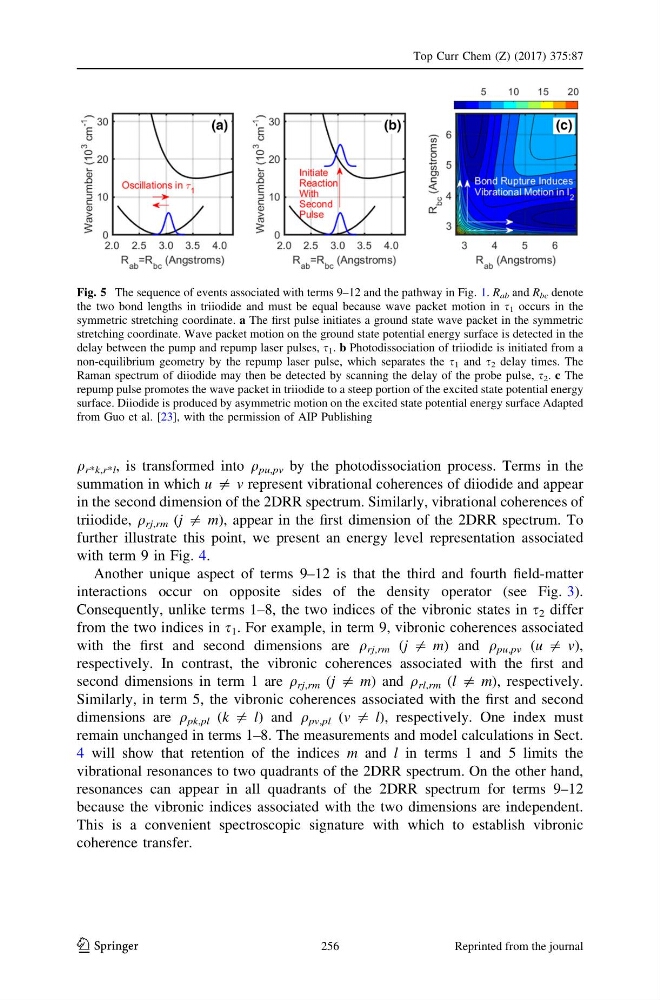
Fig. 5 The sequence of events associated with terms 9–12 and the pathway in Fig. 1. R ab and R bc denote
the two bond lengths in triiodide and must be equal because wave packet motion in s 1 occurs in the
symmetric stretching coordinate. a The first pulse initiates a ground state wave packet in the symmetric
stretching coordinate. Wave packet motion on the ground state potential energy surface is detected in the
delay between the pump and repump laser pulses, s 1 . b Photodissociation of triiodide is initiated from a
non-equilibrium geometry by the repump laser pulse, which separates the s 1 and s 2 delay times. The
Raman spectrum of diiodide may then be detected by scanning the delay of the probe pulse, s 2 . c The
repump pulse promotes the wave packet in triiodide to a steep portion of the excited state potential energy
surface. Diiodide is produced by asymmetric motion on the excited state potential energy surface Adapted
from Guo et al. [23], with the permission of AIP Publishing
Top Curr Chem (Z) (2017) 375:87
123
256
Reprinted from the journal
summation in which u = v represent vibrational coherences of diiodide and appear
in the second dimension of the 2DRR spectrum. Similarly, vibrational coherences of
triiodide, q rj,rm (j = m), appear in the first dimension of the 2DRR spectrum. To
further illustrate this point, we present an energy level representation associated
with term 9 in Fig. 4.
Another unique aspect of terms 9–12 is that the third and fourth field-matter
interactions occur on opposite sides of the density operator (see Fig. 3).
Consequently, unlike terms 1–8, the two indices of the vibronic states in s 2 differ
from the two indices in s 1 . For example, in term 9, vibronic coherences associated
with the first and second dimensions are q rj,rm (j = m) and q pu,pv (u = v),
respectively. In contrast, the vibronic coherences associated with the first and
second dimensions in term 1 are q rj,rm (j = m) and q rl,rm (l = m), respectively.
Similarly, in term 5, the vibronic coherences associated with the first and second
dimensions are q pk,pl (k = l) and q pv,pl (v = l), respectively. One index must
remain unchanged in terms 1–8. The measurements and model calculations in Sect.
4 will show that retention of the indices m and l in terms 1 and 5 limits the
vibrational resonances to two quadrants of the 2DRR spectrum. On the other hand,
resonances can appear in all quadrants of the 2DRR spectrum for terms 9–12
because the vibronic indices associated with the two dimensions are independent.
This is a convenient spectroscopic signature with which to establish vibronic
coherence transfer.
Fig. 5 The sequence of events associated with terms 9–12 and the pathway in Fig. 1. R ab and R bc denote
the two bond lengths in triiodide and must be equal because wave packet motion in s 1 occurs in the
symmetric stretching coordinate. a The first pulse initiates a ground state wave packet in the symmetric
stretching coordinate. Wave packet motion on the ground state potential energy surface is detected in the
delay between the pump and repump laser pulses, s 1 . b Photodissociation of triiodide is initiated from a
non-equilibrium geometry by the repump laser pulse, which separates the s 1 and s 2 delay times. The
Raman spectrum of diiodide may then be detected by scanning the delay of the probe pulse, s 2 . c The
repump pulse promotes the wave packet in triiodide to a steep portion of the excited state potential energy
surface. Diiodide is produced by asymmetric motion on the excited state potential energy surface Adapted
from Guo et al. [23], with the permission of AIP Publishing
Top Curr Chem (Z) (2017) 375:87
123
256
Reprinted from the journal