

32
2 Efficient Organic Synthesis: What Ultrasound Makes Easier
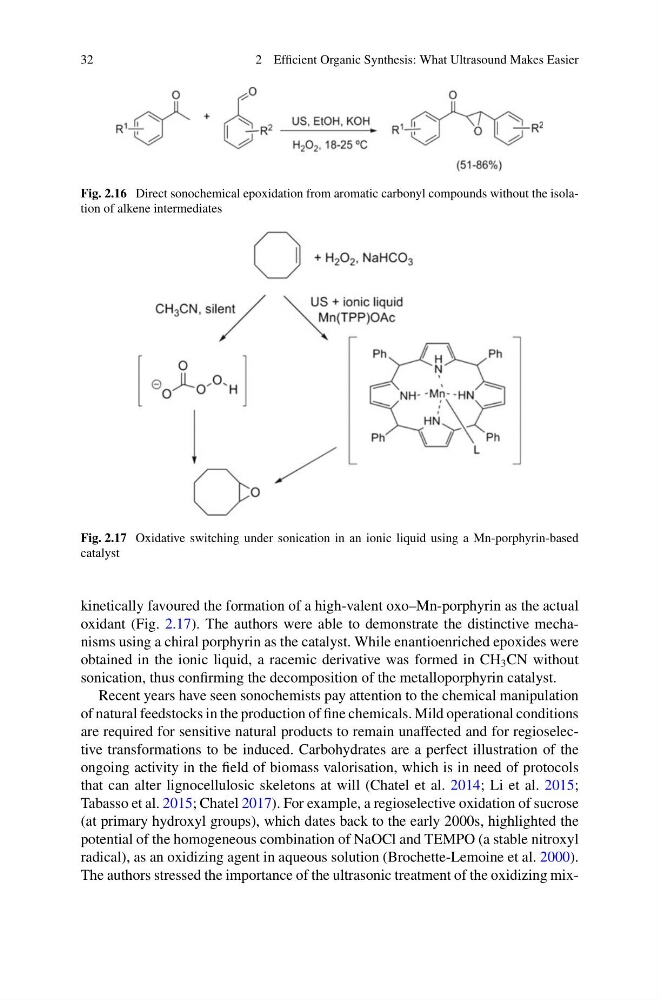
Fig. 2.16 Direct sonochemical epoxidation from aromatic carbonyl compounds without the isolation of alkene intermediates
Fig. 2.17 Oxidative switching under sonication in an ionic liquid using a Mn-porphyrin-based
catalyst
kinetically favoured the formation of a high-valent oxo–Mn-porphyrin as the actual
oxidant (Fig. 2.17). The authors were able to demonstrate the distinctive mechanisms using a chiral porphyrin as the catalyst. While enantioenriched epoxides were
obtained in the ionic liquid, a racemic derivative was formed in CH 3 CN without
sonication, thus confirming the decomposition of the metalloporphyrin catalyst.
Recent years have seen sonochemists pay attention to the chemical manipulation
of natural feedstocks in the production of fine chemicals. Mild operational conditions
are required for sensitive natural products to remain unaffected and for regioselective transformations to be induced. Carbohydrates are a perfect illustration of the
ongoing activity in the field of biomass valorisation, which is in need of protocols
that can alter lignocellulosic skeletons at will (Chatel et al. 2014; Li et al. 2015;
Tabasso et al. 2015; Chatel 2017). For example, a regioselective oxidation of sucrose
(at primary hydroxyl groups), which dates back to the early 2000s, highlighted the
potential of the homogeneous combination of NaOCl and TEMPO (a stable nitroxyl
radical), as an oxidizing agent in aqueous solution (Brochette-Lemoine et al. 2000).
The authors stressed the importance of the ultrasonic treatment of the oxidizing mix-
2 Efficient Organic Synthesis: What Ultrasound Makes Easier
Fig. 2.16 Direct sonochemical epoxidation from aromatic carbonyl compounds without the isolation of alkene intermediates
Fig. 2.17 Oxidative switching under sonication in an ionic liquid using a Mn-porphyrin-based
catalyst
kinetically favoured the formation of a high-valent oxo–Mn-porphyrin as the actual
oxidant (Fig. 2.17). The authors were able to demonstrate the distinctive mechanisms using a chiral porphyrin as the catalyst. While enantioenriched epoxides were
obtained in the ionic liquid, a racemic derivative was formed in CH 3 CN without
sonication, thus confirming the decomposition of the metalloporphyrin catalyst.
Recent years have seen sonochemists pay attention to the chemical manipulation
of natural feedstocks in the production of fine chemicals. Mild operational conditions
are required for sensitive natural products to remain unaffected and for regioselective transformations to be induced. Carbohydrates are a perfect illustration of the
ongoing activity in the field of biomass valorisation, which is in need of protocols
that can alter lignocellulosic skeletons at will (Chatel et al. 2014; Li et al. 2015;
Tabasso et al. 2015; Chatel 2017). For example, a regioselective oxidation of sucrose
(at primary hydroxyl groups), which dates back to the early 2000s, highlighted the
potential of the homogeneous combination of NaOCl and TEMPO (a stable nitroxyl
radical), as an oxidizing agent in aqueous solution (Brochette-Lemoine et al. 2000).
The authors stressed the importance of the ultrasonic treatment of the oxidizing mix-