

663
3 UAV PATH PLANNING AND OPTIMIZATION
3.1 Empirical study
A power consumption model of UAV considering the effect of wind is necessary for optimizing the battery performance of drone. Studies in the literature proposed that there are two
main approaches to power consumption models of a drone. (i) White-box model approach:
In this approach, a microscopic behavior model for each drone is derived from a comprehensive study of the motor performance, aerodynamic environment, and battery systems. Such a
model requires a lot of aerodynamic parameters relating to the body of the drone and sophisticated experimental setups. This is also specific to that particular drone (Kim et al., 2013).
(ii) Black-box model approach: In this approach, a multivariate regression model for the
power consumption of a drone is derived by doing empirical studies (Cappiello et al., 2002).
Such a model is more flexible and acceptable for flight mission optimization. Further, this
approach is more desirable as it is based on parameters which are more easily measurable.
This makes it more suitable for the mining industry as most of the companies use commercial
drones which usually don’t come with a development kit (Tseng et al., 2017).
In this study, the black-box model approach has been utilized for the estimation of the
energy consumption. In a drone, most of the battery is consumed in powering of motors to
lift the UAV’s body in the air. Further, the energy is used in the movements of the UAV in the
air. Experiments have been conducted for studying the performance of the battery when the
drone flies in different directions and wind speeds. Each drone has three main motions: hovering, horizontal moving, and vertical moving. A flight of a drone is a combination of these
three motion types. In each experiment, the drone is programmed to ascend and descent
repeatedly at its maximum speed in a vertical direction. Then, it is moved horizontally without altering its altitude at maximum speed. To understand the effect of wind on battery
performance, another set of experiments have been conducted in which the drone flies in
the same direction as wind and vice versa repeatedly. The experiments have been conducted
for three wind speed cases including 17.28 km/hr, 18 km/hr, and 19.8 km/hr. A commercially available drone with a camera sensor, DJI Mavic Pro has been used as a test platform
equipped with a windspeed meter.
DJI Mavic Pro has a maximum flight time of 27 minutes and camera resolution of 12
MP (DJI, 2018). The frequency of wind measurements is 2 sec. The flights were made at a
local park on different days to consider the different wind speeds and make the study more
comprehensive.
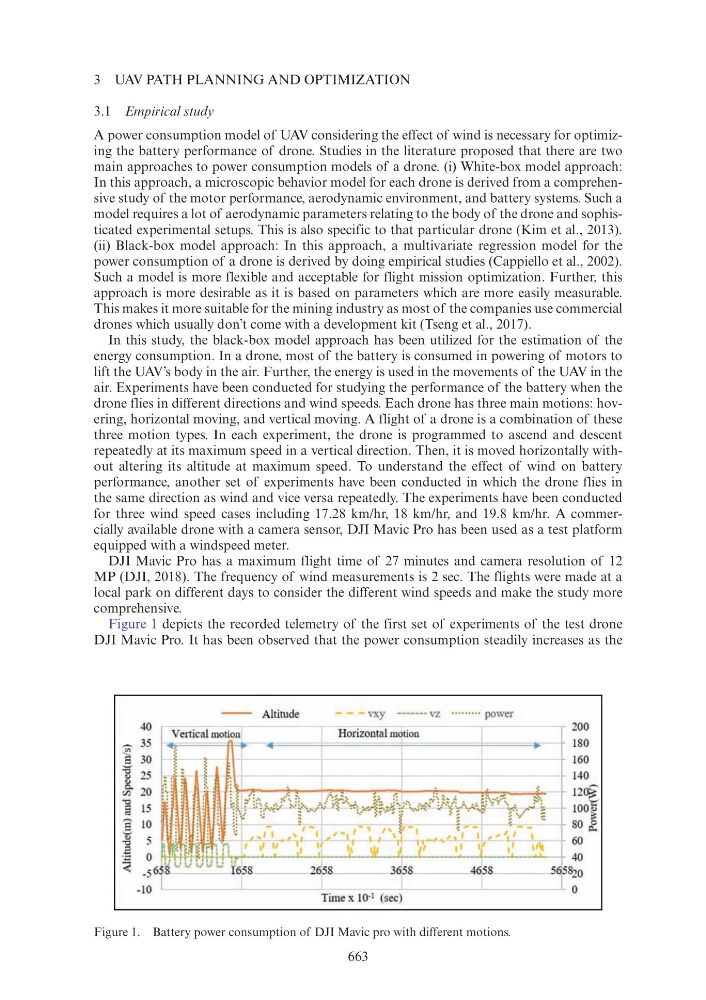
Figure 1 depicts the recorded telemetry of the first set of experiments of the test drone
DJI Mavic Pro. It has been observed that the power consumption steadily increases as the
Figure 1. Battery power consumption of DJI Mavic pro with different motions.
Altitude
Vertical motio~
w
-10 '-I
2658
- vx.y ------- vz ········· power
Horizontal motion
3658
4658
Timex 10-1 (sec)
-
200
180
160
140
12c€'
100'iJ :;:
80 ~
60
40
st58:2o
- 0