

659
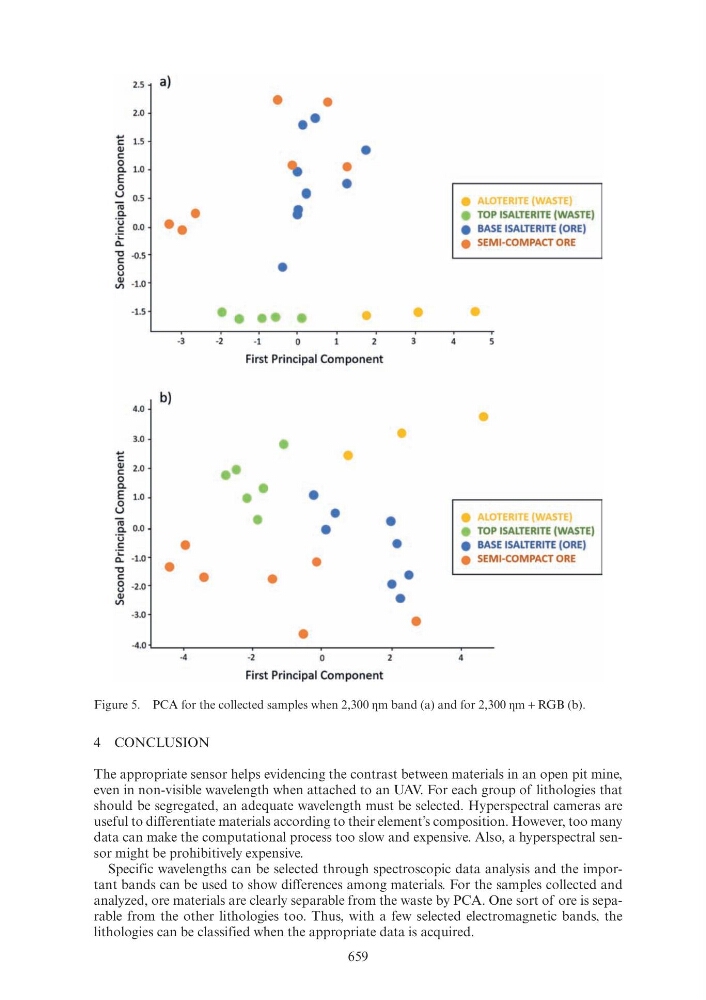
Figure 5. PCA for the collected samples when 2,300 m band (a) and for 2,300 m + RGB (b).
4 CONCLUSION
The appropriate sensor helps evidencing the contrast between materials in an open pit mine,
even in non-visible wavelength when attached to an UAV. For each group of lithologies that
should be segregated, an adequate wavelength must be selected. Hyperspectral cameras are
useful to differentiate materials according to their element’s composition. However, too many
data can make the computational process too slow and expensive. Also, a hyperspectral sensor might be prohibitively expensive.
Specific wavelengths can be selected through spectroscopic data analysis and the important bands can be used to show differences among materials. For the samples collected and
analyzed, ore materials are clearly separable from the waste by PCA. One sort of ore is separable from the other lithologies too. Thus, with a few selected electromagnetic bands, the
lithologies can be classified when the appropriate data is acquired.
2.5
a)
• •
2.0
••
..... 1.5
c:
QJ
•
c:
0
0.. 1.0
•
E
•
0
u 0.5
•
• ALOTERITE (WASTE)
Iii
•
0..
•
• TOP ISALTERITE (WASTE)
·c; 0.0
••
• BASE ISALTERITE (ORE)
c:
·.::
c..
• SEMI-COMPACT ORE
"C -0.5
c:
•
0
u
QJ -1.0
•• •• •
• •
-3
-2
-1
0
4
First Pri ncipal Component
b)
4.0
•
3.0
•
•
.....
•
c:
QJ 2.0
••
c:
0
0..
•
E 1.0
•
•
0
u
•
• ALOTERITE (WASTE)
[ 0.0
•
•
·c;
•
• TOP ISALTERITE (WASTE)
c:
•
•
• BASE ISALTERITE (ORE)
·.::
c.. -1.0
•
• SEMI-COMPACT ORE
"C
•
•
c:
•
•
0
•
u -2.0
QJ
•
•
•
-4.0
-4
-2
0
4
First Principal Component