

575
4.2 A proposal for a data and service management platform to integrate data and systems
across KGHM Polska Miedź
On the basis of projects launched under the KGHM 4.0 programmes named “Implementation of Service Oriented Architecture (SOA)” and “Development of Data Governance Processes, including policies and standards for data processed within business areas”, project
tasks were initiated. Work on the model is being carried out in accordance with the premises
of the Data Governance and SOA Governance concepts. The key components that will make
up the centre should be named as parts of the data processing and integration platform.
In the area of data management, the following types of tools can be distinguished:
• reporting and data presentation tools;
• advanced data analysis tools (prediction, modelling, etc.);
• data modelling tools;
• tools for creating ETL (Extract Transform Load) processes;
• tools supporting Data Governance processes;
• data warehouses.
The Data Governance Policy involves the creation of many organisational roles and the
definition of procedures with a view to handling business processes. Thus, in our model, using
tools that support ETL processes, the programmer creates appropriate data flows which supply data warehouses. A multi-thematic data warehouse stores data logically grouped according to business domain Data Marts) (Chodkowska-Gyurics, A. 2009). Using appropriate
software, analysts use the data stored in the warehouse to build complex mathematical models. The results of these calculations are stored back in the database. Then, designers use the
reports to create breakdowns for the management. The Data Steward uses relevant tools to
ensure the correctness of Data Governance processes.
In the area of data integration, the following elements can be distinguished:
• ESB (Enterprise Service Bus),
• corporate services repository,
• service management tools (availability rules, authorisations, and monitoring),
• tools securing services (encryption, authentication, authorisation, etc.),
• tools for developing services (development environments).
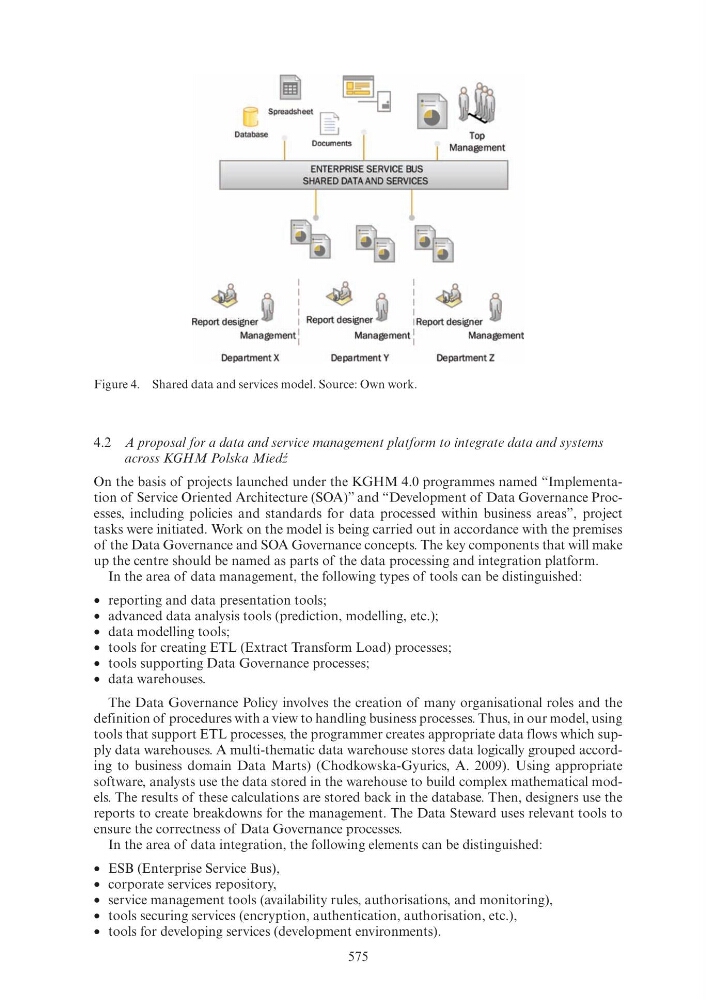
Figure 4. Shared data and services model. Source: Own work.
Spreadsheet
Database
Documents
SHARED DATA AND SERVICES
Repo!
igner ~
IRepo!
igner ~
Management :
Management :
Management
Department X
Department Y
Depa rtment Z