

566
has been one of the reasons why the industry, specially mining, has been reluctant to mobile
broadband technologies. Moreover, since IEEE802.11 (Wi-Fi) operates on a narrow unlicensed band it became easily the first choice for mine sites looking for supporting wireless
connectivity at a reasonable price and requires no dependency on extra contracts and licenses.
3 THE CASE FOR MINING
3.1 The inherent shortcomings of Wi-Fi
IEEE802.11 (Wi-Fi) as well as other wireless technologies have been serving the mining
industry for many years now. Great advances have been made within the Wi-Fi standard so it
rapidly became ubiquitous and a relatively easy, standardized, way to provide good wireless
connectivity with some mobility.
The problem is now that the demands for reliable and more scalable wireless communication systems in mining applications are increasing
4 at the same time that the Wi-Fi technology seems to have reached its limit. With a very limited and narrow spectrum, low power
devices (which forces densification and added installation/maintenance costs), single channels for both downlink and uplink as well as no possibility to traffic and congestion control
whatsoever, seems to have turned Wi-Fi into a less likely long term technology for the current
and future aspirations of the mining industry.
Of course Wi-Fi still has its own areas of use however for those scenarios where capacity, low latency and high reliability are non-negotiable pre-requisites (for ex time-critical
4. Especially when it comes to mission-critical applications.
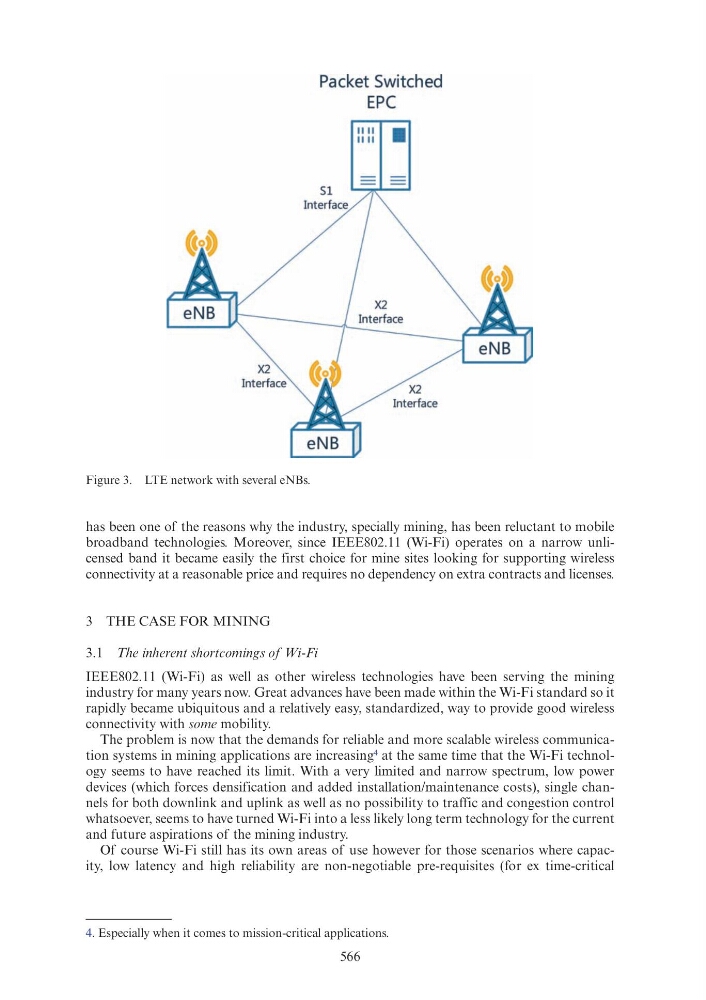
Figure 3. LTE network with several eNBs.
X2
Interface
Packet Switched
EPC
X2
Interface
X2
Interface