

32
8 MINING ENGINEERS IN THE FOURTH INDUSTRIAL REVOLUTION
In a pre-AGM address to the South African Chamber of Mines in 2017, Prof C. Musingwini, the head of the School of Mining Engineering at the University of the Witwatersrand
(“Wits”), spoke of “The role of the mining industry during this difficult time in our academic
environment and how tertiary institutions can continue to support the mining industry’s
skills pipeline” [11]. In reference to the four Mining Engineering Schools in South Africa
(Universities of Johannesburg (“UJ”), Pretoria (“UP”), South Africa (“UNISA”) and Witwatersrand (“Wits”)), he outlined how in 2015 the Heads of these 4 schools established a
Mining Engineering Education South Africa (MEESA) initiative to strengthen collaboration, so as to serve the country better and also produce engineers with the required skills set
for the 4th industrial revolution, or “Mining 4.0”. MEESA collaborates on many fronts, in
teaching, research and service activities, also including joint participation in Mine Health
and Safety Council (MHSC) research projects and research projects identified by the Mining
Phakisa process inclusive of the Mining Precinct. In his speech, he further outlined how tertiary education needed to produce mining engineers with skill sets that can not only cope, but
also drive systems in the 4th industrial revolution, requiring graduates with high Intelligence
Quotient (“IQ”), Emotional Intelligence (“EQ”), Creative Quotient (“CQ”) and Adaptive
Quotient (“AQ”). In this regard, Wits itself is refining the curriculum, planning to include
digital technologies, autonomous systems, data analytics and entrepreneurship, to name but
a few. Once suitable approvals are received from the relevant university channels, the redesigned curriculum should gradually roll out from 2019.
In light of industry requirements and technological advancements, Wits is not alone in
continuously reviewing and improving its offerings, with the University of Johannesburg
replacing it’s BTech/National Diploma with a new Bachelor of Engineering Technology
degree, with first graduates expected at the end of 2019. The University of Pretoria is similarly looking to address various portions of its curricula in relation to the demands of the
4th Industrial Revolution, which requires the Department to re-evaluate its approach to educating and training the next generation of mining engineers. These changes will commence
from 2020, including the management of its planned student numbers. After several years of
significant growth in undergraduate student numbers, followed by a slump in mining student
numbers worldwide, it decided to reduce the Department’s first-year intake. Its design capacity is 50 final-year students, and its strategic intent is to have 200 undergraduate and 100
postgraduate students by 2025.
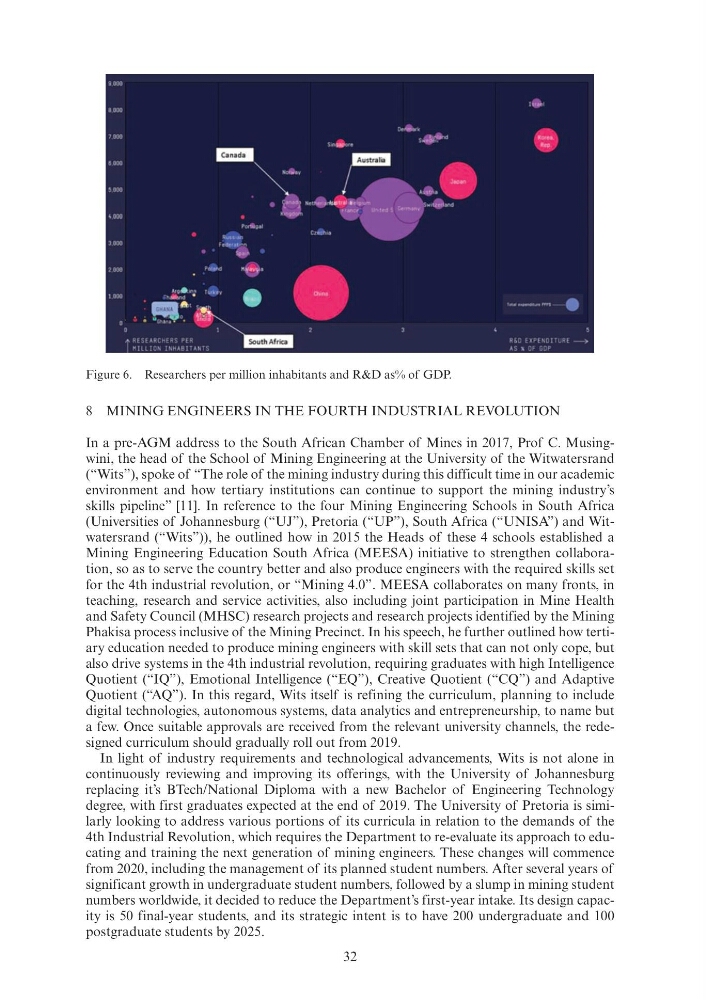
Figure 6. Researchers per million inhabitants and R&D as% of GDP.
8 MINING ENGINEERS IN THE FOURTH INDUSTRIAL REVOLUTION
In a pre-AGM address to the South African Chamber of Mines in 2017, Prof C. Musingwini, the head of the School of Mining Engineering at the University of the Witwatersrand
(“Wits”), spoke of “The role of the mining industry during this difficult time in our academic
environment and how tertiary institutions can continue to support the mining industry’s
skills pipeline” [11]. In reference to the four Mining Engineering Schools in South Africa
(Universities of Johannesburg (“UJ”), Pretoria (“UP”), South Africa (“UNISA”) and Witwatersrand (“Wits”)), he outlined how in 2015 the Heads of these 4 schools established a
Mining Engineering Education South Africa (MEESA) initiative to strengthen collaboration, so as to serve the country better and also produce engineers with the required skills set
for the 4th industrial revolution, or “Mining 4.0”. MEESA collaborates on many fronts, in
teaching, research and service activities, also including joint participation in Mine Health
and Safety Council (MHSC) research projects and research projects identified by the Mining
Phakisa process inclusive of the Mining Precinct. In his speech, he further outlined how tertiary education needed to produce mining engineers with skill sets that can not only cope, but
also drive systems in the 4th industrial revolution, requiring graduates with high Intelligence
Quotient (“IQ”), Emotional Intelligence (“EQ”), Creative Quotient (“CQ”) and Adaptive
Quotient (“AQ”). In this regard, Wits itself is refining the curriculum, planning to include
digital technologies, autonomous systems, data analytics and entrepreneurship, to name but
a few. Once suitable approvals are received from the relevant university channels, the redesigned curriculum should gradually roll out from 2019.
In light of industry requirements and technological advancements, Wits is not alone in
continuously reviewing and improving its offerings, with the University of Johannesburg
replacing it’s BTech/National Diploma with a new Bachelor of Engineering Technology
degree, with first graduates expected at the end of 2019. The University of Pretoria is similarly looking to address various portions of its curricula in relation to the demands of the
4th Industrial Revolution, which requires the Department to re-evaluate its approach to educating and training the next generation of mining engineers. These changes will commence
from 2020, including the management of its planned student numbers. After several years of
significant growth in undergraduate student numbers, followed by a slump in mining student
numbers worldwide, it decided to reduce the Department’s first-year intake. Its design capacity is 50 final-year students, and its strategic intent is to have 200 undergraduate and 100
postgraduate students by 2025.
Figure 6. Researchers per million inhabitants and R&D as% of GDP.