

472
3 CONCLUSIONS
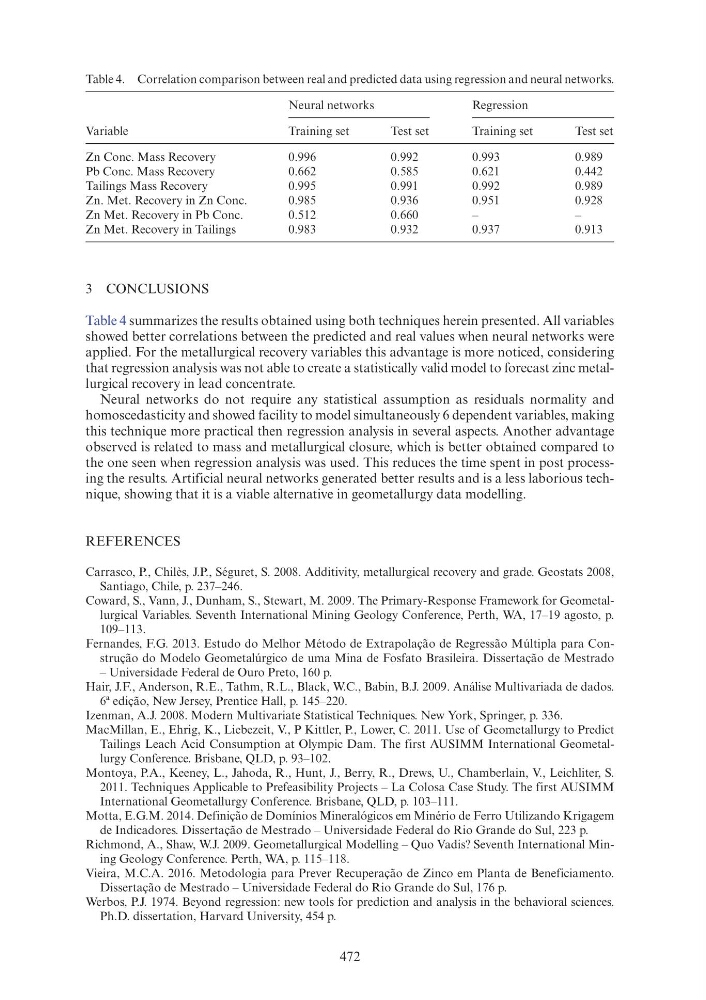
Table 4 summarizes the results obtained using both techniques herein presented. All variables
showed better correlations between the predicted and real values when neural networks were
applied. For the metallurgical recovery variables this advantage is more noticed, considering
that regression analysis was not able to create a statistically valid model to forecast zinc metallurgical recovery in lead concentrate.
Neural networks do not require any statistical assumption as residuals normality and
homoscedasticity and showed facility to model simultaneously 6 dependent variables, making
this technique more practical then regression analysis in several aspects. Another advantage
observed is related to mass and metallurgical closure, which is better obtained compared to
the one seen when regression analysis was used. This reduces the time spent in post processing the results. Artificial neural networks generated better results and is a less laborious technique, showing that it is a viable alternative in geometallurgy data modelling.
REFERENCES
Carrasco, P., Chilès, J.P., Séguret, S. 2008. Additivity, metallurgical recovery and grade. Geostats 2008,
Santiago, Chile, p. 237–246.
Coward, S., Vann, J., Dunham, S., Stewart, M. 2009. The Primary-Response Framework for Geometallurgical Variables. Seventh International Mining Geology Conference, Perth, WA, 17–19 agosto, p.
109–113.
Fernandes, F.G. 2013. Estudo do Melhor Método de Extrapolação de Regressão Múltipla para Construção do Modelo Geometalúrgico de uma Mina de Fosfato Brasileira. Dissertação de Mestrado
– Universidade Federal de Ouro Preto, 160 p.
Hair, J.F., Anderson, R.E., Tathm, R.L., Black, W.C., Babin, B.J. 2009. Análise Multivariada de dados.
6ª edição, New Jersey, Prentice Hall, p. 145–220.
Izenman, A.J. 2008. Modern Multivariate Statistical Techniques. New York, Springer, p. 336.
MacMillan, E., Ehrig, K., Liebezeit, V., P Kittler, P., Lower, C. 2011. Use of Geometallurgy to Predict
Tailings Leach Acid Consumption at Olympic Dam. The first AUSIMM International Geometallurgy Conference. Brisbane, QLD, p. 93–102.
Montoya, P.A., Keeney, L., Jahoda, R., Hunt, J., Berry, R., Drews, U., Chamberlain, V., Leichliter, S.
2011. Techniques Applicable to Prefeasibility Projects – La Colosa Case Study. The first AUSIMM
International Geometallurgy Conference. Brisbane, QLD, p. 103–111.
Motta, E.G.M. 2014. Definição de Domínios Mineralógicos em Minério de Ferro Utilizando Krigagem
de Indicadores. Dissertação de Mestrado – Universidade Federal do Rio Grande do Sul, 223 p.
Richmond, A., Shaw, W.J. 2009. Geometallurgical Modelling – Quo Vadis? Seventh International Mining Geology Conference. Perth, WA, p. 115–118.
Vieira, M.C.A. 2016. Metodologia para Prever Recuperação de Zinco em Planta de Beneficiamento.
Dissertação de Mestrado – Universidade Federal do Rio Grande do Sul, 176 p.
Werbos, P.J. 1974. Beyond regression: new tools for prediction and analysis in the behavioral sciences.
Ph.D. dissertation, Harvard University, 454 p.
Table 4. Correlation comparison between real and predicted data using regression and neural networks.
Variable
Neural networks
Regression
Training set
Test set
Training set
Test set
Zn Conc. Mass Recovery
0.996
0.992
0.993
0.989
Pb Conc. Mass Recovery
0.662
0.585
0.621
0.442
Tailings Mass Recovery
0.995
0.991
0.992
0.989
Zn. Met. Recovery in Zn Conc.
0.985
0.936
0.951
0.928
Zn Met. Recovery in Pb Conc.
0.512
0.660
–
–
Zn Met. Recovery in Tailings
0.983
0.932
0.937
0.913
3 CONCLUSIONS
Table 4 summarizes the results obtained using both techniques herein presented. All variables
showed better correlations between the predicted and real values when neural networks were
applied. For the metallurgical recovery variables this advantage is more noticed, considering
that regression analysis was not able to create a statistically valid model to forecast zinc metallurgical recovery in lead concentrate.
Neural networks do not require any statistical assumption as residuals normality and
homoscedasticity and showed facility to model simultaneously 6 dependent variables, making
this technique more practical then regression analysis in several aspects. Another advantage
observed is related to mass and metallurgical closure, which is better obtained compared to
the one seen when regression analysis was used. This reduces the time spent in post processing the results. Artificial neural networks generated better results and is a less laborious technique, showing that it is a viable alternative in geometallurgy data modelling.
REFERENCES
Carrasco, P., Chilès, J.P., Séguret, S. 2008. Additivity, metallurgical recovery and grade. Geostats 2008,
Santiago, Chile, p. 237–246.
Coward, S., Vann, J., Dunham, S., Stewart, M. 2009. The Primary-Response Framework for Geometallurgical Variables. Seventh International Mining Geology Conference, Perth, WA, 17–19 agosto, p.
109–113.
Fernandes, F.G. 2013. Estudo do Melhor Método de Extrapolação de Regressão Múltipla para Construção do Modelo Geometalúrgico de uma Mina de Fosfato Brasileira. Dissertação de Mestrado
– Universidade Federal de Ouro Preto, 160 p.
Hair, J.F., Anderson, R.E., Tathm, R.L., Black, W.C., Babin, B.J. 2009. Análise Multivariada de dados.
6ª edição, New Jersey, Prentice Hall, p. 145–220.
Izenman, A.J. 2008. Modern Multivariate Statistical Techniques. New York, Springer, p. 336.
MacMillan, E., Ehrig, K., Liebezeit, V., P Kittler, P., Lower, C. 2011. Use of Geometallurgy to Predict
Tailings Leach Acid Consumption at Olympic Dam. The first AUSIMM International Geometallurgy Conference. Brisbane, QLD, p. 93–102.
Montoya, P.A., Keeney, L., Jahoda, R., Hunt, J., Berry, R., Drews, U., Chamberlain, V., Leichliter, S.
2011. Techniques Applicable to Prefeasibility Projects – La Colosa Case Study. The first AUSIMM
International Geometallurgy Conference. Brisbane, QLD, p. 103–111.
Motta, E.G.M. 2014. Definição de Domínios Mineralógicos em Minério de Ferro Utilizando Krigagem
de Indicadores. Dissertação de Mestrado – Universidade Federal do Rio Grande do Sul, 223 p.
Richmond, A., Shaw, W.J. 2009. Geometallurgical Modelling – Quo Vadis? Seventh International Mining Geology Conference. Perth, WA, p. 115–118.
Vieira, M.C.A. 2016. Metodologia para Prever Recuperação de Zinco em Planta de Beneficiamento.
Dissertação de Mestrado – Universidade Federal do Rio Grande do Sul, 176 p.
Werbos, P.J. 1974. Beyond regression: new tools for prediction and analysis in the behavioral sciences.
Ph.D. dissertation, Harvard University, 454 p.
Table 4. Correlation comparison between real and predicted data using regression and neural networks.
Variable
Neural networks
Regression
Training set
Test set
Training set
Test set
Zn Conc. Mass Recovery
0.996
0.992
0.993
0.989
Pb Conc. Mass Recovery
0.662
0.585
0.621
0.442
Tailings Mass Recovery
0.995
0.991
0.992
0.989
Zn. Met. Recovery in Zn Conc.
0.985
0.936
0.951
0.928
Zn Met. Recovery in Pb Conc.
0.512
0.660
–
–
Zn Met. Recovery in Tailings
0.983
0.932
0.937
0.913