

In the year 2000, there was a significant discovery of the submarine serpentinitehosted Lost City hydrothermal field near the Mid-Atlantic Ridge [24–26]. One of the
characteristic features of serpentinization is an abiogenic generation of dissolved
hydrogen and methane [27]. It is not surprising that microbes could not “pass by”
such energetically beneficial substances. Taking into account that carbonate and
sulfur species always present in submarine hydrothermal vents, places of submarine
serpentinization were densely populated by chemoorganotrophic microbial communities. Metagenomic investigation of the Lost City hydrothermal field revealed high
bacterial (Firmicutes, Chloroflexi, Alphaproteobacteria, Betaproteobacteria,
Gammaproteobacteria, Epsilonproteobacteria, Planctomycetes) and low archeal
(Methanosarcinales, Euryarchaeota, Crenarchaeota, and ANME) diversity
[24]. Besides the Lost City, another good example of the developed ecosystem
existing in the submarine serpentinizing site is a Prony Hydrothermal Field in New
Caledonia [28, 29]. Unlike the Lost City field, Prony is more accessible for sampling
because it is located in shallow area. The archaeal part of community comprised of
Euryarchaeota and Thaumarchaea, the bacterial part mainly consisted of Firmicutes,
Chloroflexi, Alphaproteobacteria, Betaproteobacteria, Gammaproteobacteria, and
Deltaproteobacteria and of the candidate division NPL-UPA2. The surprisingly high
diversity of the Prony’s biocoenosis makes it possible to consider it as a source of not
only new alkaliphiles but potentially other extremophiles, particularly thermophiles.
Although, to date, not many valid names of alkaliphiles from this site have been
published, Acetoanaerobium pronyense [30], Alkaliphilus hydrothermalis [31], and
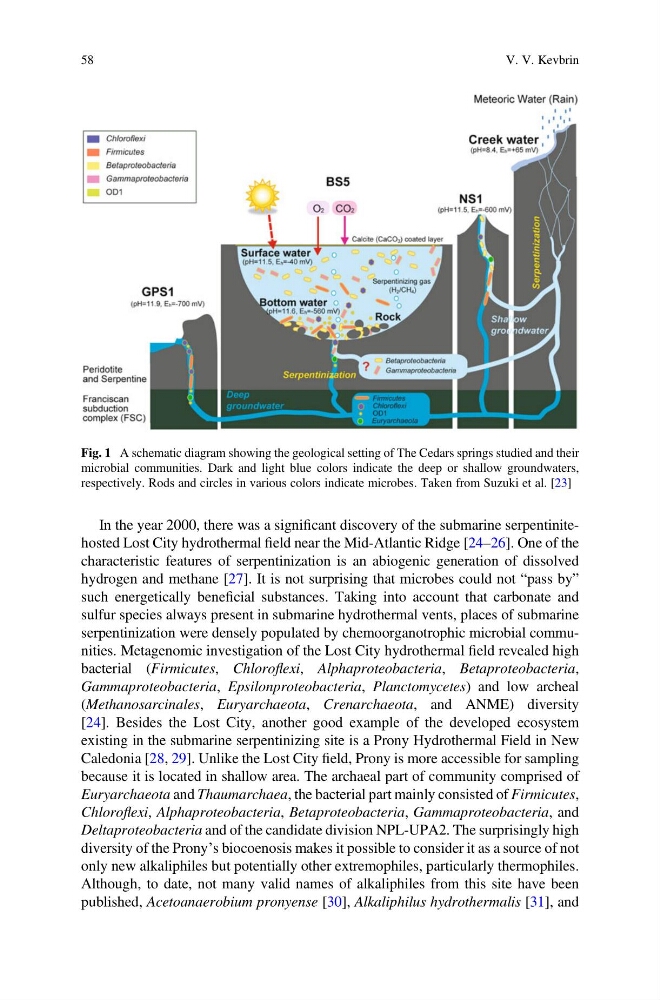
Fig. 1 A schematic diagram showing the geological setting of The Cedars springs studied and their
microbial communities. Dark and light blue colors indicate the deep or shallow groundwaters,
respectively. Rods and circles in various colors indicate microbes. Taken from Suzuki et al. [23]
58
V. V. Kevbrin
characteristic features of serpentinization is an abiogenic generation of dissolved
hydrogen and methane [27]. It is not surprising that microbes could not “pass by”
such energetically beneficial substances. Taking into account that carbonate and
sulfur species always present in submarine hydrothermal vents, places of submarine
serpentinization were densely populated by chemoorganotrophic microbial communities. Metagenomic investigation of the Lost City hydrothermal field revealed high
bacterial (Firmicutes, Chloroflexi, Alphaproteobacteria, Betaproteobacteria,
Gammaproteobacteria, Epsilonproteobacteria, Planctomycetes) and low archeal
(Methanosarcinales, Euryarchaeota, Crenarchaeota, and ANME) diversity
[24]. Besides the Lost City, another good example of the developed ecosystem
existing in the submarine serpentinizing site is a Prony Hydrothermal Field in New
Caledonia [28, 29]. Unlike the Lost City field, Prony is more accessible for sampling
because it is located in shallow area. The archaeal part of community comprised of
Euryarchaeota and Thaumarchaea, the bacterial part mainly consisted of Firmicutes,
Chloroflexi, Alphaproteobacteria, Betaproteobacteria, Gammaproteobacteria, and
Deltaproteobacteria and of the candidate division NPL-UPA2. The surprisingly high
diversity of the Prony’s biocoenosis makes it possible to consider it as a source of not
only new alkaliphiles but potentially other extremophiles, particularly thermophiles.
Although, to date, not many valid names of alkaliphiles from this site have been
published, Acetoanaerobium pronyense [30], Alkaliphilus hydrothermalis [31], and
Fig. 1 A schematic diagram showing the geological setting of The Cedars springs studied and their
microbial communities. Dark and light blue colors indicate the deep or shallow groundwaters,
respectively. Rods and circles in various colors indicate microbes. Taken from Suzuki et al. [23]
58
V. V. Kevbrin