

features have brought a great deal of attention on using microbes to develop selfhealing concrete. Like the other two applications of microbes discussed above, the
bio-based self-healing concrete is based on CaCO 3 precipitation. In this case,
dormant microbe(s) (normally spores), precipitation precursors, and nutrients are
added into the concrete during the mixing and casting process. When cracking
occurs, the microorganisms in the crack zone become activated by moisture and
air (oxygen) coming through the crack and initiate precipitation of CaCO 3 which
heals the concrete cracks in situ. Unlike the biodeposition and manual crack-fixing
applications, in self-healing system the microorganisms should remain dormant but
viable for a long time, survive the concrete mixing process, tolerate the drastic
conditions of the concrete environment, and be activated when crack occurs.
The success of developing bio-based self-healing concrete depends on several
factors such as the organism nature, the way cells are added to the concrete, type of
calcium precursor used, etc. Concrete is known to be a harsh environment for
organisms to survive. It is alkaline, nutrient poor, anoxic, and dry. Moreover, the
mixing is very rough. These conditions have a great impact on survival of the
microorganisms. The alkaline environment makes alkaliphiles the primary choice.
Since it is difficult to estimate the timing at which crack occurs (which can be after
days or several years), it is preferable to have cells that can last for long time. This
favors the use of endospore-forming bacteria. It is generally known that spores, the
dormant state of some microbes, have much longer survival time than vegetative
cells, from several years to hundreds of years [197] and get activated when the
environment becomes conducive. Often, the presence of moisture, air, and nutrients
triggers the germination (activation) of spores. Therefore, spore-forming alkaliphilic
bacteria, which become active upon concrete cracking and deposit good amount of
calcite, are most favorable for this application.
The harsh concrete environment can severely affect the survival rate of microbes.
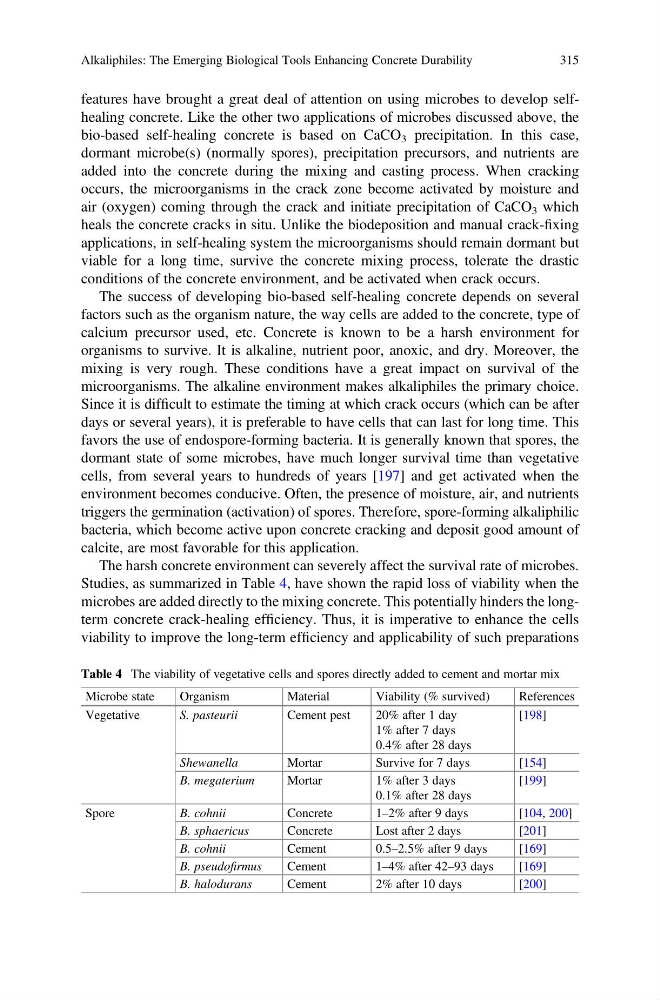
Studies, as summarized in Table 4, have shown the rapid loss of viability when the
microbes are added directly to the mixing concrete. This potentially hinders the longterm concrete crack-healing efficiency. Thus, it is imperative to enhance the cells
viability to improve the long-term efficiency and applicability of such preparations
Table 4 The viability of vegetative cells and spores directly added to cement and mortar mix
Microbe state
Organism
Material
Viability (% survived)
References
Vegetative
S. pasteurii
Cement pest
20% after 1 day
1% after 7 days
0.4% after 28 days
[198]
Shewanella
Mortar
Survive for 7 days
[154]
B. megaterium
Mortar
1% after 3 days
0.1% after 28 days
[199]
Spore
B. cohnii
Concrete
1–2% after 9 days
[104, 200]
B. sphaericus
Concrete
Lost after 2 days
[201]
B. cohnii
Cement
0.5–2.5% after 9 days
[169]
B. pseudofirmus
Cement
1–4% after 42–93 days
[169]
B. halodurans
Cement
2% after 10 days
[200]
Alkaliphiles: The Emerging Biological Tools Enhancing Concrete Durability
315
bio-based self-healing concrete is based on CaCO 3 precipitation. In this case,
dormant microbe(s) (normally spores), precipitation precursors, and nutrients are
added into the concrete during the mixing and casting process. When cracking
occurs, the microorganisms in the crack zone become activated by moisture and
air (oxygen) coming through the crack and initiate precipitation of CaCO 3 which
heals the concrete cracks in situ. Unlike the biodeposition and manual crack-fixing
applications, in self-healing system the microorganisms should remain dormant but
viable for a long time, survive the concrete mixing process, tolerate the drastic
conditions of the concrete environment, and be activated when crack occurs.
The success of developing bio-based self-healing concrete depends on several
factors such as the organism nature, the way cells are added to the concrete, type of
calcium precursor used, etc. Concrete is known to be a harsh environment for
organisms to survive. It is alkaline, nutrient poor, anoxic, and dry. Moreover, the
mixing is very rough. These conditions have a great impact on survival of the
microorganisms. The alkaline environment makes alkaliphiles the primary choice.
Since it is difficult to estimate the timing at which crack occurs (which can be after
days or several years), it is preferable to have cells that can last for long time. This
favors the use of endospore-forming bacteria. It is generally known that spores, the
dormant state of some microbes, have much longer survival time than vegetative
cells, from several years to hundreds of years [197] and get activated when the
environment becomes conducive. Often, the presence of moisture, air, and nutrients
triggers the germination (activation) of spores. Therefore, spore-forming alkaliphilic
bacteria, which become active upon concrete cracking and deposit good amount of
calcite, are most favorable for this application.
The harsh concrete environment can severely affect the survival rate of microbes.
Studies, as summarized in Table 4, have shown the rapid loss of viability when the
microbes are added directly to the mixing concrete. This potentially hinders the longterm concrete crack-healing efficiency. Thus, it is imperative to enhance the cells
viability to improve the long-term efficiency and applicability of such preparations
Table 4 The viability of vegetative cells and spores directly added to cement and mortar mix
Microbe state
Organism
Material
Viability (% survived)
References
Vegetative
S. pasteurii
Cement pest
20% after 1 day
1% after 7 days
0.4% after 28 days
[198]
Shewanella
Mortar
Survive for 7 days
[154]
B. megaterium
Mortar
1% after 3 days
0.1% after 28 days
[199]
Spore
B. cohnii
Concrete
1–2% after 9 days
[104, 200]
B. sphaericus
Concrete
Lost after 2 days
[201]
B. cohnii
Cement
0.5–2.5% after 9 days
[169]
B. pseudofirmus
Cement
1–4% after 42–93 days
[169]
B. halodurans
Cement
2% after 10 days
[200]
Alkaliphiles: The Emerging Biological Tools Enhancing Concrete Durability
315