

of cracks, compressive strength enhancement, and recovery of strength after crack
formation and healing [18, 133, 134].
2.2 Microbe-Mediated Silicate Precipitation
Another important biomineralization process relevant to concrete durability is the
microbial-based silicate precipitation. Silicon (Si) is the second-most abundant
element accounting nearly 29% of the earth’s mass [135]. It exists mainly in silica
(SiO 2 ) form that occurs as monosilicic acid (Si(OH) 4 ) in aqueous solution. Like
calcium carbonate precipitation, biomineralization of silicate seems an important
process in nature. A large amount of silica is known to be mineralized in the body of
organisms ranging from terrestrial plants to marine organisms such as diatoms. This
silica formed in the body of organisms is known as biogenic silica. Organisms
synthesize this remarkable substance by extracting and processing naturally occurring silica or silicon from their respective environments and often using it for
structural or defensive purposes. The biosilicification process could be simple
accumulation of silica in the body of organisms, or it could be very complex process
performed by specifically evolved metabolic activities. For instance, in marine
organisms, silica deposition is known to be chemically and spatially controlled
and involves silica-depositing proteins such as silicatein and silaffin [136, 137].
Unlike the manmade and the natural geological fabrication processes of silicates that
require extreme temperature, pressure, or pH, organisms produce remarkably diverse
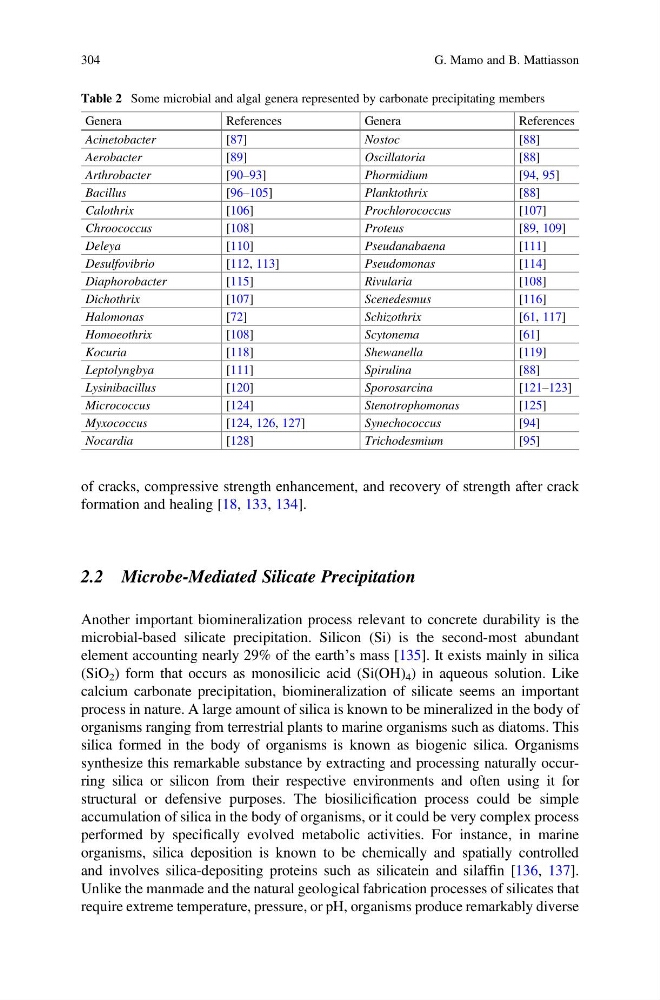
Table 2 Some microbial and algal genera represented by carbonate precipitating members
Genera
References
Genera
References
Acinetobacter
[87]
Nostoc
[88]
Aerobacter
[89]
Oscillatoria
[88]
Arthrobacter
[90–93]
Phormidium
[94, 95]
Bacillus
[96–105]
Planktothrix
[88]
Calothrix
[106]
Prochlorococcus
[107]
Chroococcus
[108]
Proteus
[89, 109]
Deleya
[110]
Pseudanabaena
[111]
Desulfovibrio
[112, 113]
Pseudomonas
[114]
Diaphorobacter
[115]
Rivularia
[108]
Dichothrix
[107]
Scenedesmus
[116]
Halomonas
[72]
Schizothrix
[61, 117]
Homoeothrix
[108]
Scytonema
[61]
Kocuria
[118]
Shewanella
[119]
Leptolyngbya
[111]
Spirulina
[88]
Lysinibacillus
[120]
Sporosarcina
[121–123]
Micrococcus
[124]
Stenotrophomonas
[125]
Myxococcus
[124, 126, 127]
Synechococcus
[94]
Nocardia
[128]
Trichodesmium
[95]
304
G. Mamo and B. Mattiasson
formation and healing [18, 133, 134].
2.2 Microbe-Mediated Silicate Precipitation
Another important biomineralization process relevant to concrete durability is the
microbial-based silicate precipitation. Silicon (Si) is the second-most abundant
element accounting nearly 29% of the earth’s mass [135]. It exists mainly in silica
(SiO 2 ) form that occurs as monosilicic acid (Si(OH) 4 ) in aqueous solution. Like
calcium carbonate precipitation, biomineralization of silicate seems an important
process in nature. A large amount of silica is known to be mineralized in the body of
organisms ranging from terrestrial plants to marine organisms such as diatoms. This
silica formed in the body of organisms is known as biogenic silica. Organisms
synthesize this remarkable substance by extracting and processing naturally occurring silica or silicon from their respective environments and often using it for
structural or defensive purposes. The biosilicification process could be simple
accumulation of silica in the body of organisms, or it could be very complex process
performed by specifically evolved metabolic activities. For instance, in marine
organisms, silica deposition is known to be chemically and spatially controlled
and involves silica-depositing proteins such as silicatein and silaffin [136, 137].
Unlike the manmade and the natural geological fabrication processes of silicates that
require extreme temperature, pressure, or pH, organisms produce remarkably diverse
Table 2 Some microbial and algal genera represented by carbonate precipitating members
Genera
References
Genera
References
Acinetobacter
[87]
Nostoc
[88]
Aerobacter
[89]
Oscillatoria
[88]
Arthrobacter
[90–93]
Phormidium
[94, 95]
Bacillus
[96–105]
Planktothrix
[88]
Calothrix
[106]
Prochlorococcus
[107]
Chroococcus
[108]
Proteus
[89, 109]
Deleya
[110]
Pseudanabaena
[111]
Desulfovibrio
[112, 113]
Pseudomonas
[114]
Diaphorobacter
[115]
Rivularia
[108]
Dichothrix
[107]
Scenedesmus
[116]
Halomonas
[72]
Schizothrix
[61, 117]
Homoeothrix
[108]
Scytonema
[61]
Kocuria
[118]
Shewanella
[119]
Leptolyngbya
[111]
Spirulina
[88]
Lysinibacillus
[120]
Sporosarcina
[121–123]
Micrococcus
[124]
Stenotrophomonas
[125]
Myxococcus
[124, 126, 127]
Synechococcus
[94]
Nocardia
[128]
Trichodesmium
[95]
304
G. Mamo and B. Mattiasson